

 Akuc Marine

The Environmental pillar of ESG has long been communicated through the lens of climate change. But are we communicating enough about water?
The Environmental conversation often revolves around carbon emissions, and, renewable energy. While these issues deserve attention, one environmental challenge continues to receive far less visibility despite its direct impact on climate change, public health, and, natural water sustainability.
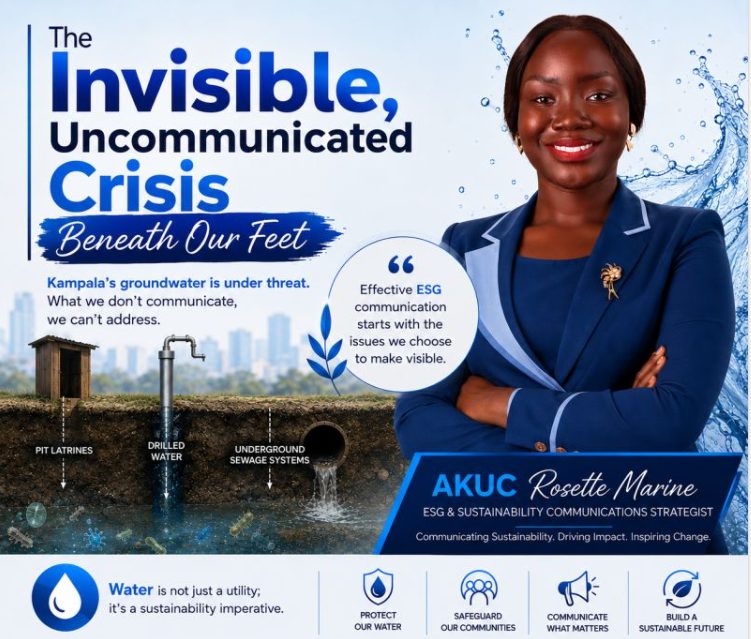
Across Africa, many households and businesses are drilling water to reduce the rising cost of piped water. From a financial perspective, this appears to be an innovative and cost-saving solution. However, effective ESG communication requires us to look beyond cost and communicate long-term sustainability risks.
Kampala’s rapid urbanization, coupled with the widespread use of latrines, aging sewer infrastructure, and densely populated settlements, increases the vulnerability of shallow groundwater to microbial contamination (Howard et al., 2003). Studies have shown that groundwater quality can be compromised where sanitation systems are inadequate, exposing communities to waterborne diseases and other public health risks (Howard et al., 2003).
When we protect water, we protect forests, agriculture, biodiversity, public health, and ultimately, humanity itself. The future of environmental sustainability begins with safeguarding the ecosystems that sustain every drop.
This is where ESG communication becomes critical. If we communicate environmental sustainability only through the lens of tress and carbon, we risk overlooking equally pressing issues such as water encroachment, water source depletion, rainwater harvesting, water security, sanitation, groundwater protection, and responsible urban planning.
Sustainability communication should not only inspire organizations to adopt environmentally friendly practices, it should also encourage evidence-based decision-making that protects both people and natural resources.
The next evolution of ESG communication is not simply communicating more, but communicating broader.
This post was created with our nice and easy submission form. Create your post!

Did this story move you? Every gift goes directly to Akuc Marine — writers on Muwado earn from reader appreciation, not algorithms. Even $1 makes a difference.






Muwado weekly chart
Get Africa’s top 10 stories every Thursday
No account needed — just your email.
Want to follow Akuc Marine and get notified every time they publish?
Create a free Muwado account →