

 Brian Oduti

On a June afternoon, I went on a photo walk organised by Muwado, FOTEA, and Unpublished Africa. I joined a group of photographers from Kampala who wanted to use photography to understand the theme of informality.
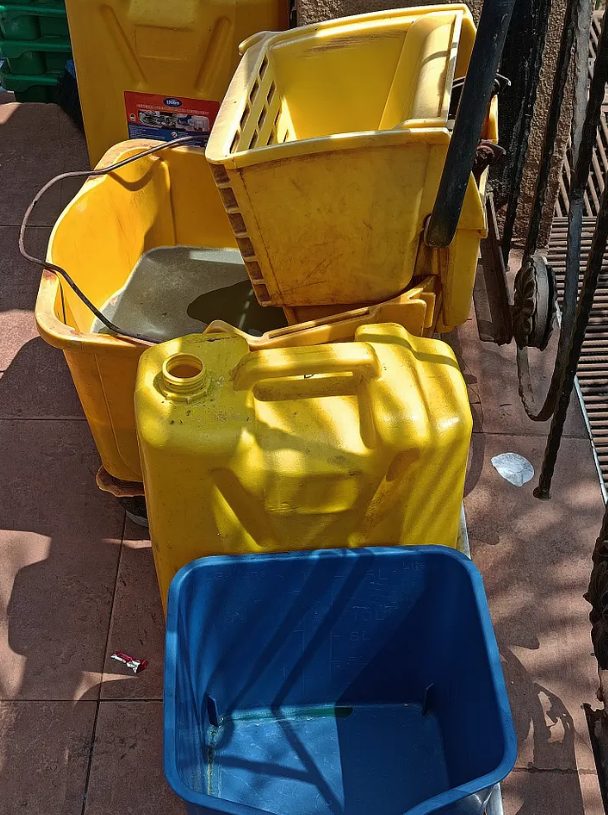
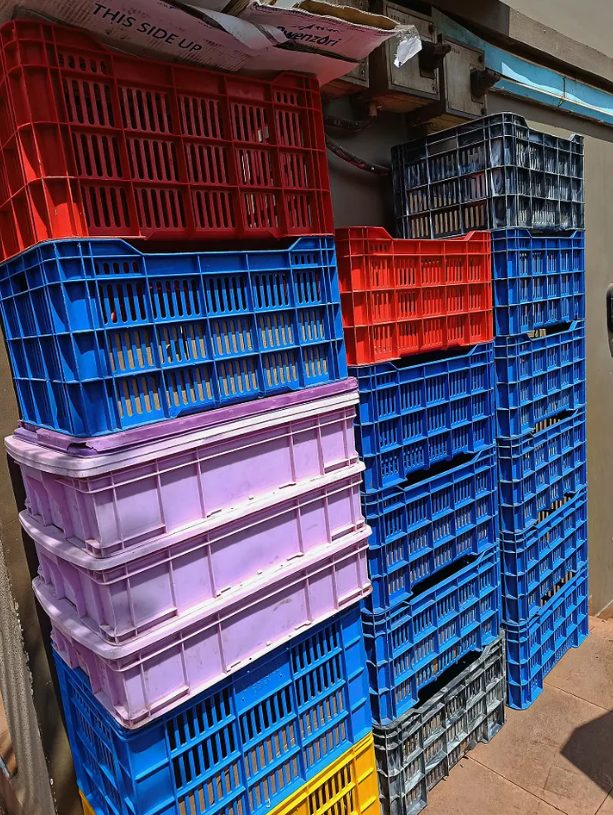
The photographers converged at KCCA Kamwokya Gardens. Before the walk, I did not think they were even open to the public. Until the writing of this essay, I did not know the name of the gardens. KCCA Kamwokya Gardens are just behind Café Javas in Kamwokya. The park is public property, owned by the city, but you access it through a corridor from the restaurant. The corridor is stacked with plastic containers and cleaning equipment—likely of the restaurant. I used to think the park was an extension of the restaurant.
Before we set off, we had been briefed about the walk: ethics, what to look out for in terms of the theme and how to stay safe out there. During the briefing, one of the photographers (I forget his name, shame) shared his reflections about third spaces; the role they play in society and their limited number in Kampala. I had discussed this topic in my essay Walking Kampala, where I highlighted public parks have been occupied by the state or by the private sector. KCCA Kamwokya Gardens were one of the few such third spaces still surviving. Later, when we returned to the park to debrief and share reflections, the lawns had filled up with what looked like a girlfriend group picnicking, a family walking hand in hand, children playing, and lawyers on a photoshoot the week of their graduation from the bar course.
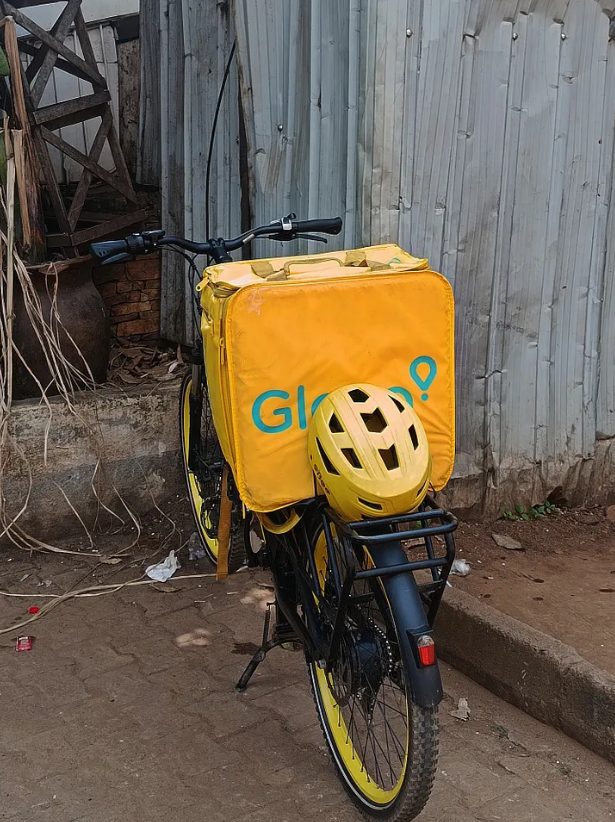
The walk began across Kira Road onto Kayunga Road, then Dr. Tufnell Drive, a road with what were once, you could say, middle-class residential houses; many have since been turned into offices. Part of this road, right from the first junction, was under construction, with caution signs, men in bright-coloured helmets, dug into the earth. A man in a yellow helmet stood in the pit they were digging.
Outside the Kamwokya Sindhi Ganpati temple, I spoke to a man on the paved parking lot who later introduced himself as Sandeep. Pigeons flew around him. He picked handfuls of chia seeds from a black buveera and sprinkled them on the ground. The birds fed. It was when I asked what motivated him to feed these birds that I realised that he did not speak much English. The only word he said to me was: prayer. I said, oh, so it’s a spiritual thing. He shook his head in agreement, then handed the buveera to me, signalling that I should feed the birds. I started feeding them. They seemed safe, so free, in the afternoon sun, flying from the paved ground to the top of the wall fence. There were overgrown leaves and pink flowers of bougainvillaea over the white wall of the temple.
Immediately after the temple, we found concrete road barriers painted with yellow and black hazard stripes. A section of the street had been closed for an excavation. Men in yellow helmets worked out of the pit in the road. The men in the pit were probably day-hire, paid by the job. Yet, they were building a road for the formal economy, a road with a line item in the national or KCCA budget. We crossed the closed section over on a wood plank.
Considering the thin lines between the formal and informal economy, it is important to attempt to define or trace the origins of the “informal”. Before colonial administration, no register separated a “formal” trader from an “informal” one. What we now call informality is, in part, the remnants of an imposed legal and tax system that served the purpose of capital extraction, such as the hut tax and poll tax. While the nature of the present state has somewhat changed, it cannot be that the majority of people who existed within a pre-colonial economic and social order can now simply shift into attaining advanced degrees, opening bank accounts, paying insurance premiums, all within under one hundred years, in the absence of broad-based social reforms. This, in part, speaks to the persisting widening social inequality in our country.
There were signs all around the street. ‘’This house is not for sale,’‘ painted on a black gate. ‘’Quick loan for instant cash,’‘ printed on paper, laminated and nailed to an electric pole. ‘’No dumping rubbish around this fence. Fine, arrest,’‘ nailed to a wall. ‘’Please do not park in front of this gate,’‘ nailed to a wall. Taken together, these signs were citizens’ own informal, rudimentary manner of enforcing property rights and accessing finance, outside the courts and land registry, and formal banking system, respectively.
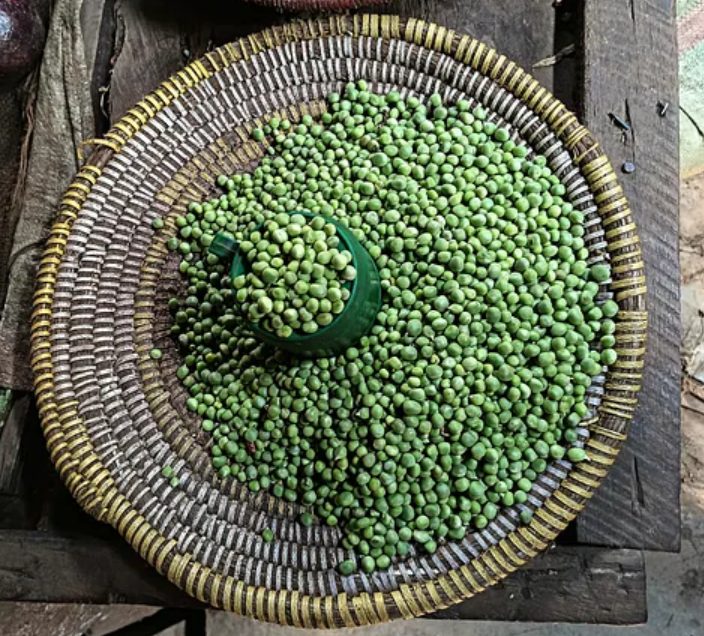
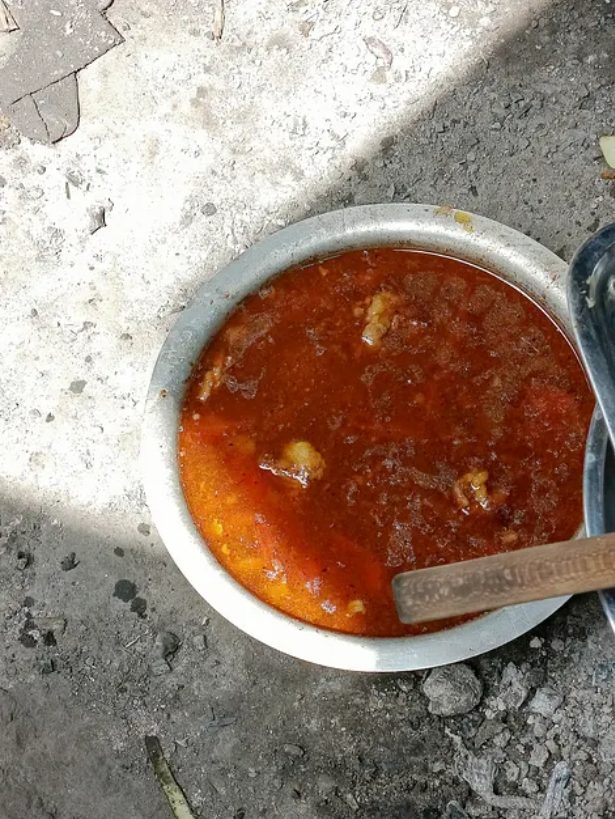
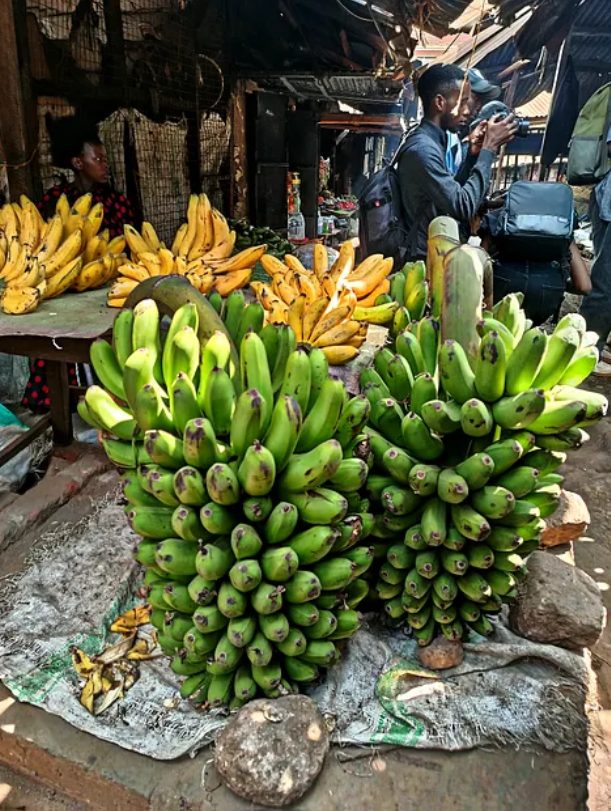
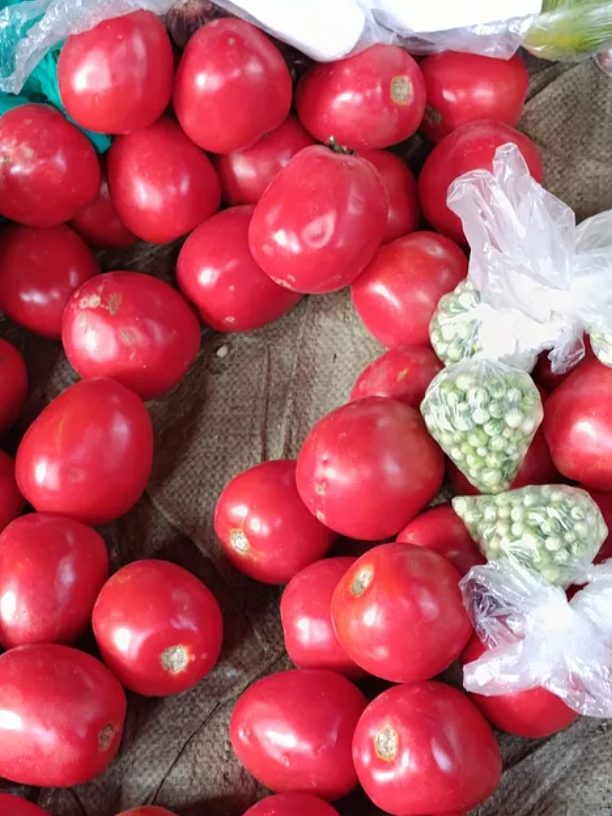
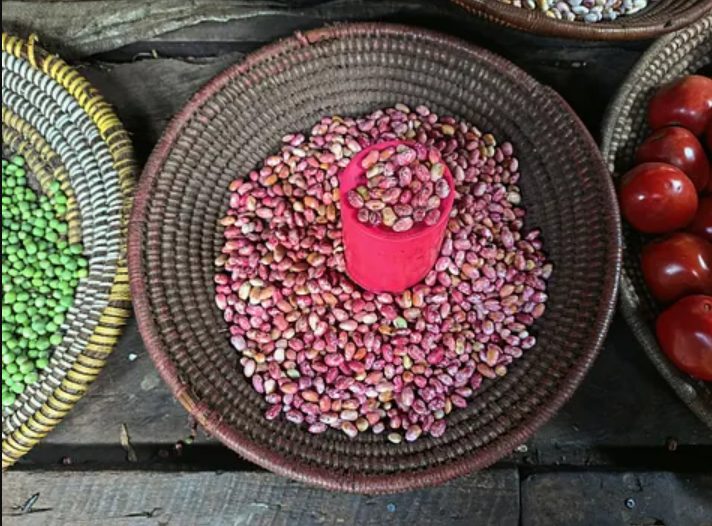
In Kamwokya market, there was so much colour in the fresh foods: bananas, matoke, tomatoes, cowpeas, beans, lemon; so much fresh food. Unpleasant smells hung in the air and food was being sold in soggy aisles. There was an open saucepan of very oily soup, which looked like beef inside, sitting just past my feet, on a floor scattered with ash and pieces of charcoal.
A man, visibly drunk, on seeing the cameras, grew agitated as he walked towards me and asked why we were taking pictures. I showed him my Instagram and explained what we were doing. He left us alone. A fishmonger was less easily won over. After a few minutes of us photographing his merchandise, he told us to leave; we were wasting his time. He was not wrong.
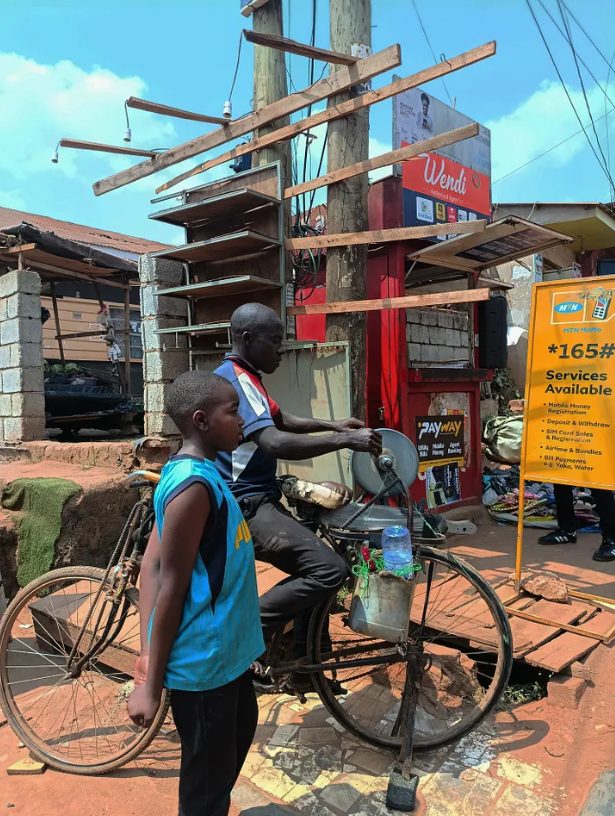
Mobile money agents and bank agents were all around. Mobile money is so widely used that even people with bank accounts resort to mobile banking for convenience. One does not have to go to a bank to keep or transact with their money, and I think this is one of those effective efforts at financial inclusion for the unbanked. In that sense then, it can be difficult to strictly define where the informal economy starts and ends.
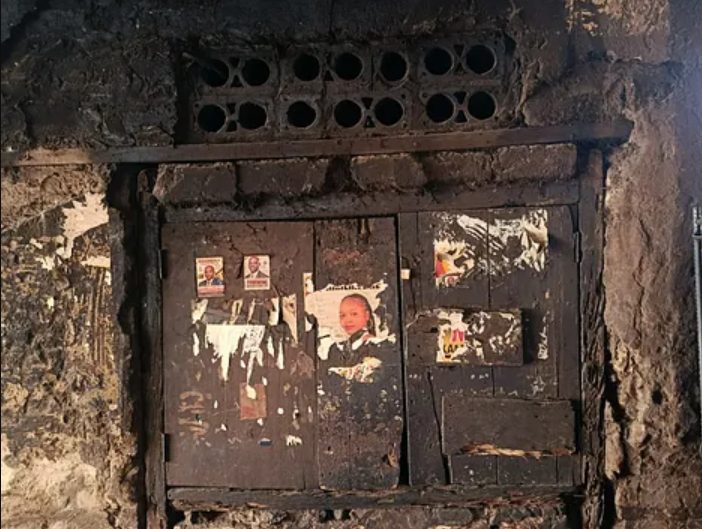
A window in the market had darkened, and the wall around it had darkened too, probably from years of soot, from all the smoke of cooking in the market. Torn election posters hung on the wall. Markets were, clearly, places of political interest. But were political promises fulfilled post-election, or the needs of these market vendors met in terms of basic safety and hygiene?
I saw a tank encased in a metal frame, with an improvised sink, and I wondered if it was functional. I asked a woman across from it, and she confirmed: yes, this was a handwashing station. Since this was the Ebola season, I asked how long ago it was put there.
“COVID-19 days,” she said.
“Is there water in it?”
“No.”
“Then what’s this pipe on top, tangled in electric wires?”
“That’s how the water came in.”
What is the relationship between the informal sector and the state? A handwashing station installed once, during a pandemic, was out of service four years later, as if urgency around public health mattered less regarding everyday cleanliness and dignity. Where did the vendors now wash their hands? The informal sector should be thought of as citizens who deserve basic services from the state. Should the sector adapt and provide these services themselves?
A few days after the walk, someone in the photo walk WhatsApp group posted a message that the market had been closed due to sanitation concerns. He joked that he hoped our photos had not been the reason the market was closed. This closure brings to the fore the state’s weak regulation of most sectors. For the informal sector, enforcement is sudden, holds for a while, then disappears. Street vendors are cleared off the roads they have encroached on, often risking accidents with oncoming traffic, only to return to the same spots months later. Boda boda riders are cracked down on; they suddenly need helmets and driving permits, then go back to riding without either once KCCA and the police have moved on.
Kamwokya market, too, will likely reopen eventually, if it has not already. And the conditions that led to its closure will likely return with it. Yet regulation of this kind should exceed revenue collection objectives and meet the aims of public safety and public order as well. My final reflection: is the informal sector failing the economy, or is inconsistent, reactive regulation failing the informal sector and, by extension, the whole economy?
This post was created with our nice and easy submission form. Create your post!

Written by
I write personal essays and short fiction set in Uganda. My work is informed by own experiences and how they fit within policy, memory, and the idea of home.
Did this story move you? Every gift goes directly to Brian Oduti — writers on Muwado earn from reader appreciation, not algorithms. Even $1 makes a difference.






Muwado weekly chart
Get Africa’s top 10 stories every Thursday
No account needed — just your email.
Want to follow Brian Oduti and get notified every time they publish?
Create a free Muwado account →