

 Oweyegha Afunaduula
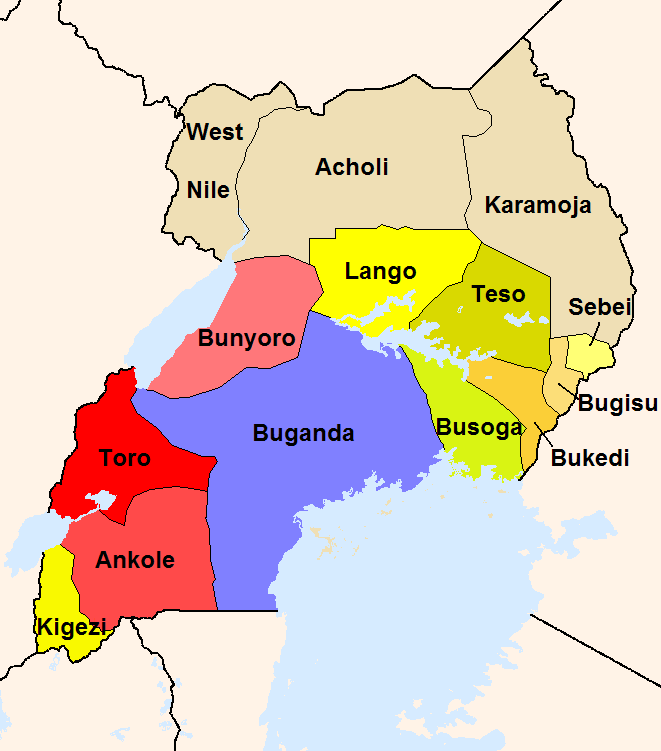
There is also the truism that the Uganda Constitution 1995, strictly directed by President Tibuhaburwa Museveni, then known as Yoweri Museveni, eliminated the words Kings and Kingdoms, reducing them to mere cultural institutions and heads of cultural institutions. The real kingdoms and kings in the past had political power, cultural power and spiritual power, all of which were distorted by the 1995 constitution.
The king was the epitome of political power. His kingdom had a cultural institution and a spiritual institution. The cultural leaders and spiritual leaders were linked to the political king, thereby determining the identity, belonging and influence of the Kingdom with the king as its political head. The king did not only make political decisions but also enforced them. Because this was the case, the Buganda Kingdom could size itself up to the British-made central government, which resulted in the King being exiled in the 1950s by the governor of the Uganda British Protectorate and in the 1960s by the UPC government.
Without political power, Kings cannot influence the political dynamics and events at the centre. However, the political power that be at the centre can use its influence to ensure that the cultural institutions, their culture and spirituality continue to decline. It can do this for example, the foreigners stand for elective office in the former kingdoms, grab land, which the basis of identity and belonging, and position foreign administrators therein such as Resident District Commissioners (RDCs), Resident District Commissioners (RDC) and Local Council Leaders to whom the 1995 Constitution transfered all political power at the grassroots, subcounty level and district level. Besides, the powers that be may from time to time create more and more constituencies and districts without consulting the cultural leaders, or even bring foreigners to exploit natural resources within the so-called cultural institution, also without consulting the cultural leaders. The cultural leaders may talk but without political influence.
In other words cultural institutions are not Kingdoms and have no political influence on anything. They are disempowered. To be empowered, it will need another national constitution that recognises Kingdoms and Kings the way the Uganda Constitution 1962 did.
If there are people who still mention Kings and Kingdoms they do so unconstitutionally and are committing treason?! Think about it.
For God and My Country.
This post was created with our nice and easy submission form. Create your post!
Written by
I am a retired lecturer of zoological and environmental sciences at Makerere University. I love writing and sharing information.
Did this story move you? Every gift goes directly to Oweyegha Afunaduula — writers on Muwado earn from reader appreciation, not algorithms. Even $1 makes a difference.




Muwado weekly chart
Get Africa’s top 10 stories every Thursday
No account needed — just your email.
Want to follow Oweyegha Afunaduula and get notified every time they publish?
Create a free Muwado account →