

 Yenze Theatre Conservatoire
While scrolling through social media, a video depicting what it means to be an artist came across the screen. Two wealthy-looking gentlemen greeted each other outside a museum and popped a bottle of champagne. They were labelled “art consumers”: clean, comfortable, and happy. Meanwhile, also outside the museum was a homeless person wrapped in an old duvet, without shoes, with unkempt hair, and a jar for pennies next to them. This person was labelled the artist.
Wava Theatre recently staged a play by Philip Luswata that recounts the trials of an artist in Uganda, from poor audience attendance and the agendas and demands of donors and funders, to the laments of family members who endure the artist’s lifestyle. At the show, the actors performed to a scattered audience. It was comical because one of the first lines of the play asks, “Where is the audience?” Another interesting aspect of the drama was that the protagonist, Adrian, eventually passed away after receiving yet another “whitepaper” of demands from donors telling him what to perform about. In this section of mourning, the artist finally receives funds; in his death, as condolence money and allowances for government officials to attend the funeral. A state funeral for a “valuable” artist. These were stark images and suggestions made by the play.
On a lighter note, the Theatre and Performing Arts Festival held at Bat Valley Theatre serves as a celebration of various Ugandan theatre groups coming together to tell authentically Ugandan stories. Festival Director Mariam Ndagire has shifted the focus away from the working-class audience and directed her vision toward the new generation. Their audience consisted of primary and secondary school children, entertained for little to no fee during a week of festivities. An admirable model, but is it sustainable?
As performing arts practitioners, we constantly find ourselves in the awkward position of justifying the purpose of art. The descriptive terms change year in and year out. In Shakespeare’s day, one could simply announce oneself as a composer or playwright, and kings would open doors for you. Then, artists were known for the higher institution of learning they hailed from and who their mentors were. These artists were given philosophical titles such as Thinker, Novelist, Poet Laureate, and so on, and when they spoke, the masses listened. They bought their books and flooded their theatre halls. Art and politics were synonymous. Creativity wasn’t some blurry career that paid you in death; it was a means of livelihood. Now, we have what is known as the creative and the creative economy, as if the two were ever separate. In fact, the wealth of a narrative has always hinged on the ability of the creative. Creativity drew the maps and built the ships that enabled the British Empire to conquer lands. Creativity coined the poetic words, “the pearl of Africa.” Creativity wrote the national anthem. Must artists now wrap their funding proposals in key trigger words like “creative economy, SDGs, impoverished, refugee, migration, women” simply to do art? Art was never meant to lie. In fact, in theatre, we say, the stage tells the truth even when it lies; it still tells the truth. It makes a spectacle of reality and causes us to pause and think.
It is humorous that during the COVID-19 lockdown, the arts were among the first sectors to be shut down as part of the non-essential workers, yet all that audiences could consume at home was entertainment. If not digitally, then family members resorted to their own creativity: knitting, dancing, reading, or practicing a new skill. The arts were the source of sanity in the long and tedious hours of the pandemic. However, recently a filmmaker narrated to me how, in their endeavor to record content in the national parks or uptown venue hotels, camera crews are often pushed aside by security guards to make room for formal sector workers. These are the same people who loudly ask filmmakers, “Why don’t you make films about us on Netflix? Why can’t you show the nice venues of Uganda? Why can’t you make a story about the indigenous people of Batwa?” The very people who lock us out with exorbitant fees, outdated attitudes toward the arts, and poor education are the same ones making overwhelming demands on what the performance sector should do.
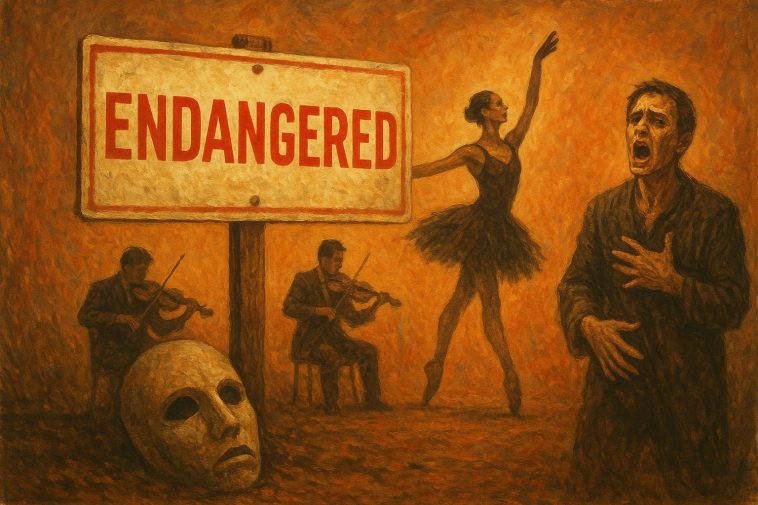
The performing arts are an endangered industry because, sometimes, it seems that something needs to be endangered before it is given its rightful attention. The performing arts in Uganda require conservation measures. This necessitates an appreciation of all performing art forms, not just musicians and filmmakers, but all. This requires deep evaluation and research into the extent of degradation and the impact of invasive “species” on the industry. The illegal hunting and poaching of the sector have prevented economic growth and wealth for practitioners. One immediate and easy method to save the industry is to physically attend and be in the audience. Actively consume our content. Otherwise, just like the protagonist who lost his life to the suffocating demands of invasive species in Philip Luswata’s play, we may also lose the vitality of the performing arts industry.
-Aganza Kisaka
President of Uganda Centre – International Theatre Institute.
Director of Yenze Theatre Conservatoire
This post was created with our nice and easy submission form. Create your post!

Written by
A performing arts enterprise enabling artists to thrive through Film/theatre productions, trainings and management.
Did this story move you? Every gift goes directly to Yenze Theatre Conservatoire — writers on Muwado earn from reader appreciation, not algorithms. Even $1 makes a difference.



Muwado weekly chart
Get Africa’s top 10 stories every Thursday
No account needed — just your email.
Want to follow Yenze Theatre Conservatoire and get notified every time they publish?
Create a free Muwado account →