

 Shadreck Chikoti
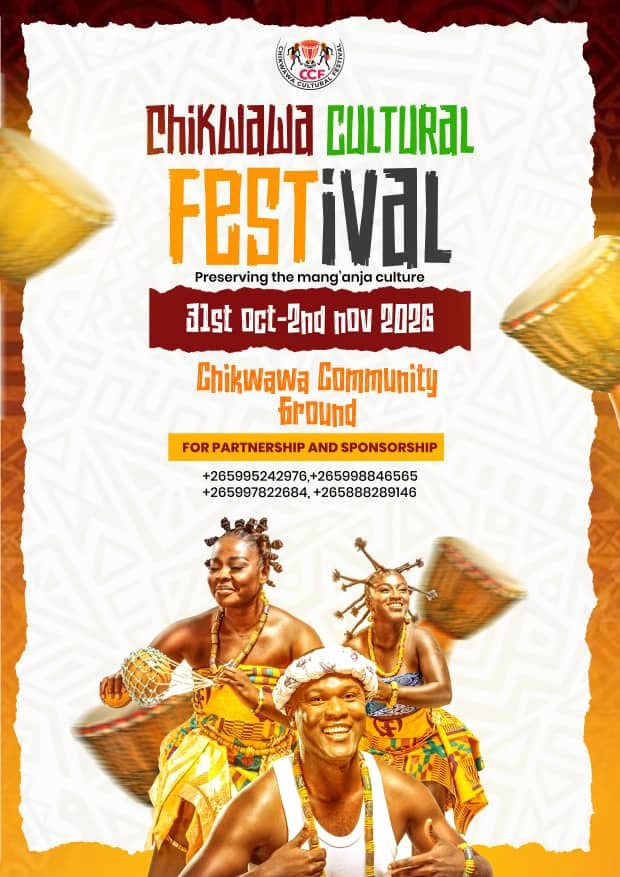
I have seen on social media, particularly Facebook, that there is a cultural festival in Chikwawa District whose objective is to celebrate Mang’anja culture. I hope that this festival will seriously excavate and examine the history of the Mang’anja people found in districts such as Nsanje, Chikwawa, Thyolo, Mulanje, and other areas.
The history of the Mang’anja cannot be truthful if it is filtered through politics, religion, or historical ignorance. Mang’anja history originates in Uluba, in present-day the Democratic Republic of Congo, and is also rooted in Kaphirimtiwa and Nsinja. Who are the Mang’anja? Where did they come from? What is the nature of their language?
The Mang’anja are seeds of the Maravi, descendants of Malawi, fruits of Kalonga, Makewana, and their great lineage. Among the most important figures in Mang’anja history are Lundu, Kamphwiti, M’bona and Kalonga.
Let us all journey to Nsinja in order to rediscover the Mang’anja.
According to the book Archaeology and Oral Tradition in Malawi, written by Yusuf Juwayeyi, Kaphwiti and Lundu were relatives. Kaphwiti was either Lundu’s elder brother or uncle. The two broke away from Kalonga, the king of the Maravi Kingdom, and migrated southward. Oral traditions provide different explanations for their departure. Some traditions suggest that disputes arose between them and Kalonga over evil magic and the administration of Mwavi. Mwavi was a medicinal ordeal used among the Maravi to identify criminals, witches, or practitioners of suspicious supernatural practices within communities. During the fifteenth century, tensions reportedly emerged between Kalonga and his younger relative Kaphwiti, as well as Lundu. It appears that the two disagreed with the use of Mwavi because many people died from the ordeal before.
At this point, the Maravi, who are today understood as Chewa, were based either at Kaphirimtiwa or Nsinja, two locations commonly debated by historians of Maravi history. It is also said that Kalonga himself instructed Kaphwiti to leave and establish his own kingdom elsewhere, though remaining subordinate to Kalonga and continuing to pay tribute, as other rulers under Maravi authority did.
Initially, Kaphwiti and Lundu settled along the Wankurumadzi River, a tributary of the Shire River in the Mwanza–Neno area. Their kingdom, particularly under Lundu, who became the stronger authority, expanded into present-day Thyolo, Mulanje, Nsanje, and Chikwawa. Oral traditions also suggest that when Lundu and Kaphwiti departed from Nsinja, they travelled with Mbona, who served as priest of the shrine and spiritual leader.
The peoples associated with Kaphwiti and Lundu settled in these regions for many generations before the arrival of later ethnic groups, including the Lomwe and the Sena, who are believed to have entered these territories approximately five centuries later. Lundu’s kingdom expanded considerably, extending into parts of present-day Mozambique. One important factor behind this expansion was the Zimba military force.
Today, some Mang’anja regard themselves as a distinct and separate ethnic identity. Yet historically, it may be more accurate to understand them as authentic Maravi, children of Kalonga.
The Mang’anja are generally peaceful people and communities willing to accommodate the customs, practices, and even languages of others. As different ethnic groups migrated into territories long occupied by the Mang’anja, they showed little resistance to learning new customs or adopting foreign linguistic practices.
An example of this appears in the autobiography of Gwanda Chakuamba, where he states: “I am Mang’anja by tribal progeny but a Sena by choice and passionate practice.” Such a statement demonstrates the fluidity of identity in the Lower Shire, where ancestry and cultural affiliation do not always perfectly align.
Consequently, it can sometimes be difficult to determine whether someone is Mang’anja or not. However, what often reveals Mang’anja, or broader Chewa/Maravi, heritage in southern Malawi are names and cultural practices. Names carry deep historical memory. They are inherited burdens of continuity, passed from one generation to another across centuries. A surname such as Phiri, for instance, did not begin with the present bearer but travelled through fathers, grandfathers, and distant ancestors.
The same principle applies to chiefly titles and kingdoms, particularly senior chiefs, traditional authorities, and paramount rulers. These institutions stretch back hundreds of years. This may explain why districts such as Nsanje, Chikwawa, Mwanza, Thyolo, and Mulanje contain many place names rooted in Mang’anja language and history: the Mang’anja were among the earliest settlers to establish authority there. Even district names such as Nsanje, Chikwawa (formerly Chinkhwawa), Mulanje, and Thyolo possess linguistic roots associated with Chimang’anja.
Therefore, I hope that as this festival celebrates Mang’anja culture, it will also remember Mang’anja history: that the Mang’anja are Maravi who carried the fire of Malawi from Uluba, travelling through forests, mountains, and rivers, enduring hunger, disease, danger, and wild animals, yet refusing to let that fire extinguish until it was rekindled at Mankhamba. Let the festival remember Kaphirimtiwa, from which Mbona spirituality and other traditions emerged. Let it remember the great chief Lundu, whose authority shaped the south. Let it also remember the Zimba, the feared military force that even the Portuguese dreaded, and which stood under Lundu’s authority.
Lundu initially served under Kalonga as a southern governor in the Lower Shire. But over time, Lundu accumulated power through trade, fertile lands, and spiritual legitimacy associated with Mbona shrines. By the late sixteenth century, he allied with the militarized Zimba, who fought Portuguese forces in the Zambezi region, strengthening his autonomy. This increasing power led to conflict with Kalonga Muzura, who around 1622 defeated Lundu and reasserted Maravi supremacy, although Lundu authority remained influential in the south.
This may partly explain why many Mang’anja communities in southern Malawi do not readily identify themselves as Chewa while in reality they are pure Chewa. Their kingdom exercised considerable autonomy, maintained its own military organization, and functioned at a distance from Kalonga’s direct authority, making practical independence a lived reality.
As we celebrate our diversity, we must also commit ourselves to the honest excavation of history. Those who fear their history, or alter it because of politics, self-interest, resentment, or discomfort with past realities, risk losing an honest future. We should never fear historical inquiry, even when it unsettles us, reveals failure, or exposes uncomfortable truths. History should not be bent like wire.
This post was created with our nice and easy submission form. Create your post!

Written by
Did this story move you? Every gift goes directly to Shadreck Chikoti — writers on Muwado earn from reader appreciation, not algorithms. Even $1 makes a difference.





Muwado weekly chart
Get Africa’s top 10 stories every Thursday
No account needed — just your email.
Want to follow Shadreck Chikoti and get notified every time they publish?
Create a free Muwado account →