

 Shadreck Chikoti

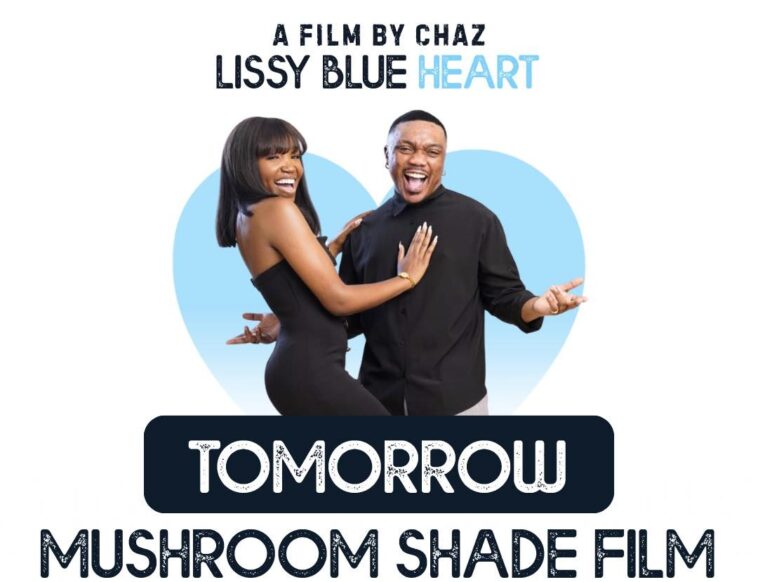
The premiere of Mushroom Shade, written by Chaz, at the Bingu International Convention Centre in Lilongwe on April 24, 2026, was a strong reminder that a film is more than just a story, it is a carefully crafted work of art. And in many ways, Mushroom Shade lives up to that standard. The storyteller laboured with skill to transform an ordinary story into something remarkable and unpredictable, which is a mark of a good storyteller.
At its heart, the film tells a familiar story, love found, love tested, and love lost. Two sisters, left alone after the death of their parents, try to build a life using the wealth they inherited. The younger sister, Lissy, finds herself caught between two very different men, Walezi, a humble taxi driver and aspiring app developer, and Mr. Banz, a wealthy businessman who offers comfort but not love. It is a storyline we have seen before, but the film often lifts it beyond cliché through thoughtful execution.
From the opening scene, the film immediately builds tension with confidence. Lissy and her boyfriend, along with friends, are in a gym working out. Lissy steps out to catch some fresh air. She leans by a pole close to the road. A posh car stops nearby, and we see the front window roll down. The passenger is obscured. We are then taken into the car, given the view of the passenger without seeing him. We become the observer, admiring the girl by the pole. Her body comes into view as we trace the contours she has been shaping in the gym. Then, just as this unfolds, the boyfriend emerges from the gym, wraps his arms around her, giving the man in the car a signal that she is taken. We step out of the vehicle with the camera to view it from a distance, only to see the window roll up as the car speeds off, its mission unaccomplished. This choice in perspective is deliberate and effective, showing the film’s strength in cinematography. Throughout the movie, the visuals feel purposeful, guiding the audience’s emotions rather than simply recording events.
The storytelling is also handled with care. The film does not follow a strictly linear path, instead, it builds its conflict gradually and sometimes unpredictably. This keeps the audience engaged, even if certain elements, like the use of flashbacks, are at times overdone.
The acting is one of the film’s strongest points. Most performances feel natural and believable, allowing the audience to connect with the characters. Tadala Chihana stands out in particular, delivering a performance that is both genuine and compelling, so is Cythia Zulu who played Lissy, Buci Mwale, who played Walezi, and Willian Phoya who played Fred. One of the most powerful scenes in the film, a conversation between Lissy and her would-be mother-in-law, Tadala Chihana, in a shopping mall, goes beyond the immediate story. It becomes a thoughtful discussion about love, timing, and the weight of personal choices. It is a moment that quietly defines the philosophy and direction of the story.
The proposal scene between Walezi and Lissy is another highlight. It is emotionally charged and well executed. Lissy’s decision to reject the proposal may seem uncertain at first, but it ultimately reflects something real, the need to be ready for love and commitment.
However, the film is not without its weaknesses. The introduction of Mr. Banz feels rushed, and his character is sometimes exaggerated, especially later in the film. This slightly reduces the realism of the story. Some plot points, particularly those involving business matters, also lack detail, which affects their credibility. Banz supposedly loaned money to Lissy’s father and, after the father’s death and the failure to repay the loan, goes through the courts to confiscate the company as repayment. This information is relayed to Lissy and her sister by their company lawyer, who appears abruptly. There are no documents shown, no rebuttals, and no evidence of the loan beyond the lawyer’s word. Given that this is a major premise on which the movie rests, it should have been developed further. One of the key elements of strong writing, especially in a visual medium, is believability. A film offers the opportunity to show rather than tell in order to convince the viewer. Yet this aspect of the movie is handled rather lightly, with no foreshadowing.
A number of side stories also do not add much to the main narrative. Characters like Fred and Yakosa appear suddenly and without proper development, making their presence feel unnecessary. Fred is an ex of Yakosa, appearing in a flashback as the sisters revisit their love stories. The scene adds very little to the film, removing it would not affect the overall narrative. However, such insertions are not uncommon, you might recall how Game of Thrones featured Ed Sheeran for a brief, somewhat distracting moment.
Similarly, Walezi’s friend plays a role in the app development storyline but is not fully explored. He is not fully rounded and often appears as a control in a kind of narrative experiment, contrasting Walezi at different levels. At the same time, he provides some of the lighter moments in the film. A story of this emotional weight benefits from such relief, and a good storyteller often creates a character to carry that balance.
The elder sister, played by Mwai Simbota, is another missed opportunity. She remains mostly passive and disconnected from the main conflicts, both emotional and practical. Her role could have been developed further to add depth to the story.
There are also scenes that feel unnecessary or overly extended. For example, the revisiting of Banz’s infidelity in great detail adds little new to the story and could have been shortened, as the audience has already witnessed the event. Some conversations, particularly between Lissy and her sister, also feel longer than necessary.
Despite these issues, Mushroom Shade holds the audience’s attention. The reactions during the premiere show just how engaging the film is.
Another area where the film truly excels is its use of music. Unlike many local productions, it understands the importance of a strong soundtrack. Songs like “Love is Crazy,” along with contributions from artists such as Tuno, Dali Ann, Sonyezo, Gwamba, and Bucci, are carefully placed and help deepen the emotional impact of key scenes.
On a different level, for those of us who read the film through a feminist lens, the story leans toward the misogynistic and the patriarchal. Why must the two girls rely on men to survive? Their father, a man, leaves behind the wealth that sustains them. Another man comes to take it away. The protagonist is then torn between two men who come to define her life, her happiness, and her future. Can she exist fully outside these structures? And when she declines a marriage proposal, must she be treated as though she has done something wrong, and be punished for it?
At one point, the narrative begins to resemble that of a so-called gold digger. Yet the film carefully complicates this reading, presenting the situation instead as something grounded in real life, where choices are rarely simple and survival often shapes desire
In the end, Mushroom Shade is not a perfect film, but it is an exciting and meaningful one. It combines strong performances, thoughtful cinematography, and moments of real emotional insight. While it leans on familiar themes, it tells its story with intention and care.
And that, perhaps, is what makes it worth watching. We give it an 8 out of 10.
This post was created with our nice and easy submission form. Create your post!

Written by
Did this story move you? Every gift goes directly to Shadreck Chikoti — writers on Muwado earn from reader appreciation, not algorithms. Even $1 makes a difference.





Muwado weekly chart
Get Africa’s top 10 stories every Thursday
No account needed — just your email.
Want to follow Shadreck Chikoti and get notified every time they publish?
Create a free Muwado account →