

 Oweyegha Afunaduula

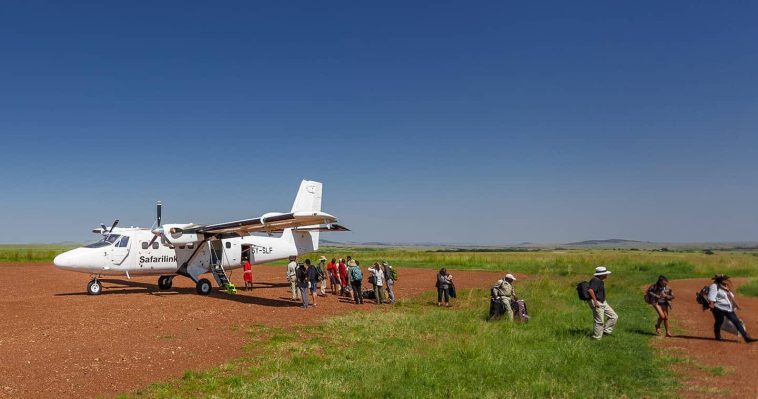
When in 1981 the coornator of The Biology of Conservation in the Zoology Department of the University of Nairobi, Dr Ian Deshmukh, told my First Year Masters group ( which consisted of Richard Bageine, Cicilia Gichuhi, Augustine Onyeungusi and myself) that he was taking us to Masai Mara Game Reserve, and that we would view that reserve from the air in a small aircraft, I was scared. I had travelled on the bigger planes of the East African Community’s East African Airways as a fisheries research officer. I was not sure moving on a small plane was as safe as moving on a big plane, although the possibility of crashes is common to all. Big planes had also crashed.
My colleagues, however, were overjoyed. I concluded that only Augustine Onyeungusi, who was from Nigeria had moved on planes, but the others had not got an opportunity to do so, which explained why they were excited.
I did not tell Dr. Deshmukh that I was somewhat reserved about an excursion on a small aircraft. We set off to Masai Mara in a Land Rover vehicle and the driver was Dr Deshmukh. It was a long way from Nairobi.
I prayed that God delivered us safely. Indeed we arrived safely. We spent 5 days doing ground surveys. On the 6th day Dr Deshmukh told us that we would spend time viewing the game reserves from the air. And that was it. We went to the Airstrip. The pilot was waiting for us in his small plane. We entered the plane. The pilot introduced himself to us and Dr Deshmuch introduced us to him. After the introductions, whose name has escaped my memory, started the engine of his aircraft. The plane started to taxi on the Airstrip and into the air it took us. It was scaring. Although I enjoyed what I saw: the ecological variety, numerous animals of different species, the vegetation types, etc, the thought of the aircraft crashing never stopped crossing my mind.
Honestly, I had not heard of small aircraft crashing. So it was an imagination of someone being prepared to be one of the very first conservation biologists in the whole world. It was a fear factor, which almost made me not concentrate on what I saw. Yet we were required to write a joint report of our scientific expedition, which had to be impressionable in the scientific world in general and in the conservation field in particular.
I was extremely happy when the small plane came down and we safely got out of it.
Years later, I learned that several small aircrafts crashed, killing people. I concluded that God was with us in Masai Mara when we safely went into the air and safely came down and moved out of it in 1981.
The latest crash of a small aircraft in Kenya occured in 27th October 2025 in Kwale County as the plane was either from or enroute to Masai Mara. 11 people, 10 of whom were tourists, perished.
Other crashes of small planes in Kenya include:
- The crash in August 2025 in Kwale County involving the death of 6 people
- The crash in July 2025 in Nairobi killing 6 people.
- The crash in January 2025 in Malindi killing 3 people.
- The crash in February 2019 in which US tourists perished.
- The crash 25 miles from the Abardares parts of Kinangop in June 2018. I do not have the number of people killed, if any.
- The crash of a Cessna 206 plane in July 2017. If was carrying journalists. I don’t have the number of victims.
This chronology of small planes in Kenya seems to suggest that travelling in small planes is more risky than travelling on the roads of that country. That is not true. There are far more crashes on the roads than there are crashes of small planes. Road fatalities rose by 5.2% from 4513 in 2023 to 4748 in 2024. Comparatively, the situation is worse in Uganda. In 2024 alone the country recorded 25107 road accidents – a 6.4% increase compared to other years. These resulted in 25808 casualties, up from 20728 in 2023. This might be due to a number of factors, including poor roads, indiscipline of drivers, consumption of drugs and corruption of the police in Uganda.
Therefore, my imagination of death in a small aircraft crash was far-fetched. Air travel remains far more safer than road travel. All the same, 44 years later I thank God that our excursion in Masai Mara did not result in the crash of our small aircraft. If it did, most likely I would not be alive today to tell you the story. In 1981 I was 32 years old. Today I am 76. Few these days live up to this age to tell their stories. I thank God for the privilege to be alive to narrate my story. My advice, however, is don’t imagine death. You may die before your time. Enjoy your flight and leave everything to God. All life belongs to God who has the plan for everyone.
This post was created with our nice and easy submission form. Create your post!

Written by
I am a retired lecturer of zoological and environmental sciences at Makerere University. I love writing and sharing information.
Did this story move you? Every gift goes directly to Oweyegha Afunaduula — writers on Muwado earn from reader appreciation, not algorithms. Even $1 makes a difference.




Muwado weekly chart
Get Africa’s top 10 stories every Thursday
No account needed — just your email.
Want to follow Oweyegha Afunaduula and get notified every time they publish?
Create a free Muwado account →