

 Tema Innocent

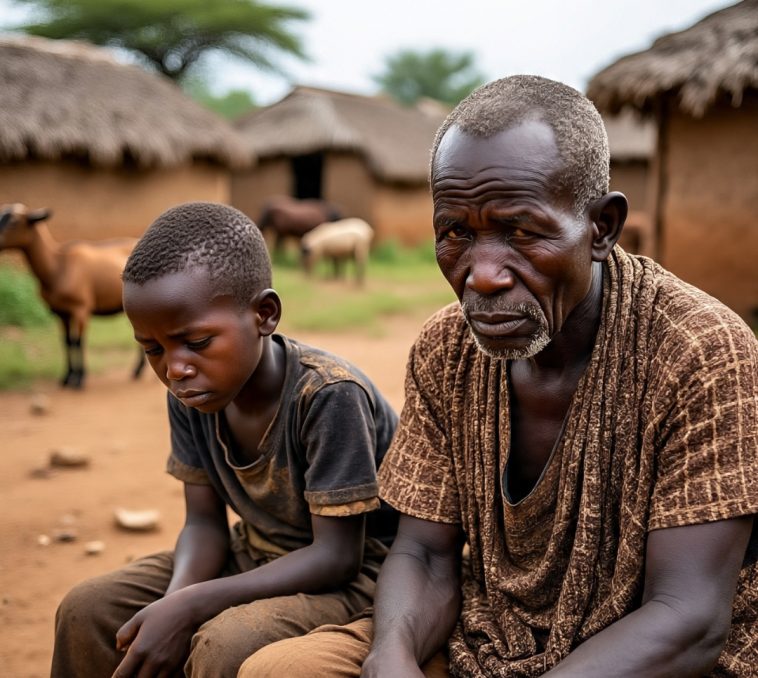
In the lush, sun-drenched hills of Maracha District, in a village called Ofude, lived an old farmer named Mzee Dramani. He was a man of quiet strength, known throughout the region for his generosity and wisdom. His compound was always open to the hungry, the tired, and the lost. But above all, he was known for raising a boy who was not his own — a spirited orphan named Ajua.
Ajua had lost his parents to a tragic road accident when he was just six. With no close relatives willing to take him in, it was Mzee Dramani who stepped forward. He gave Ajua a home, food, and more importantly, a sense of belonging. The villagers often said, “Ajua is Dramani’s son in spirit, if not in blood.”
From the age of ten, Ajua followed Dramani to the fields every morning. The old man taught him how to read the clouds, how to plant cassava just before the rains, and how to speak to the goats so they’d follow without a rope. Ajua was a quick learner, and by the time he turned twenty, he could manage the entire farm on his own.
But with age came restlessness.
Ajua began to feel that the village was too small for his dreams. He would sit under the mango tree at night, listening to the radio and imagining the bright lights of Kampala. He wanted more than goats and groundnuts — he wanted money, status, and the kind of life he saw in the music videos.
One day, a man named Kulea, a flashy trader from the city, arrived in Ovujo. He drove a shiny black car and wore sunglasses even when it rained. Kulea was looking for fertile land to buy and turn into a commercial farm. When he saw Dramani’s land — rich, green, and stretching beyond the hills — he knew he had found gold.
But Dramani refused to sell.
“This land has fed generations,” he told Kulea. “It is not for sale.”
Kulea, however, was not a man who took no for an answer. He turned to Ajua.
“You’re the one doing all the work,” he whispered. “Why should the old man keep everything? Help me get the land, and I’ll make you rich.”
Ajua hesitated. He owed Dramani everything. But greed is a slow poison — it seeps in quietly, clouding judgment. Within weeks, Ajua had forged documents and sold the land behind Dramani’s back. The deal was done in a hotel in Arua Town. Kulea handed Ajua a thick envelope of cash and drove off, leaving the young man with a suitcase and a one-way bus ticket to Kampala.
When Dramani found out, he didn’t shout. He didn’t curse. He simply packed his few belongings and moved into a small mud hut near the river, where he began fishing to survive.
Ajua, meanwhile, arrived in Kampala with dreams as tall as the Nakasero towers. But the city was not kind. The money vanished quickly — spent on rent, clothes, and fake friends. Kulea stopped answering his calls. Jobs were scarce, and Ajua, with no papers or connections, soon found himself sleeping on verandas and eating from dustbins.
Three years passed.
One rainy evening, barefoot and soaked, Ajua returned to Ovujo. The village had changed. The once-green fields were now fenced off, patrolled by guards. The land was no longer a home — it was a business.
He walked to the riverbank, where he found Dramani sitting on a stool, mending a fishing net.
“Mzee…” Ajua said, his voice trembling.
Dramani looked up slowly. His face was older, his hands thinner, but his eyes still held that quiet fire.
“I bit the hand that fed me,” Ajua whispered, falling to his knees.
There was silence, broken only by the sound of the river.
“Yes,” Dramani said at last. “And now you know how it feels to go hungry.”
Ajua wept. He wept for the betrayal, for the lost years, and for the man who had loved him like a son.
But Dramani, though hurt, was not a man of bitterness.
“Even a bitten hand can heal,” he said. “But healing takes time — and work.”
From that day, Ajua stayed by Dramani’s side. He helped him fish, rebuild the hut, and slowly, humbly, began to earn back the trust he had shattered. The villagers watched in silence, some forgiving, others skeptical.
Years later, when Kulea’s business collapsed and the land was abandoned, it was Ajua who led the effort to reclaim it. He did not put his name on the title. Instead, he registered it under a community trust — a gift to the people of Ovujo.
And every evening, as the sun dipped behind the hills, Ajua and Dramani would sit under the same mango tree, watching the goats return home.
Ajua had learned the hard way that betrayal brings ruin, but redemption — though slow — is always possible.
This post was created with our nice and easy submission form. Create your post!
Written by
A sports Journalist with RabSports Uganda, Advocate for Children’s Rights and Youths, Amazing Storyteller with DW Akademie and UNICEF, Independent Researcher, Student at Muni University
Did this story move you? Every gift goes directly to Tema Innocent — writers on Muwado earn from reader appreciation, not algorithms. Even $1 makes a difference.





Muwado weekly chart
Get Africa’s top 10 stories every Thursday
No account needed — just your email.
Want to follow Tema Innocent and get notified every time they publish?
Create a free Muwado account →