

 Patience Akumu Sunshine

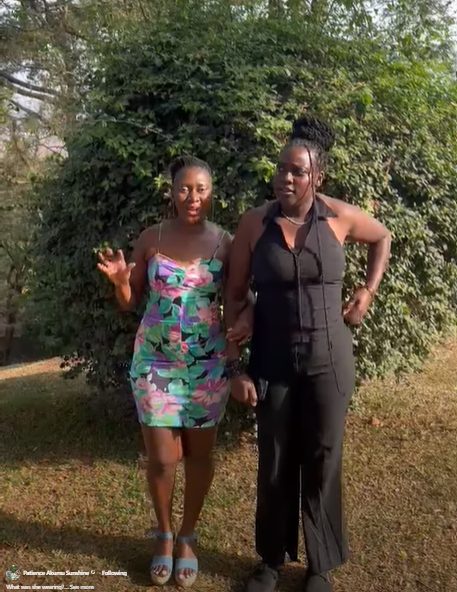
I went to visit my nephew at Comprehensive College Kitetika over the weekend. It was not my first time at this school that I used to consider progressive. No one used to check our hemlines or measure our hips at the gate. The students usually welcomed us, wholesome and happy. So, I was surprised when this time there was an army of two men and one woman just to check how sexy women are and decide whether or not they should be allowed in.
My niece Miracle and I were both stopped from entering the school. I posted about it on TikTok with a video of just me, because I knew my dress was the more audacious. I have spoken about the sexualization of women’s bodies in schools before and the conversation has always come down to sympathy and people saying, “Bambi you were not even indecent.”
This validation after being harassed and abused may feel good but it downplays the real issue: We should never go down the rat hole of asking what she was wearing and measuring unascertainable standards of decency. Well-meaning conversations that are a second judgment of whether or not a woman was decent enough to enter a school reinforce the idea that there are some situations where women are deserving of sexualization and abuse.
The seemingly benign question what is she wearing is the reason men malignantly abuse women without accountability. Rape. Murders. Physical abuse. Of babies in diapers. Of teenagers in uniform. Of women. In hijabs or miniskirts. The question is pulled out to silence and blame victims of abuse while establishing an unattainable standard of comformity that women are expected to aspire to for a chance at avoiding abuse from men.
But the reality is that every single woman in Uganda has experienced some form of physical or sexual abuse. Many female parents have quietly endured the demeaning school sexiness checks — forced to always carry the shield of a lesu to throw on without question the moment a man finds her too sexy.
Yet all the conforming in the world has failed to protect us. And the idea that there is a certain woman — covered up, silent, joining the rape choir at every chance to shame other women — that will escape patriarchy’s violence is a mirage that so many women are stuck chasing.
It is sad that Ugandans, including women who experience abuse everyday, believe that there is a particular type of woman that deserves abuse. And the version of me in the TikTok video calling out Comprehensive College and condemning the deep culture of sexualizing women in schools is the exact kind of woman.
This version of me on Tiktok could not possibly be a corporate woman who deserves to be heard. She was likely another baddie with an apartment in Kyanja who will one day be killed and the world will brush it off because she had so many men knocking at her door. My natural locs were to my audience the mark of a sex worker too broke to afford a straight wig or bleaching cream, and who must not complain because abuse is what she was created for.
The conversation on systematic abuse and sexualization of women in schools quickly descended into a beauty contest — because a woman must meet patriarchal standards of beauty before she expresses an opinion or speaks about her experience of abuse.
My makeup, worn unconcernedly over an eczema flare, became the center of conversation in a space used to filters. Was I poor? Why did I use cheap makeup? In many instances, I was called ugly and a whore. Some said I was a man. In one instance, I was called a monkey.
The chorus of the rape choir rang strong: Women like me, who likely rides on a bodaboda and spends her time in lodges servicing men, must accept all the abuse she attracts. Emboldened, Comprehensive College Kitetika came to my post and thanked me for advertising their school for them.
This intellectual institution was not interested in a conversation on what it means to enforce school rules that communicate to boys that they cannot control themselves in the presence of women and tells girls it is their responsibility to tame their sexiness and make men comfortable. After all, Ugandans openly expressed that this is the type of school, where rape culture is sowed early and effectively, they want.
And so it is that what is she wearing is a question that continues to be asked at the gates of Ugandan schools. The standards shift according to the moral campus of the measurers of hips and pubis outlines. Some schools pretend that men, too, are subject to these rules.
Others, like Comprehensive College, wave men in with a smile while asking women to fall in line to be checked. Pictures of women in various forms of clothing deemed indecent are proudly pinned at the entrance of these schools to warn off the immoral women intent on destructing little boys.
Women in field jeans on their way to work. Women in corporate suits. Women in ordinary summer dresses…. have been stopped at these gates as Ugandans comply and defend the schools and make sure rape culture lives on for generations.What was she wearing is a conversation that burns on as people forward the video featuring the woman who looks like the exact woman who deserves abuse complaining. The hate got my head pounding in shock and calling my sister-in-law, Vennie.
We spoke about how what was she wearing is the reason women get raped and never speak up. Rape victims have described it as feeling like they were the ones on trial. Like they are being raped twice.
Rape culture is strong. The defenders of rapists and abusers are loud. The women’s movement is exhausted and under-resourced. It is tempting to let the refrain of rape culture in schools and online go on unabated. To give up on civilized conversation and countering misogyny. In fact, I want to go back to sleep as I type this. And call on my privilege to block out a world that trivializes and normalizes women’s abuse.
But the 800 plus likes on the TikTok video, the people stamping it with the favourites mark… the call from my niece saying her young friends think it is cool that someone is speaking up. The visit from my neighbor who retells the story of our mutual friend whose rape as a child froze her every aspiration reminds me that we must keep hope and the conversation going.
And vile, muddy, misogynistic spaces like TikTok are exactly where we should tussle it out until one day the question what was she wearing ceases to be of the essence. It is exhausting but necessary.
This post was created with our nice and easy submission form. Create your post!

Written by
Award-winning journalist. Lawyer. Unapologetic feminist. Telling stories of food, of life...
Did this story move you? Every gift goes directly to Patience Akumu Sunshine — writers on Muwado earn from reader appreciation, not algorithms. Even $1 makes a difference.






Muwado weekly chart
Get Africa’s top 10 stories every Thursday
No account needed — just your email.
Want to follow Patience Akumu Sunshine and get notified every time they publish?
Create a free Muwado account →