

 Ochieng Umira
The most important African film released recently may not have been a feature film at all.
It may have been a comedy sketch about public transport.
Crazy Kennar’s viral Public Transport in Different African Cities has been celebrated for its humor, but I think we are laughing at the wrong thing. The skit is not really about matatus, bodabodas, buses, or danfos. It is about recognition.
It reveals something many filmmakers still misunderstand: the algorithm is not a mysterious machine deciding who becomes visible. It is a mirror reflecting how deeply a creator understands the audience.
For years, we have treated social media algorithms as a black box. We chase trending audio, editing tricks, hashtags, and posting times. Kennar’s transport series suggests something far more important.
He is not creating content for the algorithm.
He is creating content for recognition.
In Nairobi, the nganya is not just a matatu. It is a moving archive of Kenyan youth culture: loud music, graffiti, slang, speed, and performance. Every Kenyan who has negotiated fares or listened to a conductor invent new prices instantly recognizes the world he is portraying.

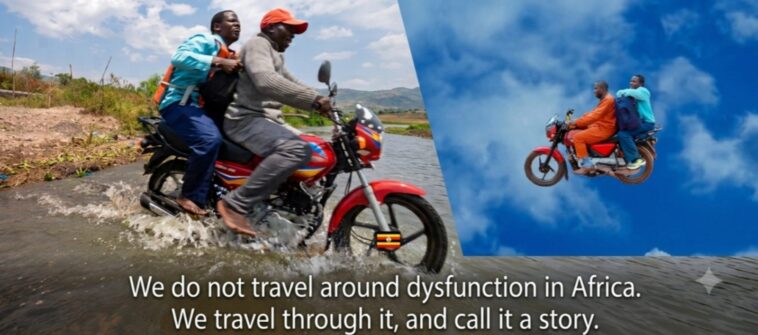
In Uganda, the bodaboda rider becomes the embodiment of hustle culture. The joke that a rider can take you anywhere, even across a lake, works because it exaggerates a truth Kampala audiences already know: mobility is improvisation.
In Rwanda, order replaces chaos. In Nigeria, transport becomes a choreography of overload, negotiation, and survival.
Different countries. Different transport systems. Different comic rhythms.
What stays constant is the underlying structure: a system that does not quite work, and a person improvising their way through it anyway.
That is why the sketch travelled across Kenya, Uganda, Rwanda, Nigeria, and the wider African diaspora.
The algorithm did not make it successful.
Audience recognition made it algorithmically visible.
Platforms reward watch time, shares, comments, and rewatches. Those behaviors happen when people feel seen. The first three seconds matter because the audience immediately recognizes itself.
This is where many filmmakers make a wrong turn.
We often ask, What does the algorithm want?
The better question is, Who is this film for?
The obsession with pleasing platforms has made many creators forget the discipline of reading an audience with almost anthropological precision. Kennar understands their frustrations, slang, rhythms, public spaces, and emotional shortcuts.
The algorithm simply measures whether that connection exists.
What fascinates me most is that these transport sketches are actually stories about infrastructure, economics, and resilience.
Transport in Africa is never just transport.
It is the daily negotiation between mismanaged public resources and extraordinary human adaptability.
It is conductors, drivers, hawkers, riders, and commuters inventing ways to put food on the table.
It is delay transformed into humor.
It is exhaustion transformed into performance.
This is what I call the philosophy of the wrong turn.
In Hollywood, the wrong turn usually leads into a forest.
In Africa, it often leads into a transport system: a matatu that changes its fare halfway through the journey, a bus that breaks down, a bodaboda that appears from nowhere, or a queue that becomes a marketplace.
These are not interruptions to African life.
They are part of its narrative structure.
What Kennar has done is transform these everyday wrong turns into entertainment without creating ethnic or national bias. The object of laughter is not a people. It is a condition, and that difference matters.
For film and media scholars, this challenges a long-standing assumption that local specificity limits reach.
The opposite may be true.
The more deeply a story understands a particular audience, the more widely it can travel.
A Kenyan nganya can become a Pan-African text because Nigerians, Ugandans, and Rwandans recognize the underlying emotional structure: uncertainty, negotiation, resilience, and humor in the face of dysfunction.
That is why short-form comedy is becoming one of the most important research laboratories for African cinema. These creators are testing characters, pacing, language, and cultural symbols in real time. They are discovering what audiences recognize before investing in longer forms.
Africa does not suffer from a shortage of stories.
It suffers from a shortage of audience attention.
And audience attention is earned through recognition, not abstraction.
Perhaps the future of African cinema will not be decided by the platforms that distribute our stories, but by the audiences whose daily wrong turns have already written them.
The algorithm is not asking whether our films are African.
It is asking a more difficult question: do Africans recognize themselves in them?
Every city has its own version of Kennar’s wrong turn, the local absurdity that would make people from your streets laugh on sight and leave outsiders confused. Scholars and creators here will have watched it happen in different registers, from campus film screenings to comment sections. What is yours, and did the algorithm ever catch up to it?
This post was created with our nice and easy submission form. Create your post!

Written by
I am a film scholar and educator investigating the convergence of digital technology, media policy, and creative economics in Africa
Did this story move you? Every gift goes directly to Ochieng Umira — writers on Muwado earn from reader appreciation, not algorithms. Even $1 makes a difference.






Muwado weekly chart
Get Africa’s top 10 stories every Thursday
No account needed — just your email.
Want to follow Ochieng Umira and get notified every time they publish?
Create a free Muwado account →