

 Ulokcwinyu Ubia

Until I realized that power is not about age. Power is about character. And sometimes, we are not as different from the adults we criticized as we thought we were.
We grew up pointing fingers at the old guard. We said they were slow. They were stuck in their ways. They loved paperwork more than people. They spoke in long meetings that could have been emails. We promised ourselves that when our time came, we would do better. Faster. Fairer. Kinder.
But power has a way of revealing who we really are, not who we said we would be on Twitter or when we were requesting for that vote.
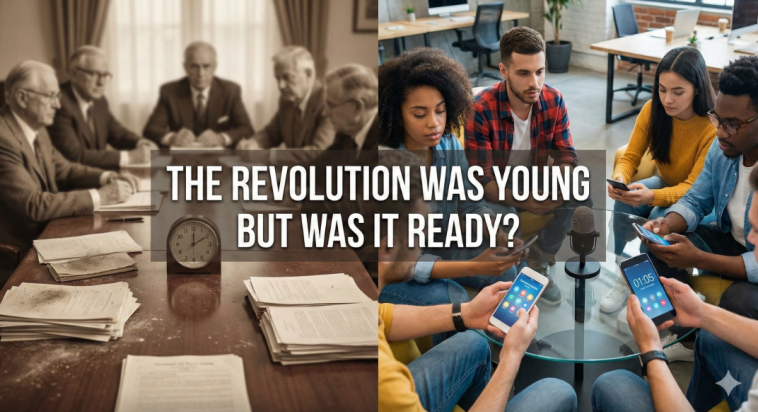
I have worked with young people in leadership spaces, and sometimes I sit and wonder. Are we actually ready for the power we are demanding so loudly? Or are we just excited about holding the microphone without understanding what to do with the sound? Because somehow, we have started creating our own versions of bureaucracy. The same system we complained about. Only this time, it is wrapped in youthful energy and very strong WhatsApp typing indicators.
Young leaders want to lead on vibes and insha’Allah? You send a message at 3 am like, “Hey, quick question,” as if people do not have lives, sleep cycles, or emotional stability. Then you expect responses at the speed of Wi-Fi in a five-star hotel. You want urgency from others but respond like you are still thinking about it spiritually.
And don’t even get me started on internal communication.
Why do I have to send an email to you… so that you can forward it to someone else… so that they can forward it to another person… Who will then ask me to summarize what I said in the email I already sent? At that point, are we communicating or are we just building a very elaborate game of telephone in the name of leadership structure? It is as simple as sending an email and copying in everyone who needs to know. But no, we have created approval chains that make you feel like you are applying for a passport to your own idea.
Maybe, just maybe, we were not raised in homes where people listened to us enough. Maybe we are now trying to overcorrect by creating systems where everyone must pass through us before anything can move. Maybe it is not even the power we want. Maybe it is attention. Maybe it is validation. Maybe it is the quiet childhood voice inside us saying, “Please notice me when I speak.”
Because leadership is not just about replacing the old generation. It is about refusing to inherit their bad habits.
At the intergenerational dialogue over the weekend, Hon. Winnie Kiiza shared a story that stayed with me. She said she used to dislike older women when she was young. She did not like how they acted, how they spoke, how they carried themselves. But time has a funny way of teaching us humility. She grew older. And suddenly, she understood those women (the story goes beyond this).
That story sat with me because it is the circle of life we keep ignoring. Today we criticize the elders. Tomorrow we are the elders we complained about, sitting somewhere wondering why the younger generation is rolling their eyes at us.
The question is not whether young people should take power. We should. We must. The question is whether we are ready to carry power with responsibility, patience, and emotional intelligence. Not just enthusiasm and revolutionary slogans.
Because being young is not a leadership qualification. Being young and disciplined is. Being young and respectful of systems while also improving them is. Being young and understanding that change is slow, even when your heart is running fast, is.
Otherwise, we will just keep fighting the same battles, just with younger faces and louder voices.
And honestly? That would be very disappointing. Because we did not fight the old system just to become a better-dressed version of it. An old android phone with a new flashy phone cover.
And before anyone starts writing angry comments thinking this is a defense of the old guard. It is not. The old system failed us in many ways. That is why we are here. That is why we are speaking. That is why young people are stepping into leadership spaces. But replacing one broken system with a younger, louder, more impatient version of it is not revolution. It is recycling dysfunction with better lighting.
Maybe we can start by learning that leadership is not a performance stage. Not every decision needs to look good on Instagram before it is good for people. Not every meeting needs to feel like a political campaign rally where we are trying to prove how powerful, busy, or important we are.
Maybe young leaders can learn patience. Not passive patience. Strategic patience. The kind that understands that systems move slowly, but they still move when pressure is applied consistently and intelligently.
Maybe we can learn transparency. If you are leading a team, communicate clearly. Stop creating mystery around simple decisions just to feel important. People do not respect leaders who make them guess. They respect leaders who make them understand.
Maybe we can learn humility. You do not have to be the smartest person in every room. Sometimes leadership is knowing when to listen more than you speak. Sometimes it is knowing when to step back so others can step forward.
Maybe we can learn emotional intelligence. Not every disagreement is an attack on your authority. Not every question is rebellion. Sometimes people are just trying to understand where we are going because, believe it or not, they are also carrying the weight of the future with us.
Young people could also build systems that outlive them. Not systems that revolve around one charismatic personality, one WhatsApp group administrator, or one person who must approve every idea before it breathes. Build institutions. Build processes that work even when you are tired, busy, or no longer in the position. Because real power is not being the loudest voice in the room. Real power is creating environments where more voices can speak without fear.
So yes, young people should take power. But let us take it with intention, with discipline, with kindness, and with the memory that one day, if we are lucky, we will also grow older. And when that day comes, I hope we will not become the kind of adults we once criticized without understanding why they became that way. Because like Hon. Winnie Kiiza’s story reminded us, life has a way of humbling us. One day you are laughing at older women. The next day you are becoming them, hoping the young ones will be kinder to you than you were to the generation before you.
@UlokcwinyuUbia.
This post was created with our nice and easy submission form. Create your post!

Did this story move you? Every gift goes directly to Ulokcwinyu Ubia — writers on Muwado earn from reader appreciation, not algorithms. Even $1 makes a difference.






Muwado weekly chart
Get Africa’s top 10 stories every Thursday
No account needed — just your email.
Want to follow Ulokcwinyu Ubia and get notified every time they publish?
Create a free Muwado account →