

 Oweyegha Afunaduula

Introduction
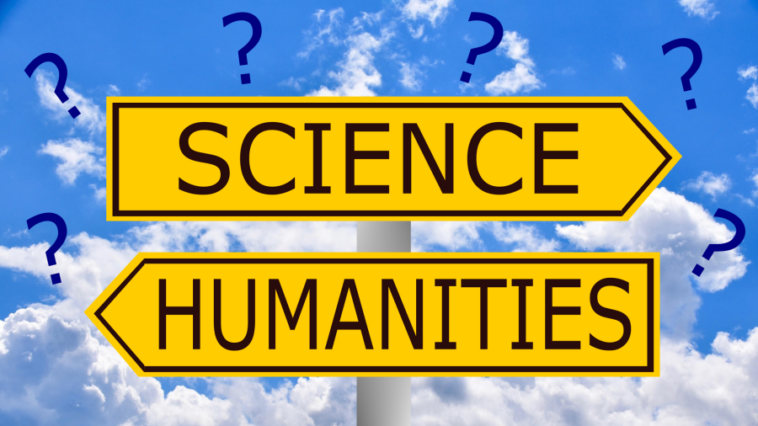
The 21st century, now a quarter complete, is increasingly defined by its unprecedented complexities, its wicked problems, and the meteoric rise of artificial intelligence. In this volatile landscape, a dangerous and pervasive ideology has taken root in higher education and public policy across the globe: the systematic devaluation of the arts, humanities, and social sciences in favour of an uncritical embrace of a narrowly defined, positivist science. This is the ideology of scientism, the philosophical conviction in the “epistemic superiority of science and its right to impose its methods onto the territory of the humanities” (Connelly, 2025). The consequences, as we have witnessed, are the hollowing out of core departments, a relentless pressure to align all research with immediate market demands, and a profound intellectual and moral impoverishment of our universities.
In this manifesto, written in the spirit of constructing a new future for higher education, I issue a clarion call. I defend the intrinsic and instrumental values of the arts, social sciences, and philosophy as indispensable guardians of our humanity. I champion the “team sciences”—interdisciplinarity, crossdisciplinarity, transdisciplinarity, and extradisciplinarity—as the only legitimate knowledge production framework for our interconnected, digitally dense, and crisis-prone era. We must move decisively beyond the exhausted paradigms of disciplinary and multidisciplinary work, which reflect a fragmented and colonial past, and embrace collaborative modes that are democratic, integrative, and future-ready. This is the only way to build institutions—true interversities, crossversities, transversities, and extraversities—fit for the remainder of this century and beyond.
1. De-intellectualisation and the Tyranny of Scientism
The precipitous decline of the humanities is not a neutral, market-driven process. It is an “active, policy-driven dismantling,” creating vast “cold spots” where the tools of critical thought are becoming a luxury for the elite (Piotrowska, 2026). This dismantling is rationalised by scientistic thinking: the belief that only questions framed and answered by the natural sciences are valid, and that knowledge generated by the arts and social sciences is, at best, decorative. This ideological narrowing is profoundly anti-intellectual.
De-intellectualisation is the direct outcome of this tyranny. An academic environment that spurns critical, philosophical, historical, and cultural analysis produces graduates who are skilled technicians but impoverished thinkers. They may be able to operate complex software but lack the wisdom to question its ethical deployment. They have been de-intellectualised—stripped of the conceptual tools necessary for human judgment. Even UNESCO warns that the uncritical embrace of AI risks a “new kind of digital colonization—where values embedded in Western-built models spread globally, erasing cultural diversity” (Feijó, 2026). Without the humanities, we are left defenceless against such ideological capture, unable to interpret the cultural or psychological fallout of an algorithmic society.
2. The Enduring Values of the Arts, Social Sciences, and Philosophy
Against the steamroller of scientism, we must reassert the unique and vital functions of humanistic and philosophical inquiry.
The arts preserve the multi-faceted nature of human experience. As Pope Leo XIV recently articulated, safeguarding art and human expression in the age of AI is “neither a nostalgic nor a defensive gesture,” but a way of affirming that a person cannot be understood solely through data. The arts cultivate empathy, ambiguity, and tolerance for multiple interpretations—precisely the capacities being eroded by algorithmic simplification.
The social sciences are our primary diagnostic tools for societal well-being. They provide the empirical frameworks to analyse inequality, power, group behaviour, development, and cultural change. In a continent like Africa, the project of decolonising knowledge structures, as promoted at colloquiums across South Africa, is an urgent critical social scientific one, “involving questioning colonialism’s deep-rooted impacts on the way knowledge is produced and shared” (Motsamai, 2025). Without robust social science research, we are not navigating the future; we are flying blind.
Philosophy is the guardian of critical thinking and epistemological integrity. In an age where AI systems can generate convincing but potentially false or biased outputs, the ability to engage in rigorous reasoning, logical analysis, and ethical deliberation is a survival skill. As experts argue, the arrival of AI in classrooms has prompted not just a panic but a “philosophical reckoning” for higher education (Kuchi & Singh, 2025). Philosophy provides us with the tools to evaluate the very claims of knowledge, to challenge the ideological presuppositions embedded in our technologies, and to defend a vision of the good life that cannot be reduced to metrics of efficiency or profit. Without philosophy, our critiques of power will be weak, and our knowledge will indeed become stale.
3. The Team Sciences: From Siloed Disciplines to Democratic Convergence
While the arts and philosophy provide the ethical compass, how do we generate the actionable knowledge to solve our most intractable, wicked problems—from climate change to pandemics to systemic poverty? The answer is unequivocally the team sciences. The disciplinary model, with its rigid boundaries and specialised jargon, was never designed for problems that are inherently complex and cross-cutting. Multidisciplinarity, where researchers from different fields work in parallel without genuine integration, is only a marginal improvement.
True convergence requires what scholars call transdisciplinarity and convergence research, which “integrates diverse epistemologies, methodologies, and expertise” to tackle wicked problems (Devine et al., 2025). It requires moving beyond simple data-sharing to an epistemological convergence where different ways of knowing are treated as complementary. For example, to address the threat of deforestation, a team science approach must integrate the ecological-biological dimensions (tree cover data, species loss), the socioeconomic factors (land markets, poverty, primitive accumulation), the sociocultural practices of local communities, and the temporal dimension—a fourth environmental frame I have long identified as essential for understanding the dynamics of change over time.
Take the Mabira Rain Forest in Uganda. This vital ecosystem is currently threatened not by any single cause, but by a toxic confluence of the sterile money culture, primitive accumulation, consumerism, militarism, and bad governance. A disciplinary forester might count tree species. A multidisciplinary team might add an economist and a security officer working in parallel. But only a team science (transdisciplinary and extra-disciplinary) approach can bring together ecologists, political economists, cultural anthropologists, historians, peace and conflict scholars, and local community knowledge holders to understand how global consumer demand, local elite accumulation, and militarised land grabs interact dynamically over time. Without such integration, any conservation intervention will fail.
Similarly, the Amazon Rainforest—where illegal logging, drug trafficking, indigenous land rights, and climate feedback loops are inseparably linked—demands the same team science response. In both forests, the problems resist disciplinary and multidisciplinary workers. They require the democratic, integrative power of the team sciences.
The team sciences are, in essence, the sciences of the future for several reasons:
·They are democratic and integrative: They refuse to oppress the weak or exclude the vulnerable. Instead, they create structures for diverse voices—from academic experts to community practitioners—to shape the research process and outcomes. This is essential for epistemic justice and for building knowledge that is legitimate and actionable.· They are inherently interdisciplinary and data-native: The future is digital. AI and complex data handling will not respect departmental divisions. The team sciences, particularly through frameworks like extradisciplinarity, are designed to work fluidly beyond all traditional boundaries. This makes them perfectly suited to generate the kind of sophisticated, multivariate analyses we need, building on the multivariate methods I have previously advocated for Ugandan knowledge workers. Univariate thinking is obsolete.· They champion teamwork over individual genius: The solitary, slow-thinking “slow professor” locked in a disciplinary silo is a relic of the past. Team science prepares us for workplaces where collaborative problem-solving is the only pathway to innovation and impact. They produce future-ready professionals, not intellectually isolated hermits.· They do not devalue intellectual production: By integrating philosophical, artistic, and social scientific insights alongside technical knowledge, the team sciences prevent the intellectual death that consummates individuals, communities, and entire countries when narrow, technocratic thinking reigns unchallenged.
4. Conclusion: Building the Interversity, Crossversity, Transversity, and Extraversity
The current model of the university, structured around disciplinary fiefdoms and an outdated priesthood of professors, is fundamentally incapable of delivering the knowledge our world requires. We must therefore begin the arduous, creative work of building new institutions or radically transforming old ones. I propose we start by shifting our conceptual vocabulary.
We must move from the traditional, inward-looking university to the concept of the interversity—an institution built first and foremost on the principle of deep, integrated collaboration across all fields. From there, we move to the crossversity, where the boundaries between university, industry, government, and civil society become porous and permeable. This evolves into the transversity, where these spheres begin to function as a single, integrated learning system addressing shared challenges. And finally, we arrive at the extraversity, an entity whose mission is explicitly to generate knowledge for and with the world outside itself—truly boundaryless, democratic, and of, by, and for the people.
This is the challenge for the remaining 74 years of this century. It will require courage from us, the academics, to abandon our comfortable silos. It will require resources and trust from policymakers to fund genuine, risky interdisciplinary work over safe, traditional research. But most of all, it will require a philosophical and political victory over scientism, and the reaffirmation of the arts, social sciences, and philosophy as the very soul of higher education. Let us begin this work now.
—
References
- Chaparian, S. (2025). Breaking Silos: Promoting Systems Thinking Through Multi-Sector Environmental Education Partnerships. In Proceedings of the 19th International Conference of the Learning Sciences (ICLS 2025), 1943-1947.
- Connelly, J. M. (2025). Scientism and the epistemic superiority of science. Publications, PhilPeople.
- Devine, J. A., Magliocca, N. R., McSweeney, K., Tellman, B., Fagan, M., Sesnie, S. E., & Nielsen, E. (2025). A convergence research approach to resolving ‘wicked problems’. Applied Geography, 177, 103538.
- Feijó, D. (2026). Anthropology and technology: Safeguarding the human in the age of artificial intelligence. Universidad Austral.
- Kuchi, S., & Singh, S. (2025). Philosophy returned to centre: Why the AI age demands humanistic education. Economic Times Education.
- Motsamai, G. (2025). Colloquium reimagines the future of humanities knowledge and pedagogy. North-West University News.
- Piotrowska, A. (2026). Humanities cuts leave us defenceless in the age of AI. Times Higher Education.
- Zambrano, F. (2025). LLMs and the increasing role of the humanities in the digital age. AI & SOCIETY.
This post was created with our nice and easy submission form. Create your post!

Written by
I am a retired lecturer of zoological and environmental sciences at Makerere University. I love writing and sharing information.
Did this story move you? Every gift goes directly to Oweyegha Afunaduula — writers on Muwado earn from reader appreciation, not algorithms. Even $1 makes a difference.





Muwado weekly chart
Get Africa’s top 10 stories every Thursday
No account needed — just your email.
Want to follow Oweyegha Afunaduula and get notified every time they publish?
Create a free Muwado account →