

 Asha Mirriam
Yesterday, my Human Rights Law lecturer was talking about the Maputo Protocol, Africa’s regional framework for protecting women’s rights. As he discussed human rights in international relations, he said Uganda should be an example.
I immediately thought about Congo.
It felt strange sitting in a classroom discussing laws meant to protect African women while, a few borders away, women are enduring unimaginable violence. I found myself wondering: what is the value of these laws if women cannot experience the rights they promise?
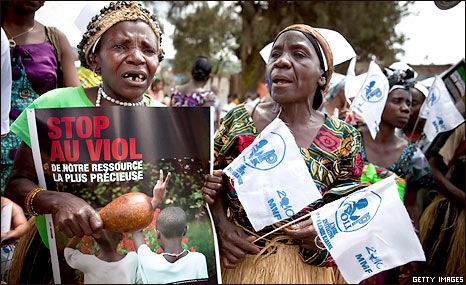
The Democratic Republic of Congo has endured decades of conflict, but the crisis is far from over. In eastern DRC, sexual violence continues to be used against women and girls. More than one million women and girls have experienced sexual violence, and recent reports have documented tens of thousands of cases. The actual number is believed to be much higher because so many survivors never report their experiences.
Then there is Furaha.In 2022, Congolese women’s rights activist Julienne Lusenge told the UN Security Council about her. Furaha had gone to deliver a ransom for a kidnapped family member. Her family had raised the money by pawning their land.
According to Lusenge’s testimony, Furaha was kidnapped, raped and subjected to horrific abuse. She and other captives were allegedly forced to cook and eat human flesh after militants killed a man. She was later captured again, repeatedly raped and held as a sex slave. When she finally escaped and returned home, she discovered that the family member whose ransom she had tried to deliver had already been killed.
I had to pause when I read that.Because Furaha is not a statistic.She is a woman who was trying to save someone she loved.And her story is only one among thousands.
In 2026, the situation remains devastating. Human Rights Watch has reported a surge in conflict-related sexual violence in eastern Congo. At Panzi Hospital in South Kivu, newly reported survivors increased by 85% in the first six months of 2026 compared with the same period the previous year.
And yet, where is the outrage?That is what saddens me.
We live in an age where a story can reach millions of people within minutes. We know what is happening in distant countries almost as it happens. Yet Congo often disappears from the news cycle until the violence becomes impossible to ignore.
The women do not disappear with the headlines.The survivors remain.The displaced remain.The war remains.
And this brings me back to the Maputo Protocol.
The Democratic Republic of Congo ratified it in 2008. Under Article 4, States are required to protect women from violence and take measures to prevent and punish it. The Protocol recognises women’s rights to dignity, health and freedom from violence.
So Congo has made legal commitments.But a right written in a treaty means very little to a woman who cannot access protection, healthcare or justice.
This is the uncomfortable truth about human rights law: ratification is not the same as implementation.A woman does not experience the Maputo Protocol as a legal document.She experiences it through whether she survives.
Whether she receives treatment.
Whether she can return home.
Whether her children are safe.
Whether the person who attacked her is ever held accountable.
That is where human rights law should matter most.Yesterday, my lecturer spoke about Uganda being an example in human rights and international relations.
Today, I am thinking about Congo.I am thinking about Furaha.I am thinking about the women whose names we will never know.And I am thinking about how easily their suffering disappears beneath the next headline.
I am not asking the world to solve Congo through awareness alone. I am asking us not to become comfortable with its suffering.
Because Congo is not an old crisis.It is happening now.And I fear we have not forgotten Congo because we do not know what is happening.
I fear we have forgotten because we have known for too long.
This post was created with our nice and easy submission form. Create your post!

Written by
Asha Mirriam is a creative writer passionate about African story telling, social justice and emotionally rich narratives
Did this story move you? Every gift goes directly to Asha Mirriam — writers on Muwado earn from reader appreciation, not algorithms. Even $1 makes a difference.





Muwado weekly chart
Get Africa’s top 10 stories every Thursday
No account needed — just your email.
Want to follow Asha Mirriam and get notified every time they publish?
Create a free Muwado account →