

 Oweyegha Afunaduula
ABSTRACT
This article examines the philosophical foundations and empirical violations of biotic rights—the inherent rights of non-human species and ecosystems—within the Ugandan context. Drawing from ecocentric philosophy, Earth jurisprudence, and the author’s five decades of ecological observation, the article argues that the dominant anthropocentric paradigm, codified in Uganda’s legal and economic systems, systematically subordinates the rights of other species and ecosystems to narrow human economic interests. Through detailed examination of specific violations—including forest giveaway, oil palm expansion, eucalyptus monocultures, wetland destruction, and pollution—the article demonstrates that Uganda is experiencing an unprecedented biotic rights crisis. The article concludes that genuine environmental justice requires rejecting the false dichotomy between human rights and biotic rights, recognizing instead their fundamental interconnectedness within a single moral and ecological community.
—
1.0 INTRODUCTION
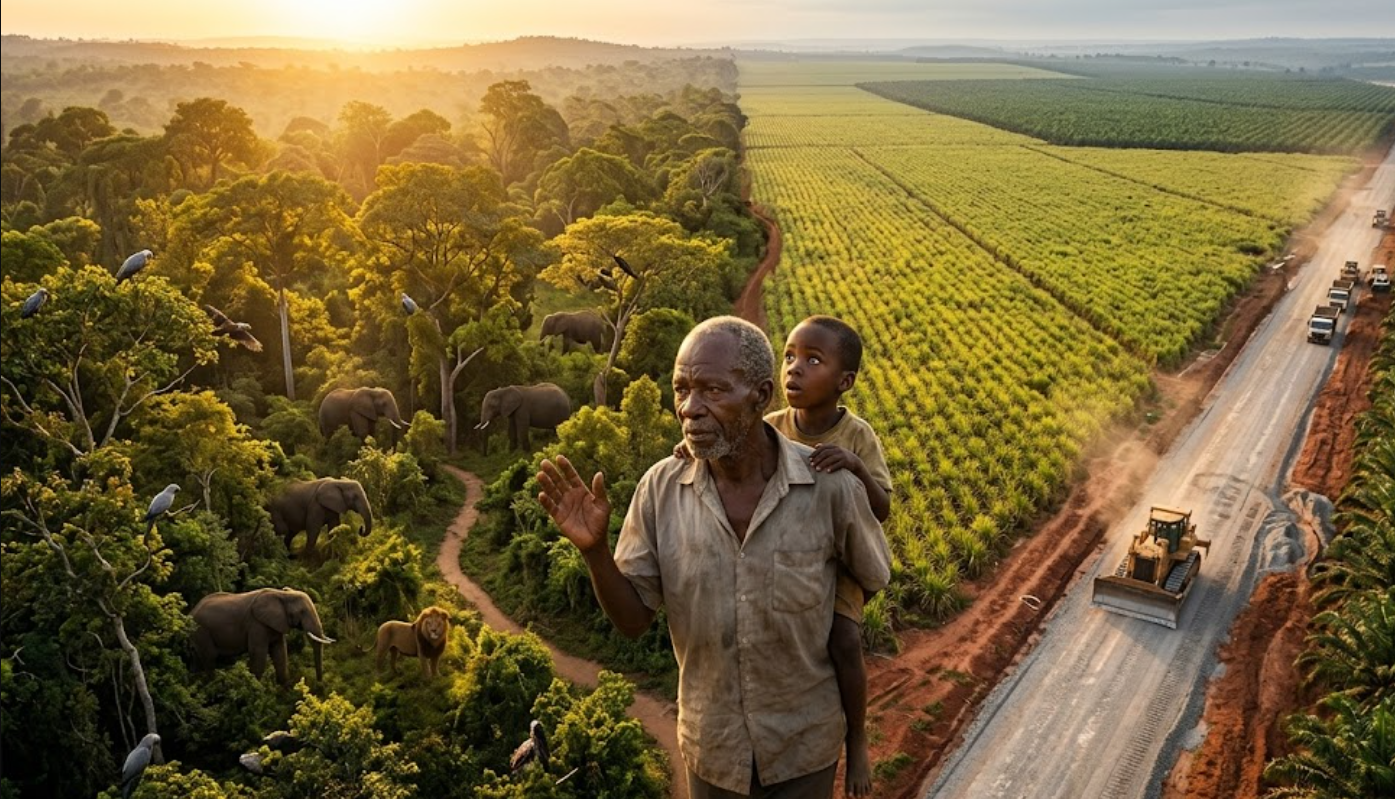
At nearly 77 years of age, I write not from abstract theory alone, but from lived witness. The forests of my childhood in Busoga during the 1950s were alive with elephants, lions, and pythons. The four-kilometer walk to Ikumbya Primary School took me through wilderness teeming with life. Today, those forests are largely gone—replaced by sugarcane plantations, eucalyptus stands, and oil palm estates.
This is not mere nostalgia. It is the testimony of an ecological witness to a vanishing biocultural heritage. The question that haunts me—and that must haunt every Ugandan—is this: By what right have we done this? By what authority have we stripped other species of their habitats, their breeding grounds, their very futures?
The answer, I have come to understand, lies in a profound philosophical error. We have defined the environment as “what surrounds us”—as though we were the center and all else mere periphery. We have constructed legal and economic systems that treat other species as property, ecosystems as resources, and biodiversity as a service provider to human welfare. We have, in short, denied that species and ecosystems possess any rights of their own.
This article challenges that denial. It proceeds from a simple proposition: just as human rights arise from the mere fact of human existence, so too do the rights of species and ecosystems arise from their existence. A lion does not need to be useful to humans to deserve to live. A forest does not need to provide ecosystem services to merit protection. A fish species does not need to be edible to have a right to its breeding grounds.
These are not sentimental claims. They are philosophical positions grounded in ecocentrism, systems science, and the emerging field of Earth jurisprudence. And they have urgent practical implications for Uganda, where the violations of biotic rights are not theoretical possibilities but ongoing catastrophes.
—
2.0 PHILOSOPHICAL
This post was created with our nice and easy submission form. Create your post!

Written by
I am a retired lecturer of zoological and environmental sciences at Makerere University. I love writing and sharing information.
Did this story move you? Every gift goes directly to Oweyegha Afunaduula — writers on Muwado earn from reader appreciation, not algorithms. Even $1 makes a difference.





Muwado weekly chart
Get Africa’s top 10 stories every Thursday
No account needed — just your email.
Want to follow Oweyegha Afunaduula and get notified every time they publish?
Create a free Muwado account →