

 Caesar Obong Ng'bong ocen

As dawn approached, Watmon had thought of a way to earn quick money, he had been there once, Goli border post in the west nile district of Paida. If he could make it through Karuma, Pakwach and goli check points, he would surely make the money in real time and sell these merchandise.
And just like that he boarded the Gaga bus from sir. Apolo Kagwa bus terminal headed towards west nile and traveling a heftty distence of four hounded killomiter to paida where he stoped at Goli junction and deviced a plan to cross boder towords democratic republic of congo. At Goli the magendo men were always there, they feried timber from the DRC side into Uganda and took back seedlings to plant in foreign soil, it was a normal thing, the boundry only existed on the maps.
He had made it to Goli custom where the wind carried the smell of diesel, damp timber, and the faint tang of river mud. Trucks idled in uneven lines, engines coughing into the late afternoon heat. Hawkers darted between pedestrians and other road users, balancing trays of deep-fried sun-dried silverfish along, and another species of fish with thousands of bones within its body they called it Angara and the smaller one was Nang Nang. Their glistening scales caught the sunlight as they called out prices in rhythmic chants, negotiating with passing drivers, boda-boda riders, and travelers. Children chasing rolling motocycle tyres, and others play with bottle caps down dusty lanes; stray dogs sniffed at smells coming from the pork being fried at a nearby make shift kiosk. The scent of fish mingled with diesel, lard and sweat, creating a pungent, inescapable perfume of the border.
Armed guards leaned against concrete pillars pretending boredom. Watmon stepped out of a government-issued pickup truck wearing the dull khaki of a forestry compliance officer. The badge stitched to his chest read: Pagen Lamber Project. The ink was real. The authority was not. He adjusted his cap, walked with measured steps past the hawkers, and entered the inspection area, every motion rehearsed.
Across the barrier stood Officer Tony Tamale, second-shift supervisor, known for two things: he did not smile at strangers, and he did not stamp quickly.
“Papers,” Tony said.
Watmon handed over the folder. Tony flipped slowly through export clearances, transit codes, ecological compliance certificates. The documentation was immaculate — too immaculate. Even authentic papers carried minor imperfections.
“You’re late for inspection rounds,” Tony noted.
“better late than sitting at the comfort of your living space, and realize letter that the world around you have been destroid,” Watmon replied evenly.
Tony’s eyes lifted. Not arrogance. Not fear. Precision. Behind him, a digital terminal flickered. Every cross-border movement was logged, scanned, archived. Goli was not just a checkpoint; it was a funnel of data.
Tony’s thumb hovered over the stamp. “Purpose of cross?”
“seedlings,” Watmon said.
Tony held his gaze three seconds longer than necessary. Something was off. But Goli was a border that swallowed doubt daily. Ask too many questions and your supervisor asks you questions in return. The stamp fell. Ink met paper. History shifted quietly.
Watmon nodded once and drove across into the DRC. Tony watched until the dust swallowed the pickup. He felt it then — not certainty. Unease.
Far away in Kampala, Okello stood alone in his study. The city beyond his window hummed with generators and distant music. Kampala never truly slept; it negotiated rest in fragments. He spoke into the dimness:
Begotten three scores and some
From dawn to dusk
My hope dwells in ignorance.
He had once believed that building stability required insulation from emotion. Now he wondered whether insulation had also insulated him from truth.
A fatal blow of life
Leaves a mean buffalo stranded.
At that moment he understood the mistake. In securing the nation, he had entrusted its arteries to men who whispered loyalty but practiced appetite. Greed had not stormed the system. It had seeped. And he had permitted it in the name of efficiency.
Inside the underground operations complex beneath Kampala’s administrative district, the Second-in-Command — 2IC — stood before a wall of screens. Unlike Drake, who preferred visible force, or Felix, who trusted analytics, 2IC believed in oversight. He was not loud. Not charismatic. But he supervised everything: resource allocation, operational discipline, chain-of-command audits, internal compliance reviews. If Okello was the architect, 2IC was the structural engineer. He monitored both the shadows and those who moved within them.
2IC had mapped all the movements of the viels right from Kampala, and with these movements he wondered if these items were still in the hands of Officer watmon, on the other hand the container had settled somewhere in eastern DRC and was not being disturbed yet the viles moved as fast as it could, if the viles had moved close to the container or even rested near the container, Heneral O together with his team would ne forced to act.
A red indicator pulsed on one screen. Border anomaly flag — Goli. Not an alert. A deviation. 2IC did not believe in minor.
“Pull background on the timber officer,” he instructed.
Felix’s fi ngers moved across the keyboard. “Identity clean. Digitally authenticated.”
2IC leaned closer. “Check the metadata of document uploads.”
A pause. Felix frowned. “Upload origin masked. Routed through three provincial servers.”
Drake exhaled sharply. “Smugglers use masking daily.”
2IC shook his head. “No. Smugglers cut corners. This is layered.” He turned to the central screen where Okello’s private feed remained inactive. He would not escalate yet. Supervision required patience.
Kampala did not riot. It murmured. Morning radio shows hosted policy analysts speaking about transparency frameworks. Civil society groups organized town halls discussing procurement oversight. boda boda riders debated surveillance budgets at stages. University students asked why certain parliamentary committees were perpetually delayed. The system functioned. But trust is not measured by function; it is measured by perception. And perception was shifting.
At Makerere’s freedom square stood Baden Paul Odeke. He was careful not to sound radical. Radicals burn quickly. He spoke instead like a lecturer. “Who watches the watchers?” he asked calmly. The crowd responded with murmurs, not cheers.
“We are told stability requires secrecy. But when secrecy grows thicker than transparency, what are we protecting?” Pause. “Or who?” Applause rose. Measured. Growing. B.P. Odeke had studied power long enough to understand this: you do not attack a fortress directly. You question its foundation. He commissioned independent policy audits, invited regional observers to review financial transparency indices, and spoke to diaspora networks via encrypted forums. His language was reformist. But its implication was structural threat.
2IC watched footage of B.P. Odeke’s speech in silence. Drake scoffed. “Political theatre.” Felix monitored sentiment analytics. “Public trust index down 6.4%. Trending downward.” 2IC did not react to the number. He reacted to velocity. “Track acceleration, not percentage,” he said.
On another screen, the Goli anomaly expanded. Facial recognition cross-checked the forestry officer’s image with archived intelligence frames. A 72% match. Watmon. Felix inhaled sharply. “It’s him.” Drake slammed his fist lightly on the table. “He crossed the border under our nose?” was that not the plan that Okello had wanted, was it not the reason why drake had entrasted him with the fake items.
2IC’s voice remained steady. “No.” He zoomed into the time stamp. “He crossed under supervision.” Both men looked at him. “Supervision?” Drake asked. “Yes,” 2IC replied. “Because if he wanted to vanish completely, we would have no anomaly.” Silence. “He wants to be seen — eventually,” 2IC concluded.
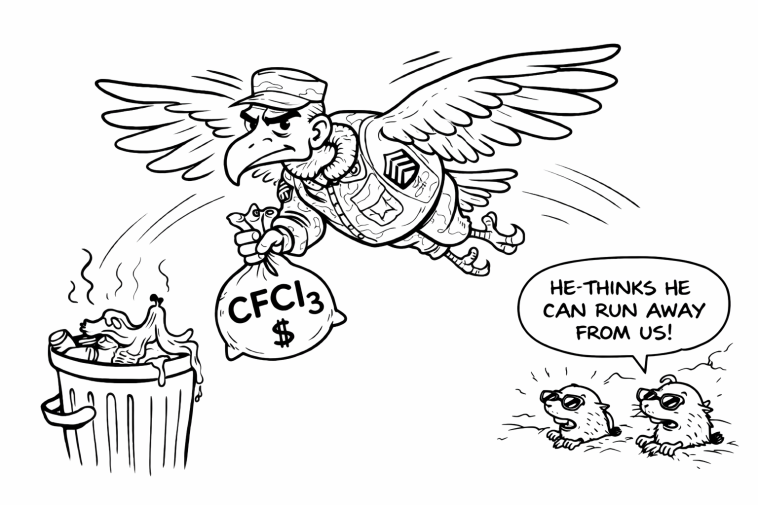
Watmon’s now on the Democratic Republic of Congo was like diving from one garbage heap to another whole the moles watch from a distance laughing at his Route
In Goma, Watmon parked near a nondescript warehouse. The pickup’s rear compartment held the vials — he did not know they were fakes. He had been careful, meticulous. Yet every step he took was anticipated.
The crates were lined with padding that replicated the exact weight and density of originals. Telemetry relayed live to the underground operations center in Kampala.
Each checkpoint he passed was scanned by drones flying 500 meters above. Thermal imaging and license plate recognition tracked him. Couriers met him in the dead of night: one truck disguised as fuel delivery, another as humanitarian aid. Watmon handed the crates over, assuming he was completing the mission.
The vials continued their journey: Goma → small border towns → Eastern DRC corridors. Each handoff was silent, deliberate, calculated. In reality, the real vials had never left Kampala; they were carefully hidden, swapped with counterfeits identical in weight, seal, and appearance.
Watmon believed he carried leverage. He did not. He was a pawn in a game he could not yet see.
At Goli, Tony replayed the footage privately. He zoomed in on Watmon’s face. Too calm. Too centered. He checked vehicle registration: government-issued, reassigned days ago.
Tony leaned back. He knew the unspoken rule: do not chase ghosts tied to central authority. Yet something gnawed at him. He forwarded the log discrepancy to his immediate supervisor with a neutral note: Minor metadata irregularity. Request clarification.
The file disappeared from his queue within an hour. No response. Just deletion. Tony understood then — he had brushed against something larger.
Okello and the Trinity
Okello convened the inner circle: Drake, Felix, 2IC. Three faces. Three suns.
“Public trust is slipping,” Okello said quietly.
Drake responded first. “We tighten narrative control.”
Felix added, “Deploy positive development metrics.”
2IC clasped his hands behind his back. “Public mistrust is not reactionary. It is cumulative.” He gestured toward the screens. “B.P. Odeke is not attacking policy. He is attacking legitimacy.”
Okello nodded. “And Watmon?”
2IC replied evenly, “He is a catalyst. Not the fire.”
Political Pressure and Public Perception
B.P. Odeke, during televised debates, spoke: “There are men in this country who believe order must be engineered from above — watched, calculated, corrected. But a nation is not a laboratory.”
Across Kampala, televisions flickered in living rooms. In the operations room, Drake muttered, “He’s baiting.” 2IC corrected him quietly: “No. He’s preparing.”
Supervisory Mandate
Later, 2IC submitted a classified memorandum to Okello:
Subject: Supervisory Stabilization Protocol
Recommendations:
Internal audit of procurement channels to pre-empt exposure.
Controlled transparency initiative — selective oversight releases.
Passive tracking of Watmon; do not intercept.
Monitor Tony Tamale discretely — potential liability or asset.
Okello read slowly. “You propose we supervise the narrative?”
“No,” 2IC replied. “I propose we supervise ourselves.”
Silence filled the room.
The Three Suns
Okello returned again to his verse:
Three suns will shine —
Of the blueprint in the sky,
Of the unseen in our hearts,
And of the mirror in reflection.
Watmon crossed borders in disguise.
Tony Tamale noted anomalies.
B.P. Odeke tested public perception.
2IC recalibrated oversight.
The nation did not tremble. But pressure was building.
Supervision alone might determine whether the next quake destroyed the house… or reinforced it.
The three men sat in the confrence room waiting for the final brieffing, Okello studied the rot within the system, he had pinned Watmon, Monitored the trade route, Knew how pourouse the boder post were, and the raving dogs like B.P Odeke were. These was what General O’s world was all about. then he smiled and said enough is enough B.P and Watmon are both threats so we have to stop them and just like that watmon and B.P Odeke found themselves back in kampala at a detention center somewhere in Makidye being charged with trison…
And from that time up to now i fear how Underground opparatives works, more men outside the system continued to find their way into the safe house in conection with watmon and that was how Okello pulled it off. Three scores of men was the most complicated espionage or sould i say system i have witnessed in my entire life
This post was created with our nice and easy submission form. Create your post!

Written by
Caesar Obong Ng'bong Ocen is a Ugandan writer whose work traverses narrative fiction, cultural memory, and moral inquiry. Drawing on African cosmologies, and reflective storytelling, his writing engages with issues of power, identity, faith, and the human condition within post‑conflict societies. His series blends political realism with interior psychological struggle, articulating the tensions between duty and conscience, tradition and modernity, exile, redemption. Obong Ng'bong's work bridges literary and social worlds: it interrogates African historical and political realities while exploring philosophical and ethical questions that resonate across disciplines. His narratives are grounded in cultural authenticity and moral depth, making them relevant to both literary and humanistic inquiry. He also mentors emerging writers and contributes to dialogue on African storytelling traditions and their place in contemporary literature.
Did this story move you? Every gift goes directly to Caesar Obong Ng'bong ocen — writers on Muwado earn from reader appreciation, not algorithms. Even $1 makes a difference.





Muwado weekly chart
Get Africa’s top 10 stories every Thursday
No account needed — just your email.
Want to follow Caesar Obong Ng'bong ocen and get notified every time they publish?
Create a free Muwado account →