

 Caesar Obong Ng'bong ocen

Prev: General O: Redemption
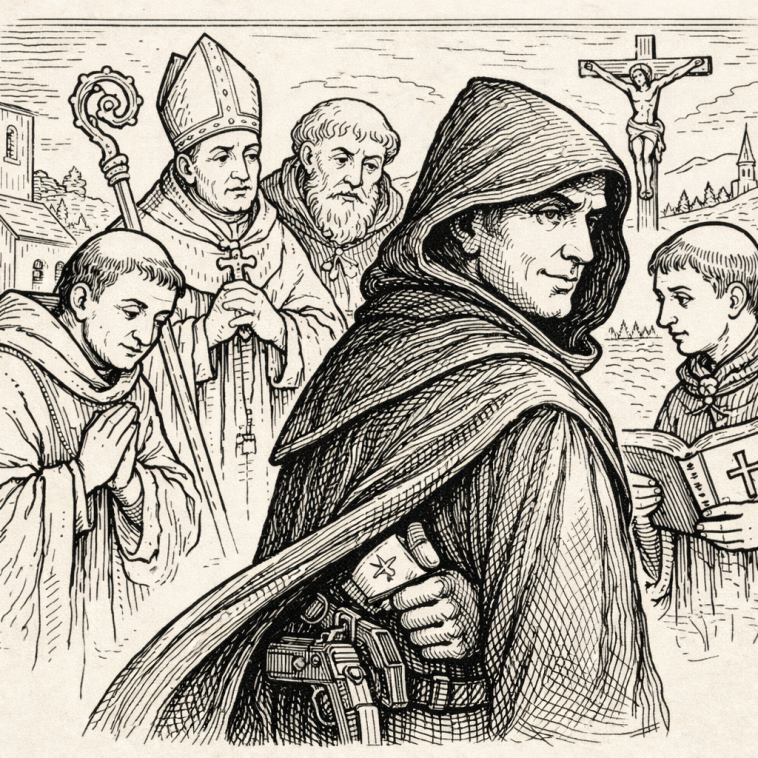
Okello had landed in Uganda—not as a soldier, not as a politician, but as a man of God. Yet those who knew him best understood that the past never fully let go. Shadows moved behind his calm smile; networks hummed with messages only he could decipher.
His grandson, once called handicapped but now a gospel pianist, welcomed him with quiet reverence. The boy’s music rose across the hall, innocent and pure, masking the tension of the room.
His smartphone buzzed lightly, a tool of a past he carried like a secret appendage. Chipper disks and mosa codes, now mere applications, blinked at his fingertips. The instincts honed over decades—reading signals, decoding messages, tracking hidden movements—remained sharp, unyielding.
A deliberate knock came at the door, sharp and precise. Okello, seated in his grandfather’s chair, did not flinch.
“Drake! Would someone open the door for Drake, please?” he called.
His grandson paused, walked to the door, opened it, and stepped aside.
Drake entered, moving deliberately, leaving space between them. His eyes scanned the room with the quiet intensity of a man trained to see everything and miss nothing.
“What brings you here, old friend?” Okello asked, a friendly smile touching the edges of his weathered face.
“Guidance… and responsibilities,” Drake replied, calm, measured, yet alert.
“Sit,” Okello said, gesturing to the chair opposite him. His voice carried the weight of a thousand battles, a life lived at the intersection of morality and survival.
Drake settled in, eyes flicking from the piano to the Bible to the worn diary on the table. That diary was no ordinary book—it was a ledger of ghosts, a silent chronicle of victories, betrayals, and losses that never faded.
Okello’s moustache trembled slightly as he opened his small notebook, the kind of tool men like them never truly abandoned.
“I decoded a message a few weeks ago,” he said, calm, deliberate. “On my arrival home. I will not hide it from you, my friend. You know I am now a man of God.”
A soft laugh escaped him, exposing teeth stained black and yellow by years of tobacco.
“Te__ 7ra train arrive,” he read aloud. “That was the message.”
“Wajinga,” Drake murmured, veins tightening at the temple. He understood.
Okello’s eyes narrowed. He already knew the coordinates, the officer in charge, the headquarters’ authentication method. There was no confession here—only confirmation. The mole had been living in the system all along.
Faith taught forgiveness. Espionage taught permanence. Some sins, he reminded himself, remained operational.
As Okello looked over the growing ministry—the land acquired, the church buildings rising, the network of deacons, pastors, and international overseers—he thought to himself with a wry smile:
“According to an old African saying, he who poos by the roadside without cleaning his behind with leaves or rubbing it on anthill is always followed by flies—a crude warning against careless exposure.”
He chuckled softly, thinking of those who sought shortcuts, who exposed themselves carelessly to the world, unaware of the consequences that would inevitably follow. In faith, as in espionage, one’s moves could never be careless; everything left a trace, every act had a shadow.
Soon, he commanded a full ecclesiastical network—deacons, pastors, reverends, bishops, and even international overseers. Once a month, they met behind closed doors to discuss the church’s direction. Vision was prayed over; strategy agreed upon. Faith, like any well-constructed operation, required coordination.
Then there was the choir ministry—a separate organization, tasked not merely with entertainment but to preach the gospel through songs and praises. This was where Okello’s right-hand man hid.
He was an emaciated middle-aged man, perhaps in his early sixties, but his sins were as dark as darkness itself. He never sang, never met Okello’s gaze. His silence weighed in the room like a shadow. The irony was unmistakable: Satan hiding beneath God’s umbrella. Week after week, he occupied sacred space, unmoving, unseen, yet fully present.
While the church service continued, Okello began to pray in tongues. Every syllable was a signal, a hidden layer of communication. His right-hand man picked up pen and notebook, jotting lines and dots that appeared meaningless, yet contained vital intelligence. Upon deciphering, the message emerged:
Western Corridor alive. Margarita Camp invasion in two days.
As Okello continued chanting, and panting and squeaking In the lord his name. He was like “Hallelujah! God, you are great! You are wonderful! You are merciful! To you I give my whole!” Okello’s voice rose, ringing across the hall.
The choir froze, glancing sheepishly at the quiet man among them. Perhaps God had spoken. Was this man mentally regarded or was he hiding from something more serious and very dangerous.
“The spirit tells me,” Okello continued, “that there are those who need to be born again in the house of the Lord. I will walk to them, and deliver them.”
Beneath the words lay layered meaning: orders, movements, and coded instructions. First, a long-lost figure. Then Drake, positioned in the congregation. Finally, his right-hand man, receiving encoded instructions silently.
To maintain the illusion, Okello feigned fainting for several minutes. The congregation’s attention wavered as his body was carried back to the pulpit. Using subtle finger movements, he replaced a “beep” in the code. Every gesture, carefully choreographed.
Then he summoned the last man he had touched. Alone in a private room, Okello asked, “Did you get the message?”
“Yes,” the man replied. “The Western Corridor is alive, and Margarita Camp will be on fire in two days.”
Okello nodded, the weight of the world in his eyes.
“Good. Inform the General and get the government soldiers to cover this mess, and don’t forget our motive: remain silent in faith and preach God’s words. From now onwards, you are a born-again Christian, and you have a ministry to run alongside me.”
These were Okello’s last instructions. His right-hand man realized, in that moment, that although they had officially retired, both of them remained active—redeployed, invisible, officially moles in God’s house. Silent watchers, guiding events under the guise of devotion, operating in faith and shadows alike.
This post was created with our nice and easy submission form. Create your post!

Written by
Caesar Obong Ng'bong Ocen is a Ugandan writer whose work traverses narrative fiction, cultural memory, and moral inquiry. Drawing on African cosmologies, and reflective storytelling, his writing engages with issues of power, identity, faith, and the human condition within post‑conflict societies. His series blends political realism with interior psychological struggle, articulating the tensions between duty and conscience, tradition and modernity, exile, redemption. Obong Ng'bong's work bridges literary and social worlds: it interrogates African historical and political realities while exploring philosophical and ethical questions that resonate across disciplines. His narratives are grounded in cultural authenticity and moral depth, making them relevant to both literary and humanistic inquiry. He also mentors emerging writers and contributes to dialogue on African storytelling traditions and their place in contemporary literature.
Did this story move you? Every gift goes directly to Caesar Obong Ng'bong ocen — writers on Muwado earn from reader appreciation, not algorithms. Even $1 makes a difference.





Next: https://muwado.com/general-o-the-ritualist-and-the-reckoning/