

 Ulokcwinyu Ubia

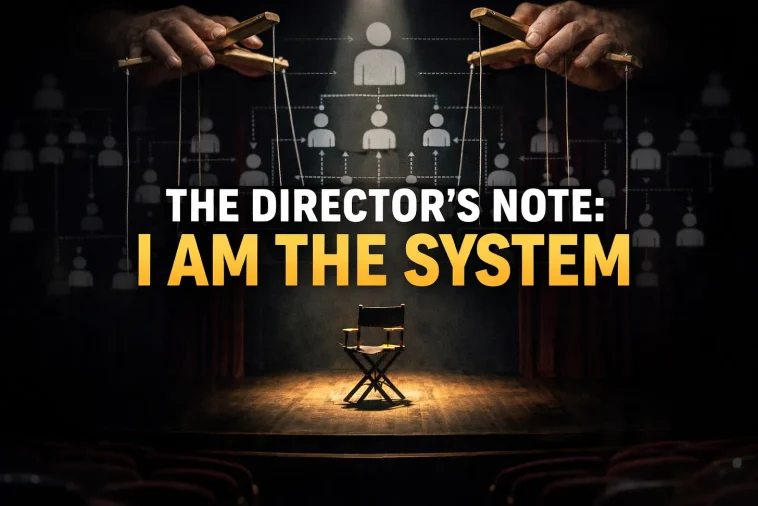
The stage is full of shadows and the founders are dying with it.
At the beginning of this year, I decided to read a book I have always wanted to read: The 21 Irrefutable Laws of Leadership by John C. Maxwell. One of the laws that stood out for me is the Law of Empowerment. As I read that chapter, the arts industry, especially the Ugandan theatre industry kept coming to my mind.
According to Maxwell, only secure leaders give power to others. I have been in the theatre space a lot, sometimes even in positions of leadership, and my oh my, the power insecurities in these spaces are very interesting. Over the weekend, I was walking with a friend and he shared how power dynamics and insecurities have made creative spaces deeply toxic. I couldn’t help but agree.
Here is the thing: if you do not allow the people under you to fully take charge, you risk losing good leadership. I do not know where this deep mistrust came from, but at this point, I could argue that it started with a creative. For creatives, even those who have made a name for themselves in the Ugandan industry, entrusting someone else with their vision is rare. On the outside, they preach the gospel of building structures and empowering young people, yet inside these organisations, they clip the wings of the very people they claim to empower.
There is a cycle of getting young creatives to do jobs at very low rates, with no insurance, benefits, or incentives whatsoever. On top of that, the young creative is constantly reminded that “this is not your company.” Even when they bring ideas that could genuinely work, those ideas are watered down simply because the boss was not the one who suggested them. Please point out where empowerment is in this.
Theodore Roosevelt once said, “The best executive is the one who has sense enough to pick good men to do what he wants done and the self-restraint enough to keep from meddling with them while they do it.” Meanwhile, in Uganda, every time you make a mistake on a project, you are reminded of how your job is at stake and how you are not doing things the way they were done in the past. Tell me: how am I expected to perform at my best under constant threats and fear?
At some point, I began asking a very uncomfortable question: if the founder of this organisation passed on, or was no longer able to talk to funders, secure grants, or work actively, would the organisation still operate? Most people I asked this question went quiet, not because they did not know the answer, but because they were afraid to say it out loud. Let us look at this critically. Look at some of the most prestigious theatre organisations we have right now. If their founders, artistic directors, or directors were no longer present, would these organisations survive?
Empowerment allows continuity. This is something we probably do not think about enough because we assume we still have time. But death and mishaps never make appointments.
Some leaders even go as far as creating mistrust within their own teams. A creative space, which should ideally be safe, becomes filled with cliques of people fighting each other. We forget that as we fight others, we are also draining our own energy.
I once met a gentleman and asked him to mentor me for his role because I felt there were many things going wrong in the system that I could help fix. I had also proven myself worthy of the mentorship. To date, he has never responded. Apparently, “I am still young to start eyeing the position.” That was insecurity speaking.
Many creatives believe that if they empower others and those people reach their full potential, then they themselves will no longer be needed. What they forget is this: when you lift others, others lift you. I once said the same about the last elections of the Poets Association of Uganda (which you should check out – https://linktr.ee/ugpoets). Do you really expect a functional team when older presidents are unwilling to bridge the gap with a younger cabinet? At that time, the cabinet was made up of young, fresh creatives whose ideas were ignored because the “older guys” supposedly knew better, despite the failure of the systems they had put in place.
As a leader, you need to believe in people. Not everyone is as selfish as you are. Stop projecting your insecurities, because in the end, it is your organisation that will pay the price.
When Abraham Lincoln became President of the United States, he appointed generals who thought differently from him. Some who had even opposed his bid for presidency. He gave them credit for their successes and publicly took responsibility for their failures. He empowered them and allowed them to make decisions because he understood that they were at the front lines and therefore knew what battle truly meant.
Yet there are directors who will ask you to produce artwork in one hour, with no clear brief and no understanding of what graphic design actually entails, only to trash the work in the end. (This, of course, should not be an excuse for poor work.) Mark Twain once said, “Good things can happen when you don’t care who gets the credit. But even greater things happen when you give credit to others.” This quote feels like it was written for stage managers and stagehands, the people who often never get to be seen or recognised.
Imagine if the Uganda National Cultural Centre or International Theatre Institute – Uganda Chapter (I use these examples because these are key players in the Ugandan theatre space) sat with different arts organisations and allowed them to do what they do best. Those familiar with the theatre space know this: there is an organisation known for training actors, one that can pull off a national festival, another that excels in improvisation, one that produces excellent technical work, another that understands up-to-date publicity and advertising, and many more.
Yet the importance of empowerment is something key players, especially leaders of arts organisations, either do not understand or choose not to understand. And let us not get it twisted: empowerment does not mean free labor. It does not mean “we are giving you a platform.” Empowerment exists when both parties are genuinely benefiting.
I believe that adapting the Law of Empowerment could reduce empty audiences at shows because there would be a shared pool of audiences to tap into. It could end the chicken fights among organisation leaders that alienate young creatives, where suddenly, no matter how good you are, you cannot work with organisation X because you once interacted with organisation Y. It could reduce the amount of bad work being produced because everyone would feel responsible enough to contribute toward quality before production.
Maybe even the Media Council would not be a battle we fight individually when exorbitant taxes and fees are imposed on productions and festivals. We might stop losing capable and excellent creatives to other professions. And maybe, just maybe, the creative industry will finally become a priority industry in this country.
At some point, we must ask ourselves difficult questions: are we building institutions or personal empires? Are we growing people or managing fear? The future of the creative industry in this country will not be saved by talent alone, but by leaders secure enough to empower others. Anything short of that is not leadership. It is survival dressed up as authority.
I still believe in the power of this industry. I believe in what is possible when leaders choose trust over control and growth over ego. Empowerment is not about stepping aside; it is about stepping back so others can rise. And if we get this right, we will not only create better work. We will create a future that can finally sustain us as artists.
@UlokcwinyuUbia.
This post was created with our nice and easy submission form. Create your post!

Did this story move you? Every gift goes directly to Ulokcwinyu Ubia — writers on Muwado earn from reader appreciation, not algorithms. Even $1 makes a difference.





Muwado weekly chart
Get Africa’s top 10 stories every Thursday
No account needed — just your email.
Want to follow Ulokcwinyu Ubia and get notified every time they publish?
Create a free Muwado account →