

 Ulokcwinyu Ubia

Sundays are very interesting days. That is when the anxiety for the new week chips in and you suddenly remember that you did not actually rest enough over the weekend. I guess weekends are really made in China.
This Sunday, I told myself that I was going to fully spend my time in bed. If possible, even order in food (this later became impossible because my finances voted “nay”). But yeah, I watched a movie with my baby and really did my best not to open any gadgets around, despite the temptations that lingered and the voice telling me that I was not being productive. One of the other few things I did was listen to the Mind Your Head podcast. The guest of the episode was Kasuku and amidst all the fun, the banter and the life stories, one thing stuck in my head: how he battled depression for six months. But that is not even the part that stayed with me the most. The trigger was when he talked about his wife also getting depressed because of the state he was in.
It threw me back to something I do not always talk about.
There was a time when asthma did not miss a chance to show me “shege.” I embraced the reality of it around 2015 when I had a major attack that got me unconscious for about 12 days. And to think that the trigger was anger. Anger had almost gotten me dead. So when you see me walk away or do my best not to get angry, it is not a weakness. It is a memory. It is survival. I have been to a bad place because of anger before. My coping mechanism for the longest time became blaming myself instead of the perpetrators. But I am learning to say things out before they accumulate. My memory of those severe asthma years is hazy, but a few things are very clear. The many times my mother picked me up from school during attacks. The times she carried me on her back to the taxis because resources were not available. The exhaustion she must have felt. The fear. The loneliness.
Everyone worries about the patient. But the caretaker is rarely thought about.
Now that I am grown and can take better care of myself, I often think about what that period must have been like for her. Hospitals make me feel helpless, which is why I run for checkups even when I feel the tiniest glitch in my system. Anything to avoid admission. Anything to avoid feeling that powerless again. Then sometime last year, life decided to give me a reminder from the other side.
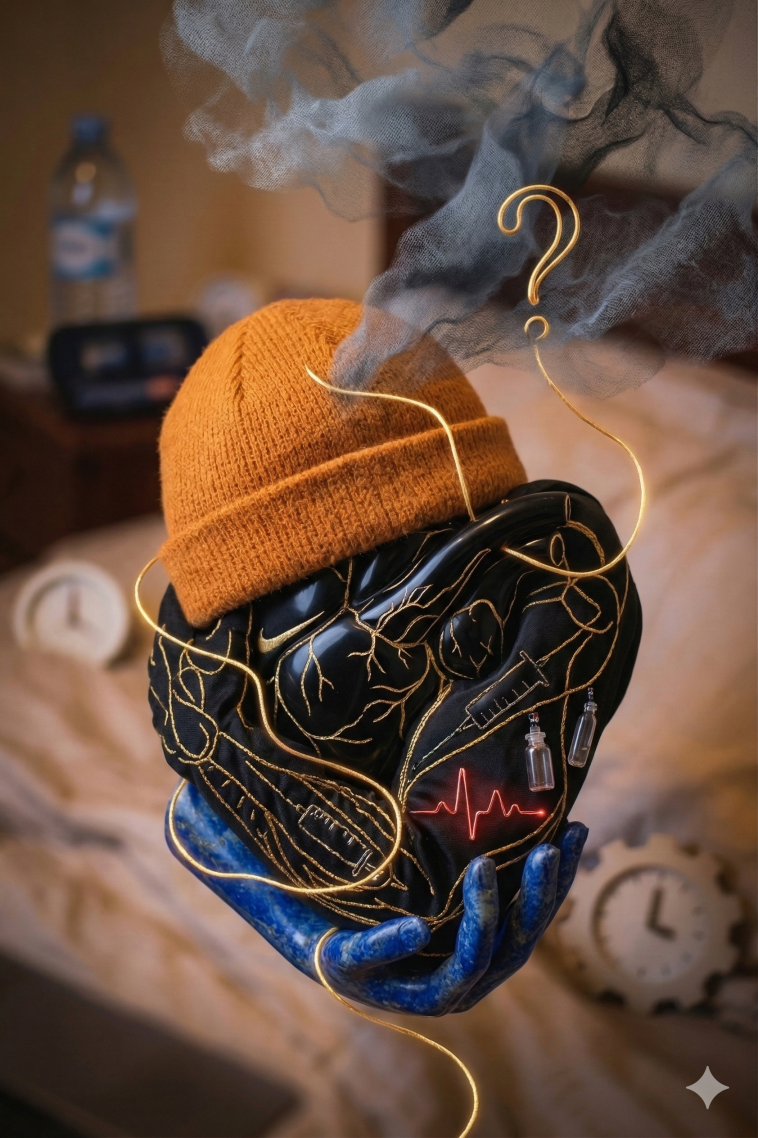
My baby was diagnosed with Type 1 Diabetes.
It started as what we thought was a routine check-up. The plan was simple: go to Medipal, do the tests quickly, then return home for movies and maybe pizza. That plan died the moment the doctor looked at us and said, “I cannot let you go home.” My heart sank. My body suddenly felt weak. I wanted to run to the washroom as tears rushed out of my eyes. But then I looked at him.
He was panicking. I could see it in his face. I could feel the fear building inside him. And in that moment, my brain made a decision for me: you have to be strong. So I switched into autopilot. Signing documents. Giving consent. Listening to the doctors. Watching as the drips became faster. Hearing the nurses whisper and wonder how he was still alive with blood sugar that high. I cannot even say I remember feeling anything. I was numb. I was just… functioning. That numbness lasted until they took him to the ICU and the nurse called me to come and see where he was.
The first four patients I saw when I entered the ICU shook something in me. My baby was half-conscious. Later he told me he thought everything was a dream. Maybe he forgot that when I said I would be with him through the best and the worst, I was damn serious. But the ICU was not a pleasant place to be. Then I saw a baby on machines like in the movies, and that is when reality hit me. That is when the fear of losing him arrived in full.
I looked at him sleeping like the baby he is, then walked straight out of the ICU and into the doctor’s office. “You said he is only diabetic, right?” I asked. She nodded. “Then why is he with patients who are badly off?” She looked at me gently and said, “He is actually worse than the ones you saw in there.” At that moment, I wanted my people.
I wanted Big Daddy. I wanted my Mums. I wanted my Dads. I wanted Ubia. I wanted Camilla. I wanted Evelyn. I wanted Camilla’s mum. A hug from even one of them would have made me stronger. But I had not informed anyone yet. Like I said, I was still operating like a robot. The doctor explained things kindly and then told me I could sleep in the waiting area. I did not even realize how cold it was until around 6 a.m. That is when the body finally started feeling what the mind had been suppressing.
That morning, I informed a few close people. Camilla and Evelyne chose not to sleep. They kept checking in every 25 minutes. The next afternoon we were transferred to the ward. That is when it all kicked in.
My baby was getting about four drips during the day and night. He hated them. He hated the hospital. Some moments he was happy. Other moments he was moody and said not very nice things. Sometimes he was confused. Sometimes he got suicidal. Sometimes he simply did not understand why life had thrown this at him. Meanwhile, I was trying to process everything while also taking care of him. Disconnecting the drip when it finished. Helping him to the washroom. Checking if he was warm enough. If he was hungry. If he was thirsty. Making sure he was comfortable in bed.
People called to check on him. No one asked how I was. And slowly, I started spiraling.
I thought about how terrible God must be for making both of us sick. I thought about how much of a burden I must have been to him all these years with my asthma. And now this? This was going to be worse. I felt like I had become part of the problem.
We were discharged after one week.
The first moment I allowed myself to break a little was when I met Camilla’s mum. She hugged me and said, “It is going to be alright.” That hug did something to me. Because that is how badly I needed a hug. But I could not ask for it from him. I could not break down in front of him either because it would feel like I was stealing his moment.
We got home and life had to change. Some meals were suddenly off the table. Eating times changed. Routines changed. He told me, “You can always prepare what you want to eat. Do not let my sickness get in the way of your lifestyle.” It sounded like a normal statement, but it felt heavy when I heard it. It spoke volumes about what he was feeling. And the truth is, cooking two different meals in the same house when you can cook one is tiring. The women know this well.
So I made a decision. Not because of the sickness alone, but because of love and companionship. I adopted the lifestyle too. The meals. The timing. Everything. It was healthier for both of us anyway, but more importantly, it eased the tension and the lonely feeling.
About two weeks after we were discharged, we attended an exhibition. A close friend pulled me aside and asked a question no one had asked me yet. “I know he is better,” they said. “But you… how are you actually doing?” I was not ready for that question. For a moment, I felt exposed. Vulnerable. Like someone had seen straight through the strong version of me I had been performing. But strangely, I also felt seen. And that is when I realized something. Caretakers also need caretaking. The strong ones also need someone to check on them.
The people holding everyone together also sometimes need someone to say, “It is okay to fall apart for a moment.” That question did not magically fix everything. But it gave me permission to feel again. Permission to acknowledge that I was tired. Scared. Angry. Hopeful. All at the same time.
Today, we are learning. Learning how to live with diabetes and asthma. Learning how to listen to our bodies better. Learning how to forgive life for the surprises it throws our way. There are still hard days. Days when the numbers are not where they should be. Days when the memories of the ICU creep back. Days when I remember the version of life we had before.
But there are also good days. Days with laughter. Days with movies in bed. Days where we cook meals that work for both of us and realize that maybe this new life is not as terrible as we first feared. And slowly, I am understanding something important. Illness may change your life, but it does not cancel it.
Love adapts. Strength grows in places you never expected. And sometimes, hope looks like a quiet Sunday in bed, watching a movie with the person you almost lost… and realizing that being here, together, is already a miracle.
@Ulokcwinyu.
This post was created with our nice and easy submission form. Create your post!

Did this story move you? Every gift goes directly to Ulokcwinyu Ubia — writers on Muwado earn from reader appreciation, not algorithms. Even $1 makes a difference.





Muwado weekly chart
Get Africa’s top 10 stories every Thursday
No account needed — just your email.
Want to follow Ulokcwinyu Ubia and get notified every time they publish?
Create a free Muwado account →