

 Mwikwabe Brown

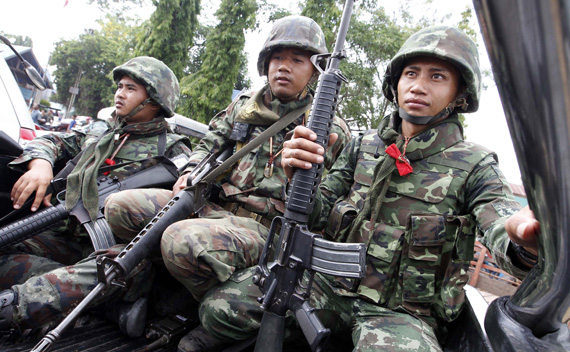
Cambodia’s powerful Senate President Hun Sen on Tuesday vowed a fierce fight against Thailand as a second day of widespread renewed combat between the Southeast Asian neighbors drove tens of thousands of people to flee border areas. Fighting broke out following a skirmish on Sunday during which two Thai soldiers were injured, derailing a ceasefire that ended fighting over competing territorial claims in July. The five days of fighting then left dozens dead on both sides, and forced the evacuation of over 100,000 civilians.
In a sign that neither side was willing to back down, Thai Prime Minister Anutin Charnvirakul said Tuesday that Cambodia had not yet contacted Thailand about possible negotiations and the fighting would continue. In a statement posted to Facebook and Telegram, Hun Sen claimed that his country had refrained from retaliating on Monday, but overnight began to fire back at Thai forces.
Thailand’s military said Cambodia attacked Thai positions with artillery and rocket and drone attacks on Tuesday. Thailand said that Cambodian forces also fired at its troops Sunday and Monday, but each side blames the other for shooting first. Cambodia’s military announced Tuesday that the new fighting had killed seven civilians and wounded 20. A Thai military spokesperson said that three soldiers have been killed.
Thailand on Monday carried out airstrikes along the frontier, which it called a defensive action targeting military installations. Thai military spokesperson Rear Adm. Surasant Kongsiri said Tuesday that such operations would continue “until attacks stop.” An evacuation shelter at a university in Thailand’s northeastern city of Surin hosted more than 3,600 people who were relocated from the danger zones. They sat or laid on thin mats and several set up small tents. At lunchtime, some lined up to receive cooked rice, while others were served ready-to-eat meals. An army band played for their entertainment.
The Thai army said almost 500 temporary shelters were set up in four border provinces, accommodating 125,838 people. Evacuees on the Cambodian side had similar experiences. Cambodian Information Minister Neth Pheaktra said almost 55,000 people have been evacuated and the numbers were mounting. Thailand and Cambodia have a history of enmity over centuries and experience periodic tensions along their land border of more than 800 kilometers (500 miles). Centuries ago both were powerful empires, but Thailand’s size and greater development over the past century give it the military advantage.
Some of the disputed territory hosts ancient temples that both nations covet as part of their heritage. Cambodia’s Culture Ministry charged that Thai forces on Tuesday had damaged one, Ta Krabey temple, calling the alleged action “a reprehensible act (reflecting) profound immorality.” Thailand’s military, referring to the same 11th-century temple by its Thai name, alleged that Cambodian forces launched rocket attacks into the northeastern province of Surin. Independent corroboration of either claim was impossible.
The ceasefire that ended July’s fighting was brokered by Malaysia and pushed through by pressure from US President Donald Trump, who threatened to withhold trade privileges from the two nations unless they agreed to it. In Washington, US Secretary of State Marco Rubio said in a statement that the United States is concerned by the uptick in violence and called for both sides to live up to the commitments they made in Kuala Lumpur in late October.
The agreement called for removing heavy weapons from the border, desisting from disseminating false information and harmful rhetoric, implementing measures to restore mutual trust and coordinating operations to remove land mines. None of these actions appear to have been fully implemented by either side. After the ceasefire, both nations continued to fight a bitter propaganda war using disinformation, alongside minor outbreaks of cross-border violence.
A major Cambodian complaint has been that Thailand continues to hold 18 prisoners who were taken the same day the ceasefire went into effect. Thailand claims they approached its positions in a threatening manner, an allegation denied by Phnom Penh. Thailand accuses Cambodia of laying new land mines in the areas under dispute, in several cases maiming Thai soldiers. Cambodia says the mines are left over from decades of civil war that ended in 1999. The mines issue caused Thailand to declare earlier this month that it was indefinitely pausing implementation of the details of the ceasefire until Cambodia apologized for wounding Thai soldiers.
This post was created with our nice and easy submission form. Create your post!
Written by
Did this story move you? Every gift goes directly to Mwikwabe Brown — writers on Muwado earn from reader appreciation, not algorithms. Even $1 makes a difference.






Muwado weekly chart
Get Africa’s top 10 stories every Thursday
No account needed — just your email.
Want to follow Mwikwabe Brown and get notified every time they publish?
Create a free Muwado account →