

 Ahmed Didaati
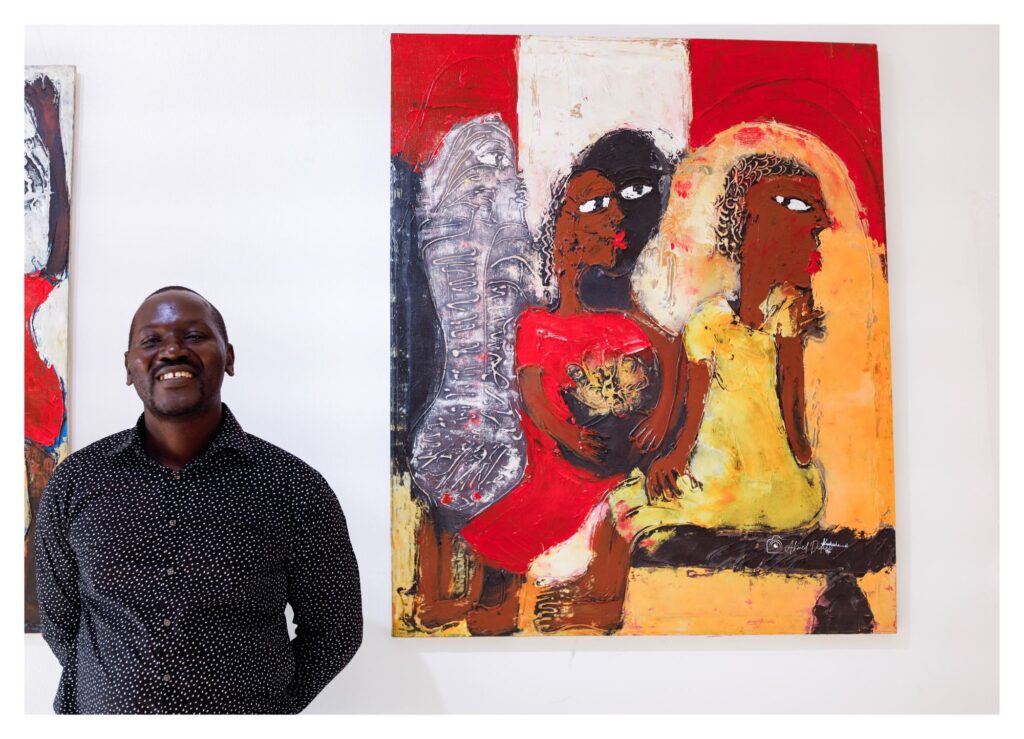
In a world increasingly shaped by uncertainty, isolation and rapid social change, Ugandan artist Herbert Kalule is using art to ask a simple but urgent question: Are we still talking to one another?
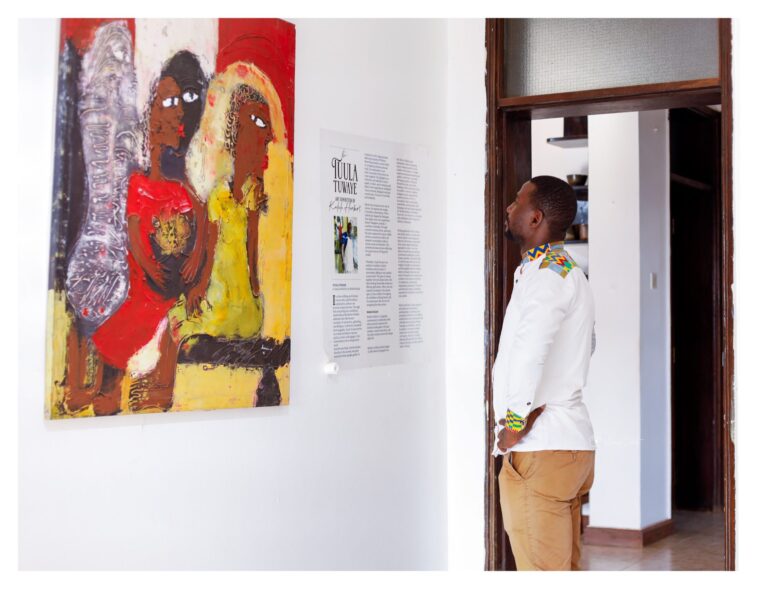
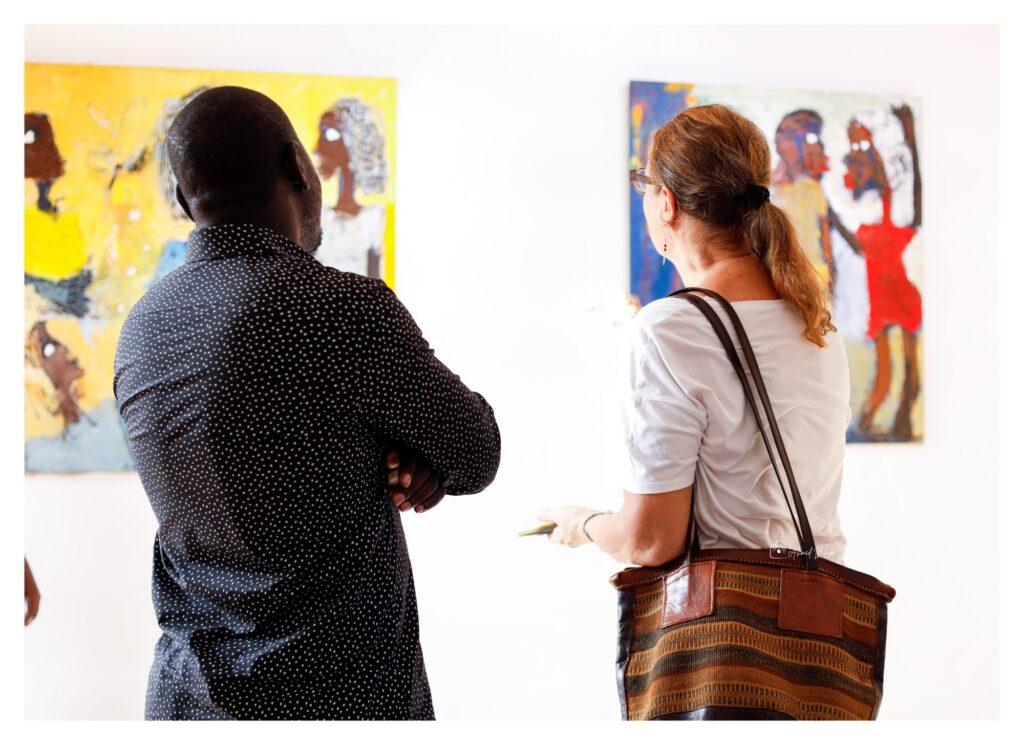
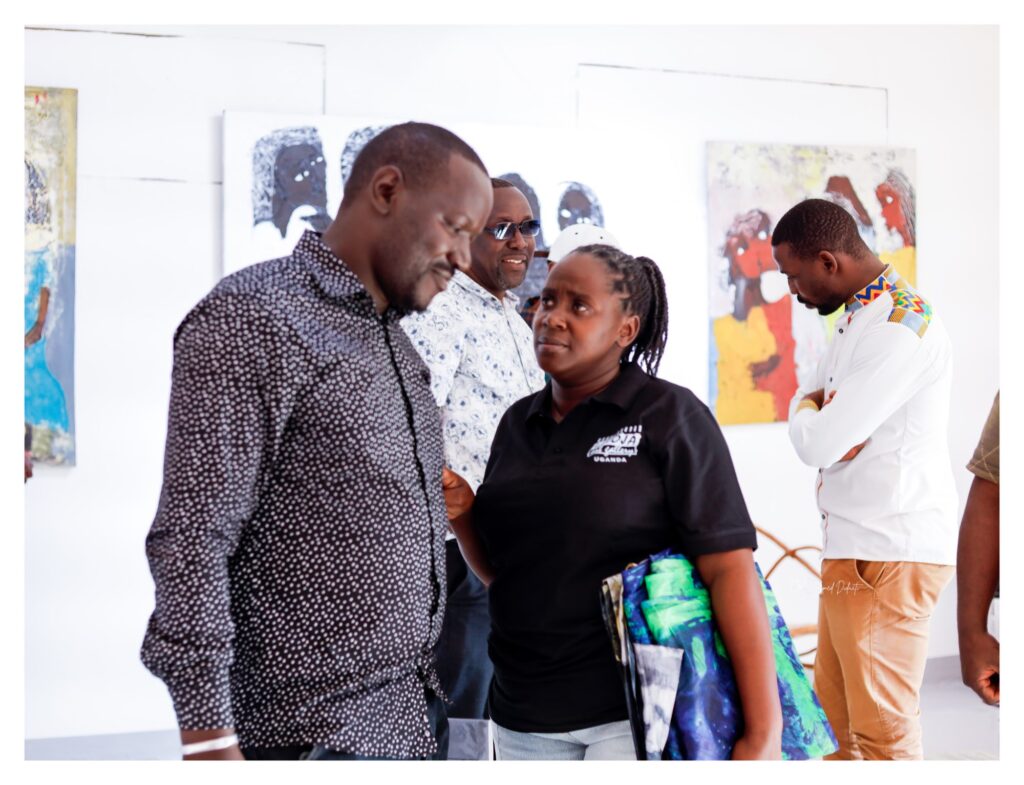
That question sits at the heart of “Tuula Tuwaye,” Kalule’s latest visual art exhibition, which opened yesterday and brings together a body of work exploring human connection, silence, community and the conversations that shape everyday life.
The exhibition takes its title from the Luganda phrase Tuula Tuwaye a call to sit down and talk. For Kalule, the idea goes beyond ordinary conversation. It is an invitation to pause, listen and recognise the experiences of others.
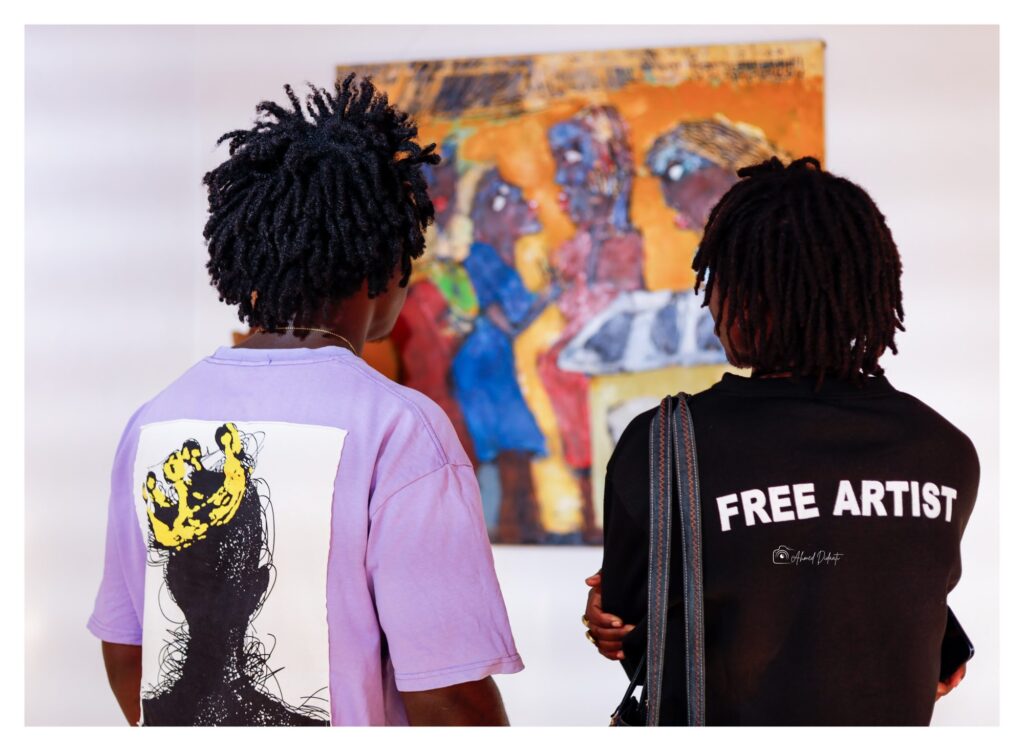
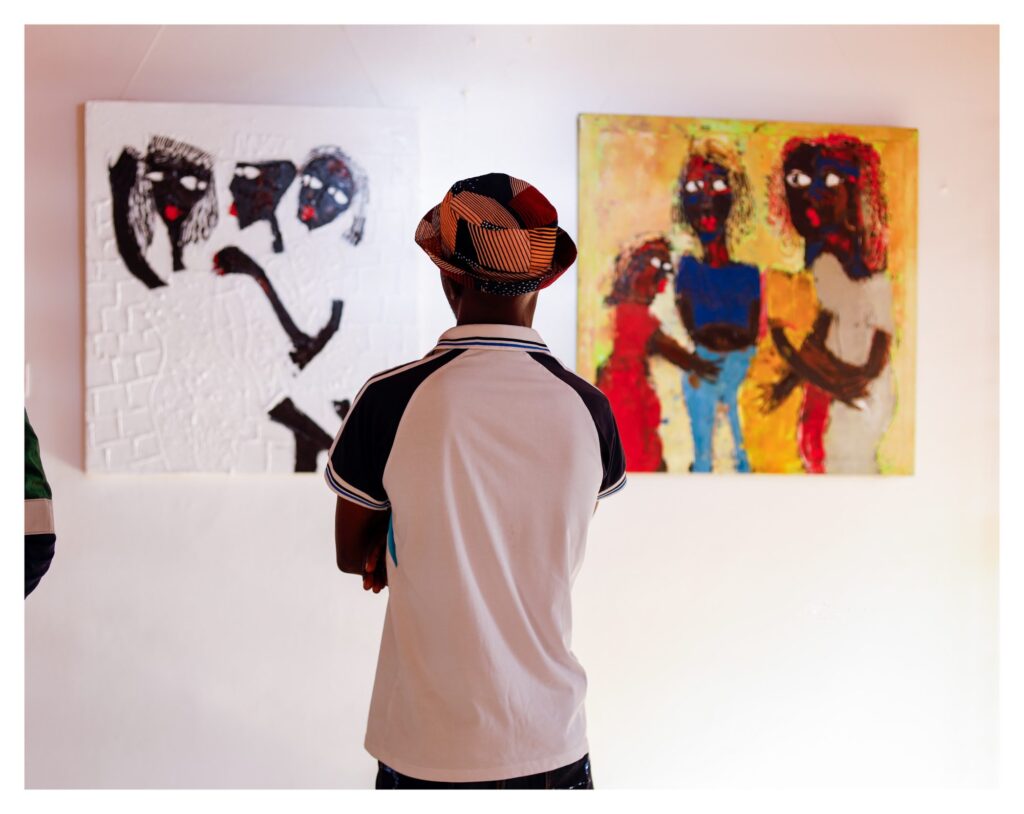
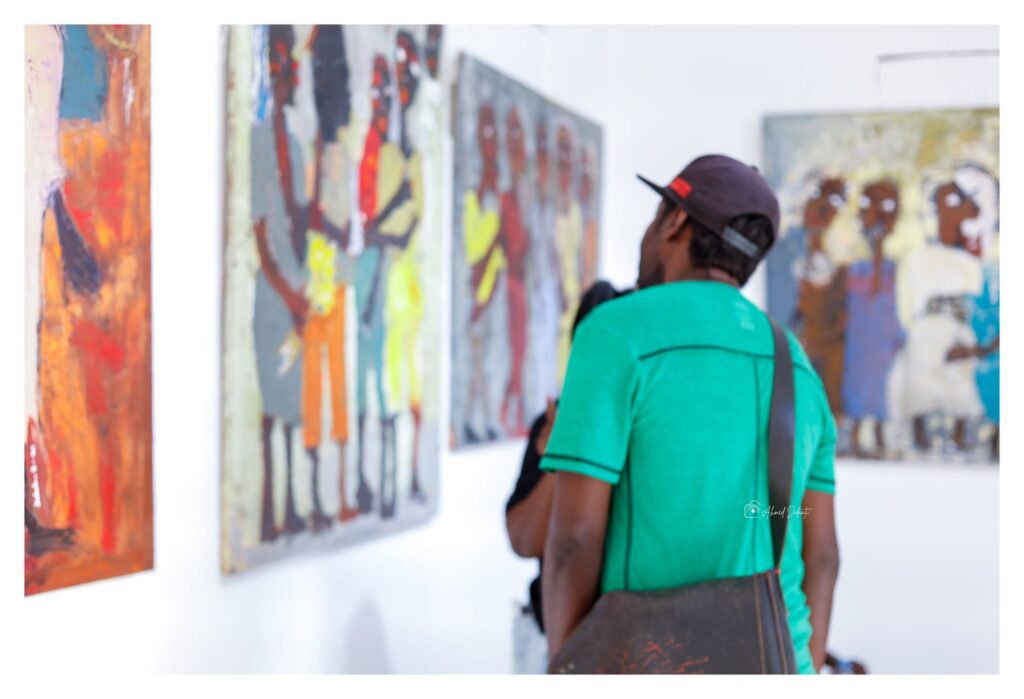
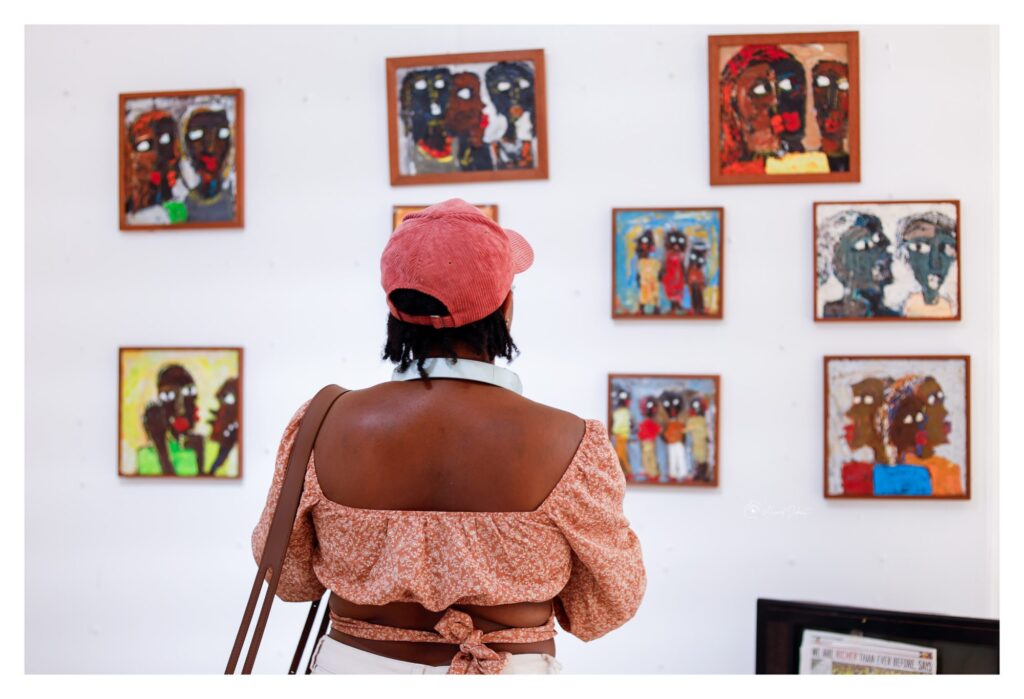 Through expressive figures, vivid colours and layered textures, Kalule explores the complex ways people relate to one another. His paintings appear to hold conversations of their own between individuals, generations, and the past and present.
The works speak of moments when people come together, but also of the silence that can emerge when communication breaks down.
Kalule’s artistic journey spans more than two decades. He began developing his practice in the early 2000s, including a period around Afriart Gallery in Kampala, where he was exposed to a creative environment that encouraged him to experiment and grow as a self-taught artist.
His practice later expanded to include acrylic painting, fabric, batik and mixed media.
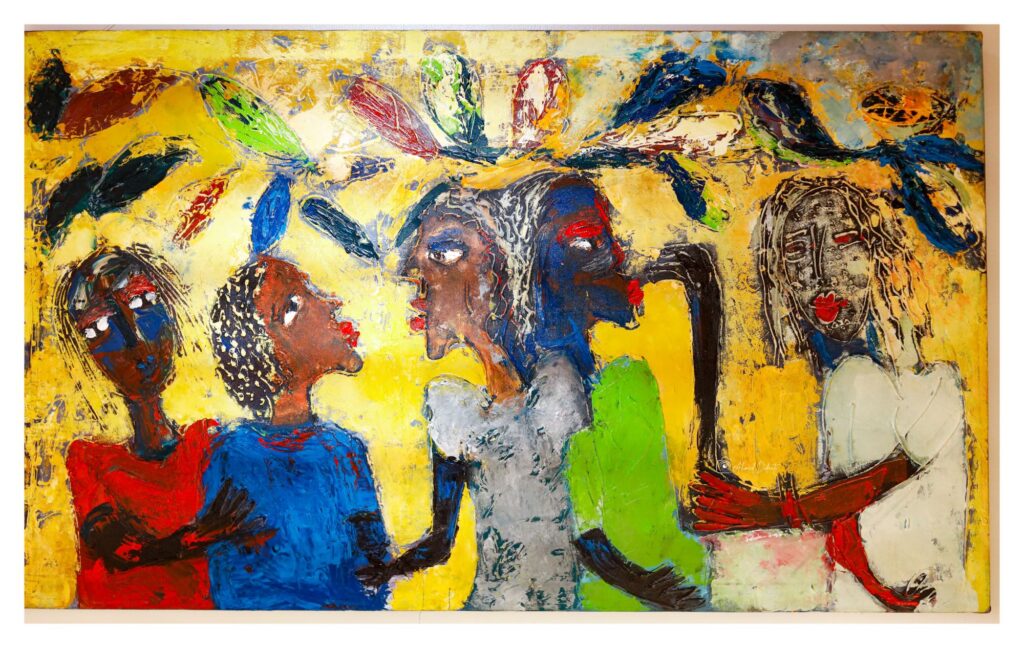
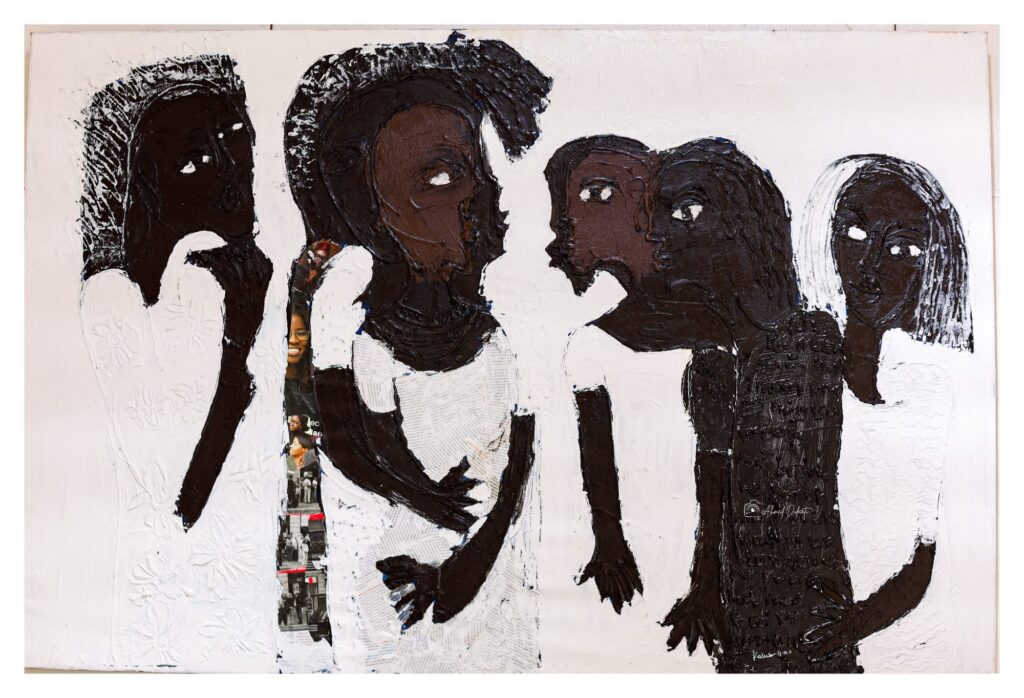
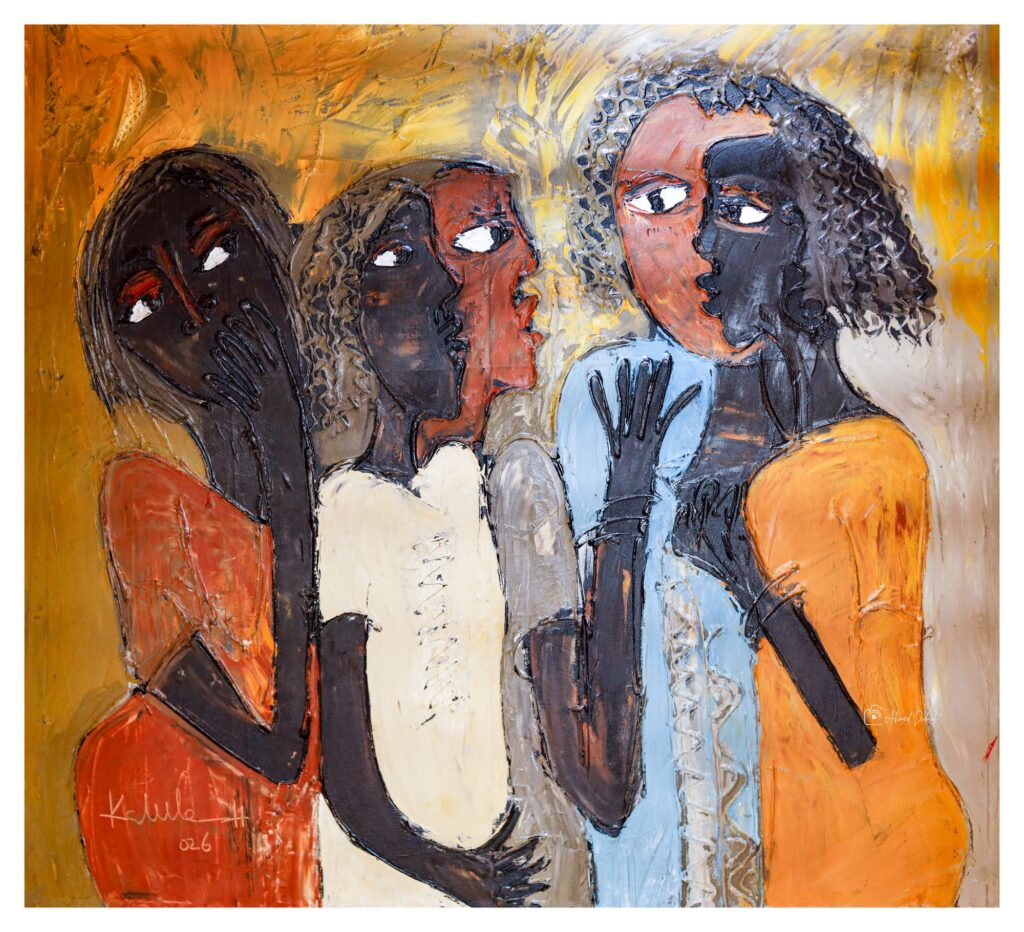 His connection to fabric is also personal. According to the exhibition profile, his mother, a tailor and fashion designer, influenced his early interest in textiles and materials.
Over time, Kalule developed a distinctive visual language combining figurative forms, bold colours and rich textures.
But beneath the colour lies a deeper concern with the human condition.
The figures in his paintings often appear caught in relationships sometimes harmonious, sometimes tense and sometimes difficult to interpret. This interest in human interaction is also evident in his earlier work, where groups of figures became a recurring motif through which he explored community and lived experience.
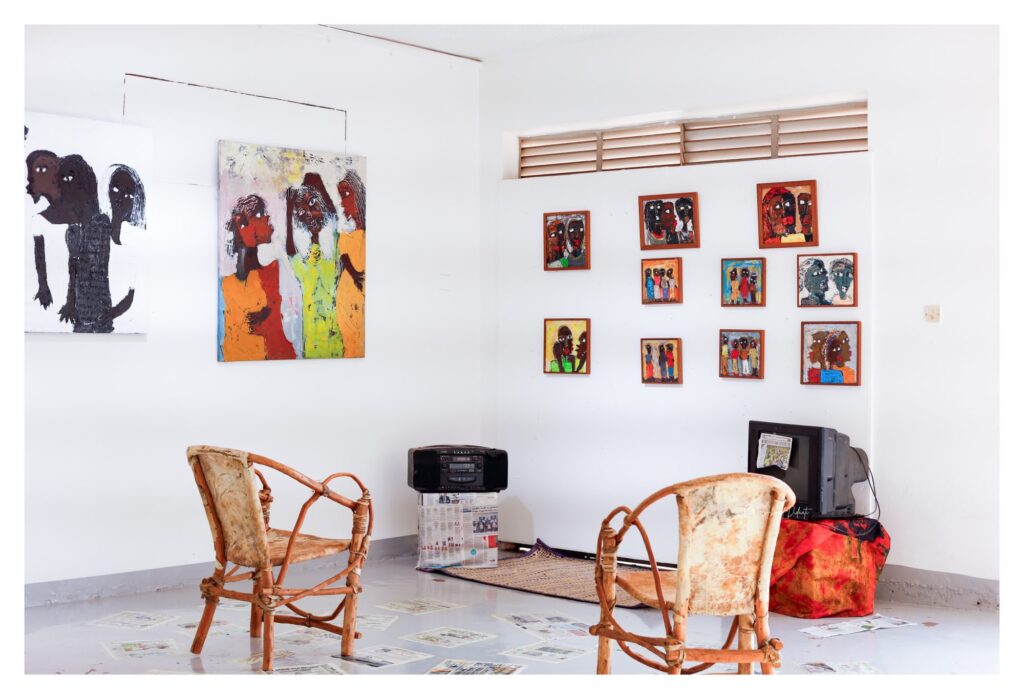
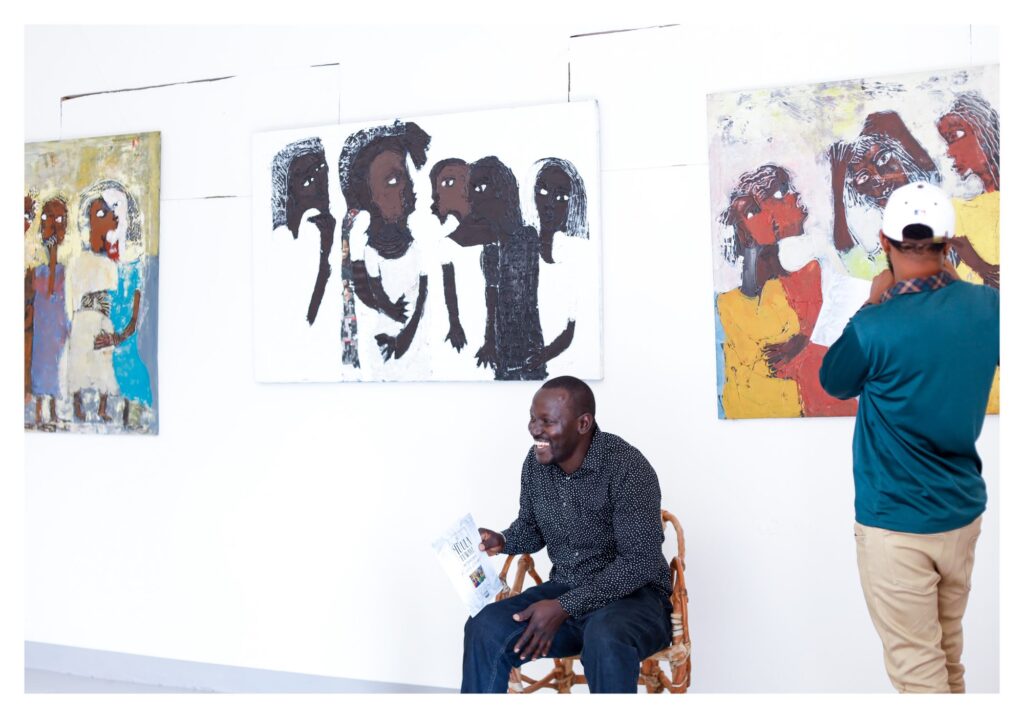
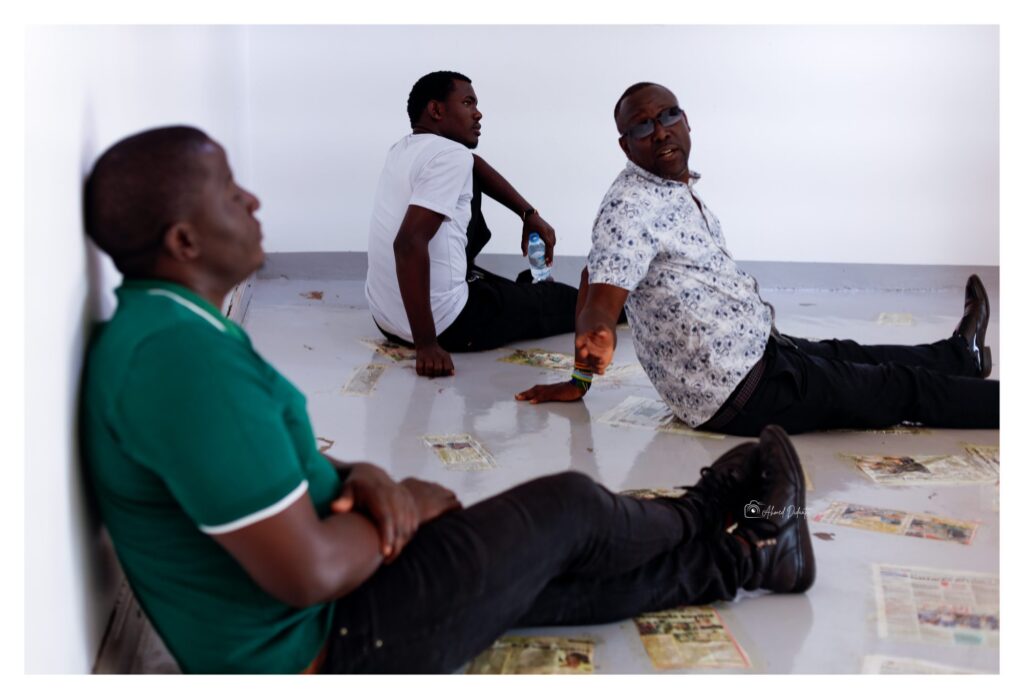
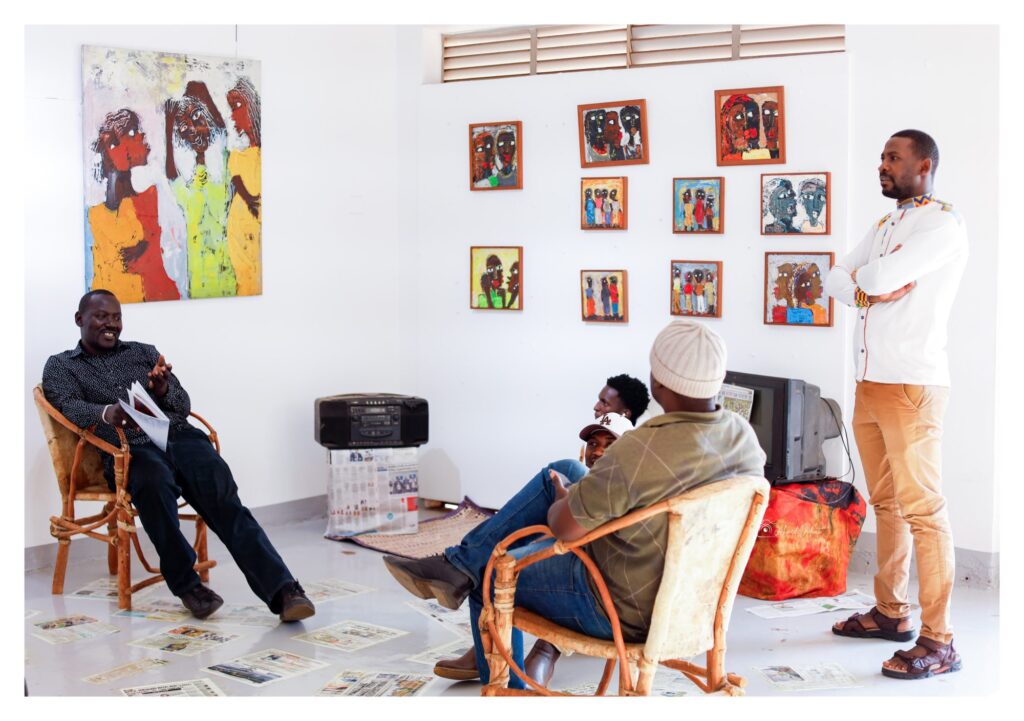 At “Tuula Tuwaye,” however, the conversation feels particularly direct.
The exhibition reflects on the cost of silence and the weight of conversations left unfinished. In a society where people can become increasingly disconnected despite being constantly connected digitally, Kalule’s work asks viewers to reconsider the value of simply sitting together and listening.
His message is not delivered as a lecture. Instead, it unfolds through the paintings, leaving room for each viewer to bring their own experiences into the conversation.
For Kalule, art becomes a meeting place a space where difficult questions can be approached through colour, gesture and emotion.
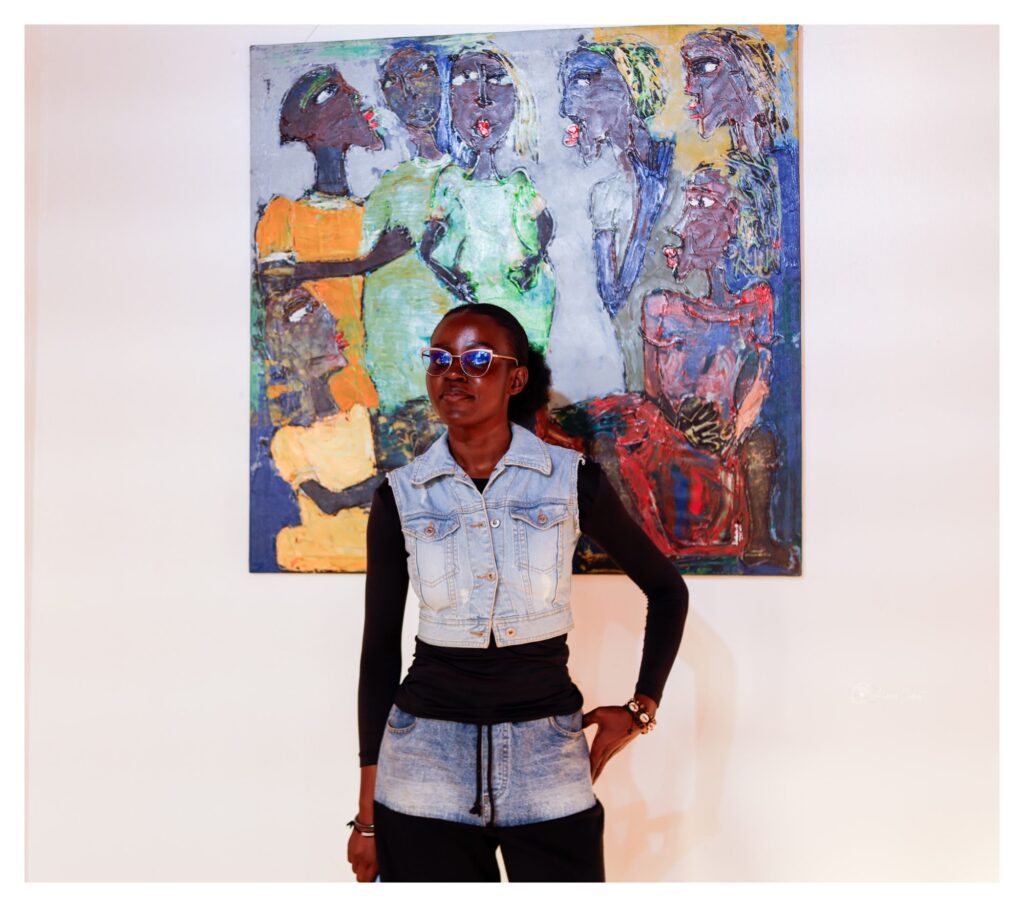
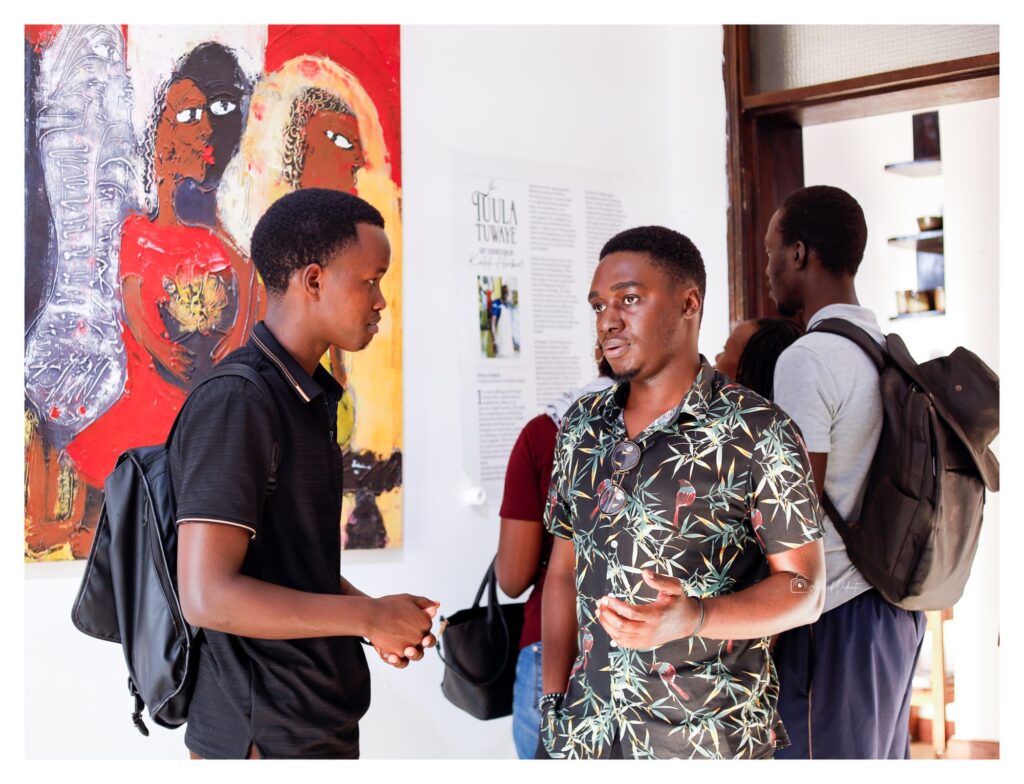
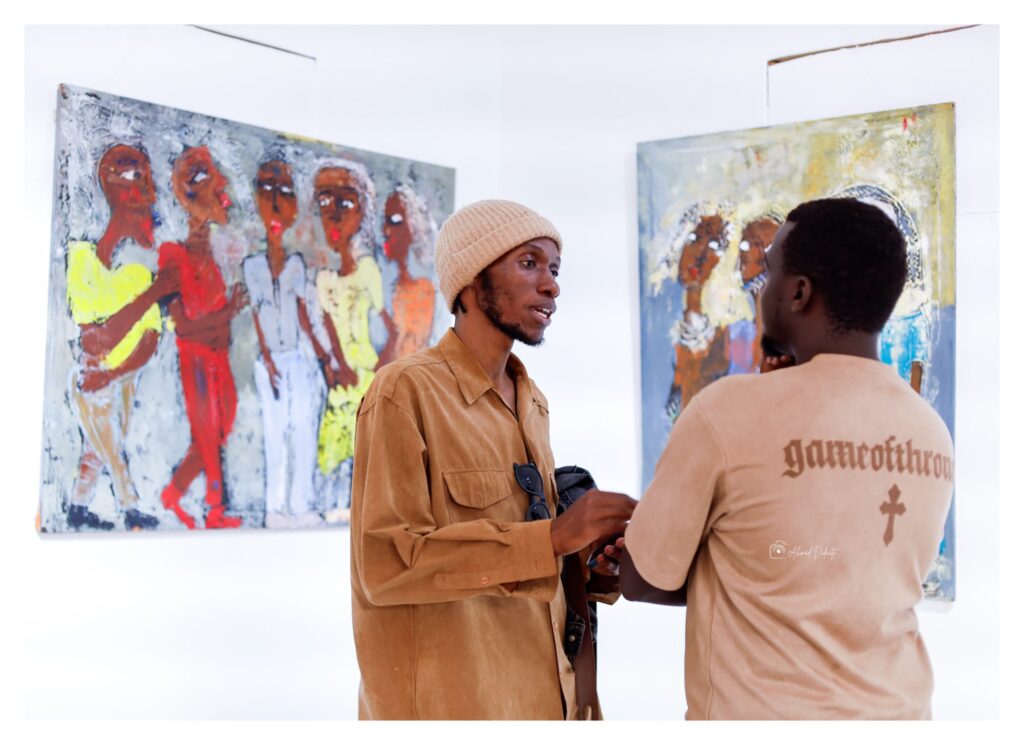 The exhibition marks another chapter in the journey of an artist who has remained closely connected to Uganda’s contemporary art community.
Kalule has been associated with Umoja Art Gallery, a space he helped bring into existence in 2011. The gallery has provided opportunities for artists to exhibit their work and contributed to the development of Uganda’s visual arts scene.
His work has also reached audiences beyond Uganda, with his paintings and other works appearing in regional and international collections and exhibitions. The ARAK Collection, for example, has documented his practice and includes his work in its collection.
 Yet the power of “Tuula Tuwaye” may lie less in where Kalule’s work has been exhibited and more in the question it leaves with those who encounter it.
At a time when conversations can quickly become arguments, and silence can replace understanding, Kalule’s invitation is simple:
Sit down. Stay a little longer. Talk.
Through his paintings, he reminds us that art does not always have to provide answers.
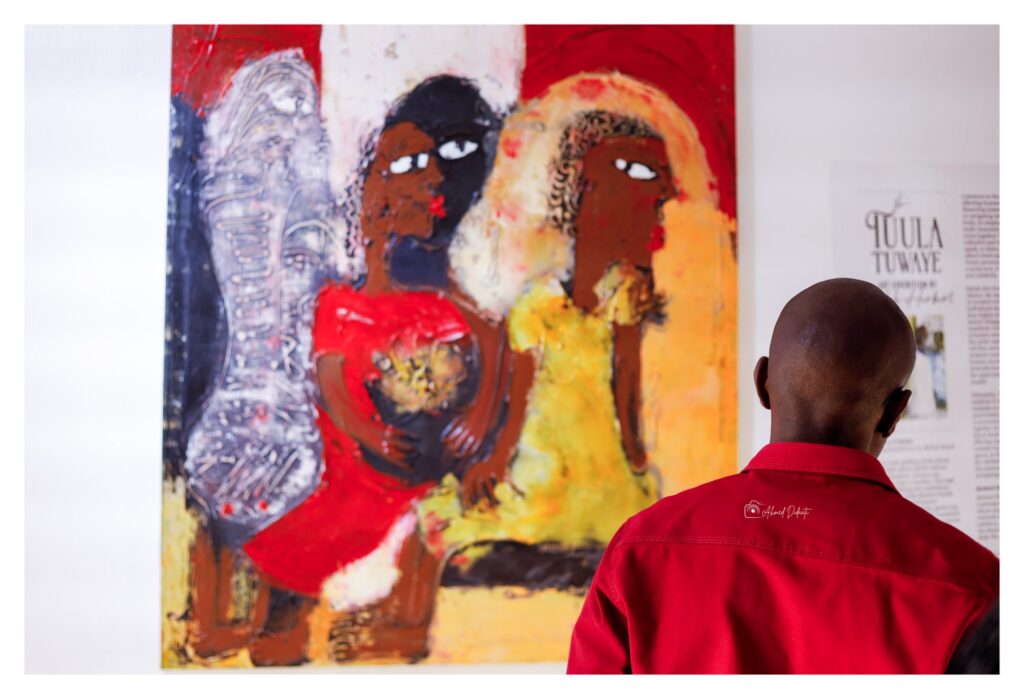
Sometimes, it simply needs to bring people into the same room and give them a reason to begin the conversation.
This post was created with our nice and easy submission form. Create your post!

Did this story move you? Every gift goes directly to Ahmed Didaati — writers on Muwado earn from reader appreciation, not algorithms. Even $1 makes a difference.




Muwado weekly chart
Get Africa’s top 10 stories every Thursday
No account needed — just your email.
Want to follow Ahmed Didaati and get notified every time they publish?
Create a free Muwado account →