

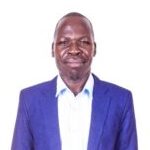
 Buleni Milton

Buleni Milton’s story is one of resilience, quiet determination, and an unyielding belief that circumstances do not define destiny. He was born and raised in a modest village in Maracha District, in the West Nile region of Uganda—a place where life moved at a slower pace, but where challenges came early and often. Like many children in rural Uganda, Milton grew up understanding responsibility long before adulthood. His parents grew tobacco (a major cash crop in the region by then) and worked hard to provide for the family, but resources were limited. Yet, from a young age, Milton showed something uncommon: a deep curiosity and a hunger for education.
His formal journey began at Koyi Primary School, a simple rural school surrounded by dusty paths and scattered homesteads. The classrooms were basic—wooden desks, chalkboards worn from years of use, and textbooks that were often shared among several pupils. But for Milton, none of this mattered. He was driven. Every morning, he would wake up before sunrise, help with household chores, and then walk to school. Sometimes barefoot, sometimes with worn-out shoes, but always determined. He listened carefully in class, asked questions, and spent extra time revising under dim kerosene lamps at night. By the time he reached Primary Seven, his teachers had already noticed that Milton was not just hardworking—he was exceptional. He consistently ranked among the top students, and his discipline set him apart. When the time came for the Primary Leaving Examinations (PLE) in 2002, expectations were high. Milton did not disappoint. He scored 8 aggregate points, one of the best results in his area. It was a moment of pride not just for him, but for his family, his school, and the entire community. For a boy from a rural background, this was more than just an academic achievement—it was a signal of potential. With this success, Milton secured admission to Otravu Secondary School for his O-Level studies, starting in 2003.
Transitioning to secondary school was not easy. The academic demands were higher, the environment more competitive, and the financial pressure on his family more intense. He recalled in his S.4 when he was told that he wouldn’t register for UCE because he had not paid fees. His parents gave the school bricks as his school fees and he was allowed to register. But Milton adapted quickly. He approached his studies with the same seriousness that had defined his primary school years. He developed strong study habits, formed discussions with classmates, and sought guidance from teachers whenever necessary. He was not just studying to pass—he was studying to excel. Over the next four years, Milton’s performance continued to rise. By the time he reached Senior Four in 2006, he had established himself as one of the top students in the district. When the Uganda Certificate of Education (UCE) results were released, the outcome was remarkable. Milton emerged as the best student in Maracha District and the fifth best in the entire West Nile region. It was a defining moment. For a young boy who had started his journey in a rural primary school with limited resources, this achievement was proof that determination could overcome circumstance. His name became known beyond his immediate community. Teachers praised him. Fellow students looked up to him. His family was proud.
With such results, the next step was clear—A-Level. Milton joined Mvara Secondary School, one of the respected institutions in the region, to pursue a combination in Physics, Chemistry, Biology, and Mathematics (PCB/M). It was an ambitious choice, reflecting his interest in science and his dream of building a future in a technical or medical field. However, this phase of his life would test him in ways he had never experienced before. While his academic ability remained strong, the financial burden became overwhelming. School fees, accommodation, scholastic materials—everything required money that his family struggled to provide. At first, they tried. There were sacrifices, delays, and efforts to keep him in school. But as time went on, it became clear that sustaining his education at that level was becoming impossible. Milton faced a painful reality: he could not continue. For a young man who had worked so hard, who had achieved so much, and who had dreams of going even further, this was devastating. It was not a failure of ability—it was a limitation imposed by circumstance.
After leaving Mvara, Milton made a difficult decision. He travelled to Luwero to find his father, who was working there as a security guard. It was not a glamorous job. His father worked long hours, often at night, earning just enough to survive. But he welcomed Milton with open arms. In Luwero, life was different. The pace was faster, the environment unfamiliar, and the expectations uncertain. Milton knew he could not remain idle. He needed to find a way to support himself and, if possible, contribute to his family. Through determination and persistence, he secured a job as a teacher at New Way Primary School in Wobulenzi. The salary was modest—just 70,000 Ugandan shillings per month. For many, such an amount might seem insignificant. But for Milton, it represented something important: a starting point. As a teacher, he stood in front of young pupils, many of whom reminded him of his younger self. He taught them with passion, patience, and dedication. He understood their struggles because he had lived them. He encouraged them not just to learn, but to believe in themselves. Despite the challenges, Milton did not give up on his dreams. He used his time wisely. He continued reading, learning, and thinking about his future. He observed the world around him, identified opportunities, and reflected on how he could rise again. His journey had taken an unexpected turn, but he refused to let it end there.
The experience of teaching, though financially limited, shaped him in important ways. It built his communication skills, strengthened his sense of responsibility, and deepened his understanding of community challenges. He saw firsthand how poverty affected education, how lack of resources limited potential, and how many young people faced the same struggles he had encountered. But instead of becoming discouraged, Milton became more determined. He began to see his story not as one of loss, but as one of preparation. Every challenge he faced—walking long distances to school, studying without adequate materials, excelling under pressure, dropping out due to financial constraints, working for a small salary—was shaping him into a resilient, disciplined, and resourceful individual. He realized that success was not always a straight path. Sometimes, it involved detours, setbacks, and sacrifices. But what mattered was persistence.
Milton’s journey from Koyi Primary School to Otravu Secondary School, to Mvara, and then to Luwero was not just a sequence of events. It was a story of growth, resilience, and unwavering belief. Even in his most difficult moments, he never lost sight of who he was and what he could become. And though his story was still unfolding, one thing was clear: Buleni Milton was not defined by where he started, or even by the challenges he faced. He was defined by his determination to rise, to adapt, and to keep moving forward—no matter the obstacles. His story is a reminder that sometimes, the strongest people are not those who have everything, but those who keep going even when they have very little. And for Milton, this was only the beginning.
This post was created with our nice and easy submission form. Create your post!
Written by
Did this story move you? Every gift goes directly to Buleni Milton — writers on Muwado earn from reader appreciation, not algorithms. Even $1 makes a difference.





Muwado weekly chart
Get Africa’s top 10 stories every Thursday
No account needed — just your email.
Want to follow Buleni Milton and get notified every time they publish?
Create a free Muwado account →