

 David. B. Namugo
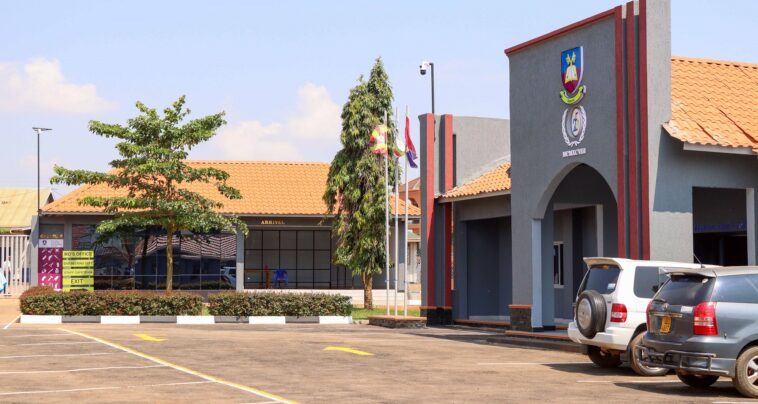
AN OPEN LETTER AND PUBLIC-INTEREST WHISTLEBLOWER PETITION TO THE MINISTRY OF EDUCATION AND SPORTS
TO: The Honourable State Minister for Primary Education
Ministry of Education and Sports
Republic of Uganda
CC: The District Education Officer, Wakiso District
CC: The Commissioner, School Inspection
CC: The Relevant Public Health and Environmental Health Authorities, Wakiso District
FROM: Concerned Parents and Guardians of Students of St. Peter’s Naalya Secondary School (SPENA)
RE: AN URGENT CALL FOR GOVERNMENT INTERVENTION, PROTECTION OF CHILDREN AND WHISTLEBLOWERS, AND AN INDEPENDENT INVESTIGATION INTO ALLEGED DEPLORABLE SANITATION, HEALTH, WELFARE, LABOUR AND GOVERNANCE CONDITIONS AT ST. PETER’S NAALYA SECONDARY SCHOOL
Honourable Minister,
We, the concerned parents and guardians of students of St. Peter’s Naalya Secondary School (SPENA), write this open letter and public-interest whistleblower petition out of profound concern for the health, safety, welfare, dignity and education of our children.
We have reached this stage because repeated concerns allegedly raised with the school administration have, according to affected parents, failed to receive an adequate response. Some parents and staff members further allege that those who have attempted to speak out, demand accountability or seek redress have faced intimidation, victimisation, threats, dismissal and, in some instances, alleged physical confrontation.
This communication is therefore not intended to prejudge any individual or institution. These are serious allegations that require urgent, independent, impartial and transparent investigation. However, where the health, safety and welfare of children may be at stake, waiting for a preventable tragedy before acting would be irresponsible.
We respectfully submit that the matters raised herein engage several fundamental constitutional rights and statutory protections under the laws of Uganda.
1. THE RIGHT TO HEALTH AND THE STATE’S DUTY TO PROTECT CHILDREN
The Constitution of the Republic of Uganda establishes the protection of human rights and dignity as a central obligation of the State. Under Article 45, the rights expressly recognised in the Constitution do not exclude other fundamental rights and freedoms inherent in human dignity.
Furthermore, Objective XIV of the National Objectives and Directive Principles of State Policy places an obligation on the State to ensure that all Ugandans enjoy access to health services. Objective XX further requires the State to take all practical measures to ensure the provision of basic medical services to the population.
The Constitution also gives special protection to children. Article 34 provides that children are entitled to basic education and other protections necessary for their welfare and development. Article 34(4) specifically recognises the right of a child to be protected from social or economic exploitation and from employment or conditions that are likely to be hazardous or harmful to their health, education or development.
The reports we are raising concerning allegedly filthy sanitation facilities, including toilets said to be infested with maggots, inadequate hygiene and fears regarding the management of food and learner welfare must therefore not be treated as ordinary customer-service complaints.
If confirmed, such conditions may present a direct and serious threat to the health, dignity and safety of children.
With the rainy season approaching, our concerns become even more urgent. Poor sanitation and environmental hygiene can create conditions in which communicable and water- or sanitation-related diseases spread rapidly. We do not seek to sensationalise or predict an outbreak. However, we submit that the relevant authorities have a duty to investigate and prevent foreseeable public-health risks before they escalate into a crisis.
No child should have to become seriously ill before an education institution is inspected.
2. THE CONSTITUTIONAL RIGHT TO A CLEAN AND HEALTHY ENVIRONMENT
Article 39 of the Constitution of the Republic of Uganda provides that every Ugandan has a right to a clean and healthy environment.
This right is not suspended merely because a child attends a private school or because a parent has voluntarily enrolled that child in a private educational institution.
A private school remains responsible for ensuring that the environment in which children study, eat, use sanitation facilities and spend significant portions of their lives meets lawful standards of health, hygiene, safety and human dignity.
The allegations concerning sanitation at SPENA therefore raise issues that go beyond private contractual arrangements between parents and a school. They potentially engage the constitutional right of learners to exist and study within a clean and healthy environment.
The response cannot simply be that dissatisfied parents should “take their children elsewhere.”
A child’s constitutional and statutory protections do not disappear because the institution responsible for the child’s care and education is privately owned.
3. THE RIGHT TO EDUCATION
Article 30 of the Constitution provides that all persons have a right to education.
The right to education must be understood as more than the mere existence of classrooms, lessons and examinations. Meaningful education requires an environment in which learners can attend school safely, with reasonable standards of sanitation, welfare, nutrition, dignity and protection.
A child cannot reasonably be expected to benefit fully from education while allegedly studying in conditions that threaten their health or undermine their dignity.
The fact that SPENA has historically been regarded as an institution associated with academic excellence makes these allegations even more distressing to parents. St. Peter’s Naalya was, for many years, viewed by many families as a symbol of educational excellence and aspiration.
It is therefore painful for parents to believe that an institution in which they placed such trust and invested substantial financial resources may now be facing allegations that require urgent intervention.
We do not write because we wish to destroy the school.
We write because we believe the school, its learners, its staff and its reputation can only be protected through truth, accountability and corrective action.
4. THE RIGHTS TO FREEDOM OF EXPRESSION, ASSOCIATION AND PARTICIPATION IN PUBLIC AFFAIRS
Article 29 of the Constitution protects fundamental freedoms, including freedom of expression and freedom of assembly and association.
Parents have a constitutional right to speak, raise concerns, organise collectively and associate with one another for the purpose of protecting the interests and welfare of their children.
Teachers and staff members also have rights to freedom of expression and association, subject to the law.
Accordingly, the alleged intimidation, victimisation, threats or dismissal of individuals merely because they raised genuine concerns would, if established, raise serious constitutional and legal questions.
Parents should not be physically attacked or intimidated for asking questions about:
- the food their children are receiving;
- the sanitation facilities their children are using;
- the safety of the school environment;
- how money paid to the institution has been utilised; or
- whether their children’s health and welfare are being adequately protected.
Likewise, teachers and employees should not be unlawfully silenced for raising concerns regarding unpaid wages, unsafe conditions or serious matters affecting the welfare of children.
Speaking out against conditions that may endanger children or violate the law is not disloyalty. In appropriate circumstances, it is an act of responsibility and public service.
5. THE CHILDREN ACT AND THE BEST INTERESTS AND WELFARE OF THE CHILD
The Children Act is founded on the principle that the welfare and best interests of the child must be a primary consideration in decisions and actions affecting children.
Every authority, institution, school administrator, parent, employer and public official dealing with children must place the child’s welfare at the centre of decision-making.
This principle must guide the investigation of the matters raised in this petition.
The fundamental question should not be:
“Is the school private, and can parents take their children elsewhere?”
The proper question should be:
“Are the children currently enrolled at the institution safe, healthy, adequately protected and being educated in conditions consistent with their dignity and best interests?”
Children do not lose their right to protection because their parents have paid fees.
Indeed, the collection of substantial school fees creates an even greater obligation on an institution to ensure transparency, accountability and reasonable standards of welfare and service.
6. PROTECTION OF WORKERS, UNPAID WAGES AND ALLEGED VICTIMISATION OF STAFF
We are equally concerned by allegations relating to teachers and other members of staff.
Parents and current or former employees have reportedly raised concerns that some staff members have allegedly gone for extended periods without receiving their salaries, despite continuing to work. It is further alleged that employees who demanded payment or raised concerns about their working conditions were dismissed without receiving monies allegedly owed to them.
There are also disturbing allegations that some individuals were warned or threatened against speaking publicly about the conditions within the institution.
If established, such conduct would require serious scrutiny under Uganda’s employment and labour laws, including the Employment Act, 2006.
The Employment Act provides a legal framework governing employment relationships, the payment of wages and salaries, fair treatment of employees, termination of employment and remedies for unlawful or unfair employment practices.
In particular, any allegations of:
- persistent or unlawful non-payment of wages;
- failure to honour employment obligations;
- dismissal without due process;
- withholding of monies lawfully due to employees;
- victimisation for raising legitimate workplace concerns; or
- maintaining employees in conditions that threaten their health, safety or dignity,
must be independently investigated by the relevant labour authorities.
Teachers are not disposable instruments. They are workers, professionals and human beings entitled to the protection of the law.
No employee should be forced to remain silent about serious workplace or child-welfare concerns merely because they fear losing their salary, their job or their personal safety.
We therefore call upon the Ministry of Gender, Labour and Social Development, where necessary, and the relevant labour officers to investigate the employment-related allegations raised against the school.
7. ALLEGATIONS OF ASSAULT, THREATS AND INTIMIDATION: THE NEED FOR POLICE INTERVENTION
We are deeply concerned by allegations that some parents who went to the school to complain about the conditions affecting their children were physically confronted or assaulted.
We are also concerned by allegations that certain current or former staff members were threatened or intimidated against speaking out.
The Police Act establishes the mandate of the Uganda Police Force in the protection of life and property, preservation of law and order, prevention and detection of crime and enforcement of the law.
Where credible allegations of assault, criminal threats, intimidation or other offences are made, they should not be treated as internal administrative disputes.
We therefore call upon the relevant police authorities to ensure that any affected parent, teacher, staff member or former employee who wishes to make a formal complaint is able to do so safely, confidentially and without intimidation.
Any criminal allegations should be investigated independently and in accordance with due process.
No person should have to choose between seeking justice and protecting their physical safety.
8. THE RIGHT TO A SAFE, PEACEFUL AND APPROPRIATE SCHOOL ENVIRONMENT
We also raise serious concerns regarding reports of a discotheque and nightclub operating directly opposite the school’s main entrance.
Parents who questioned the appropriateness and possible impact of such an establishment in immediate proximity to a school have reportedly been dismissed and, according to some accounts, told to take their children elsewhere.
This issue requires examination by the relevant local government, licensing, planning and regulatory authorities.
The question is not merely whether a business has been established.
The question is whether its location, operation, noise, hours of activity, security implications and overall impact are compatible with the safety, welfare and learning environment of children attending a secondary school directly opposite or adjacent to the establishment.
We therefore request the competent authorities to review:
- the relevant licences and approvals;
- planning and land-use compliance;
- noise and environmental considerations;
- public safety and child-protection implications; and
- whether the operation is consistent with the welfare of learners.
9. ACCOUNTABILITY FOR SCHOOL TRIPS AND MONEY PAID FOR SERVICES NOT PROVIDED
We further raise concerns regarding money allegedly paid by parents for school trips and activities that did not ultimately take place.
Following national restrictions and interventions concerning school trips after increased accidents involving learners, some parents allege that trips for which money had already been paid were subsequently cancelled or suspended.
The affected parents further allege that SPENA refused to:
- refund the money paid;
- carry the funds forward to future approved school activities; or
- credit the money toward school fees or other legitimate school obligations.
If established, this raises serious concerns regarding financial accountability, consumer fairness and the fiduciary responsibility of an institution handling parents’ money for specific purposes.
Parents are entitled to a transparent explanation of:
- how much money was collected;
- how many parents paid;
- whether any services were already procured;
- what expenditure, if any, was legitimately incurred;
- what balances remained after cancellation; and
- how the remaining funds were accounted for.
Money collected for a specific service that was not ultimately provided should not simply disappear into silence.
We therefore request a proper financial review of all funds collected for cancelled or suspended school trips and activities, and appropriate remedies where parents are found to be entitled to refunds or credits.
10. THIS IS A MATTER OF PUBLIC INTEREST, NOT MERELY A PRIVATE DISPUTE
We acknowledge that SPENA is a private educational institution and that parents, in principle, may choose where to educate their children.
However, this argument cannot be used to avoid scrutiny of alleged violations affecting children currently enrolled at the school.
The private status of a school does not place it above the Constitution, the laws of Uganda, public-health standards, labour laws, child-protection laws or lawful government inspection.
Parents who have already paid substantial fees cannot always immediately withdraw their children without causing serious educational disruption and financial hardship.
Some parents have reportedly already removed their children. Others remain only because the school term is still ongoing, because they have already paid fees or because they are trying to secure alternative placements.
Their children remain entitled to protection today.
They cannot be told to wait for the end of the term while serious allegations concerning sanitation, health, food, safety and welfare remain unresolved.
11. OUR URGENT CALL TO THE GOVERNMENT OF UGANDA
In light of the above, we respectfully but urgently call upon the Ministry of Education and Sports, the Wakiso District Education Office and all other competent authorities to:
1. Conduct an immediate, independent and preferably unannounced inspection
The inspection should cover all sanitation facilities, kitchens, food storage areas, water sources, dormitories or accommodation facilities, classrooms and other areas affecting the health and welfare of learners.
2. Deploy qualified public-health and environmental-health officers
The relevant authorities should urgently assess whether the school environment meets minimum public-health, sanitation and environmental standards, particularly in light of the approaching rainy season.
3. Investigate all allegations concerning food and student welfare
This should include an assessment of whether learners are receiving adequate, safe and properly managed meals and whether parents’ fees are reasonably reflected in the welfare services provided.
4. Establish a confidential whistleblower and witness-protection mechanism
Parents, students, teachers, employees and former employees should be able to provide evidence without fear of assault, intimidation, dismissal, threats or other retaliation.
5. Investigate allegations concerning unpaid salaries and staff mistreatment
Relevant labour authorities should examine allegations of unpaid wages, unlawful dismissals, withholding of employment benefits and alleged victimisation of workers.
6. Investigate all alleged assaults, threats and intimidation
Any affected person should be enabled to report criminal allegations to the appropriate police authorities safely and without interference.
7. Audit money collected for school trips and cancelled activities
The school should be required, where appropriate, to provide a clear accounting of money collected for activities that did not take place and to provide refunds or credits where lawfully justified.
8. Review the nightclub and discotheque operating opposite the school
Relevant licensing, planning, environmental and local government authorities should assess its legality and its implications for child welfare, safety and the school environment.
9. Require a corrective action plan
If the allegations are substantiated, the school should be required to immediately implement a time-bound corrective plan addressing sanitation, learner welfare, food, staff welfare, governance and accountability.
10. Communicate the outcome to affected stakeholders
Parents deserve to know what was investigated, what was found and what action has been taken, while protecting the privacy and safety of children and whistleblowers.
12. OUR FINAL APPEAL
Honourable Minister, we are asking the Government of Uganda to act before this situation deteriorates into a preventable crisis.
We do not want a child to fall seriously ill before sanitation conditions are investigated.
We do not want an outbreak of a preventable disease before public-health authorities intervene.
We do not want another parent to fear physical confrontation for demanding answers.
We do not want another teacher to lose their livelihood for speaking about unpaid wages or unsafe conditions.
We do not want children to continue studying in conditions that, if these allegations are established, are inconsistent with the constitutional promise of dignity, health, education and a clean and healthy environment.
And we do not want an institution that was once regarded as a beacon of academic excellence to continue losing the confidence of the very parents and families who built and sustained its reputation.
Our children are not merely customers. They are children first. Their health, safety, dignity and future must come before profit, convenience, institutional image or administrative silence.
We therefore respectfully call for urgent intervention, an independent investigation, protection of whistleblowers and witnesses, and full accountability where any wrongdoing is established.
We are prepared to cooperate with competent authorities and, where appropriate and safe, provide evidence, testimonies, photographs, videos, payment records, correspondence and other relevant information to support a lawful and impartial investigation.
We ask the responsible authorities to hear us.
We ask them to inspect.
We ask them to investigate.
And above all, we ask them to protect our children.
Yours faithfully,
CONCERNED PARENTS AND GUARDIANS OF STUDENTS OF
ST. PETER’S NAALYA SECONDARY SCHOOL (SPENA)
A PUBLIC-INTEREST WHISTLEBLOWER COMMUNICATION MADE IN DEFENCE OF CHILD WELFARE, PUBLIC HEALTH, THE RIGHT TO EDUCATION, A CLEAN AND HEALTHY ENVIRONMENT, FREEDOM OF EXPRESSION, WORKERS’ RIGHTS AND ACCOUNTABILITY.
This post was created with our nice and easy submission form. Create your post!

Written by
Did this story move you? Every gift goes directly to David. B. Namugo — writers on Muwado earn from reader appreciation, not algorithms. Even $1 makes a difference.



Muwado weekly chart
Get Africa’s top 10 stories every Thursday
No account needed — just your email.
Want to follow David. B. Namugo and get notified every time they publish?
Create a free Muwado account →