

 Ganzi Isharaza
At the height of Dr. Milton Obote’s fallout with Museveni, he (Obote) repeatedly insisted that Museveni was not a Ugandan citizen. At a rally in Mbarara, he asked the people to ponder on whether a ‘Munyarwanda’ who was willing to burn their (Ntare) school was worthy of their support. Later on, in a BBC interview with Robin White, Obote was challenged to qualify his assertion. What did he mean by claiming Museveni was a foreigner?
“Because his father was not born in this country”, Obote replies.
The irony of his assertion was perhaps lost on both interviewer and interviewee; Museveni’s father, Amos Kaguta- assumed to have been born in or around 1916, was born well before the nation state called Uganda was! In other words, one could not use Kaguta Snr’s place of birth as the basis of determining whether Museveni was Ugandan or not.
Interestingly, it was not the first time Museveni’s citizenship was being questioned. After his secondary school studies in Ntare, he applied to and qualified (academically) for admission to Makerere for his undergraduate studies. He however, was rejected on account of lack of proof of citizenship. The requirement at the time, was that prospective students have their parents provide graduated tax tickets as evidence of citizenship. He could not. It was none other than Obote that unsuccessfully tried to vouch for him, describing Museveni to the university’s scholarship committee as one of his UPC Youth wingers!
One must pause to wonder what happened between then and the 1985 BBC interview that made Obote change his opinion of Museveni’s citizenship. Here was a protégé (I suspect Museveni would reject that characterization) who had been born in Uganda, to parents that were at the very least permanently settled in Uganda way before Uganda was declared a nation, lived and studied in Uganda. Upon his return from the University of Dar-es-salaam, Museveni was unquestioningly employed in the intelligence services and for good measure, was even appointed Minister of Defence in the post-Amin government! How is it that a so-called foreigner could be given such responsibilities and his loyalty or citizenship never brought into question by those in authority until- and only until- he turned against his benefactor?
Many have speculated as to the answer. I for one, find it extremely convenient of Obote to have played the ‘foreigner’ card only when being faced with a rebellious Museveni. In any case, it is proof of the enduring nature of the struggle for acceptance experienced by Ugandans of Rwandese descent have faced over the years and demonstrates that it really did not just start after the genocidal attacks of the 1950s or 1990s. But these are not the only group of people to face this challenge.
I am 40 years old. For the first half of my life, a war raged in northern Uganda. During those 20 years, most of the rest of the country went about its business as though nothing serious was going on. I read about the LRA very much the same way people in Washington or London did. It wasn’t until my days as an undergraduate student that the extent of the war’s impact began to sink in. I was having a conversation with a dear friend of mine (now departed) that she randomly asked, ‘what do you think your life would be like if now, at 21, the only time you had experienced anything other than war and the threat of war, was this past year?” She then told me how, for most people in Northern Uganda that were our age, the notion that Uganda was peaceful was laughable. Theirs was an entirely different kind of Uganda in which every sunset brought with it the prospect of having your head chopped off or worse, being forced to chop off your family members’ heads, cook them in pots and then get gang raped before finally being given away to one of the rebels as a ‘wife’. For many there, it was more realistic to think of a Nile Republic than see themselves as part of Uganda.
In southern Uganda, the sense of exclusion from Uganda was felt by the Bakonzo and Baamba as early as before independence. The Rwenzururu rebellion of 1962 was an attempt by them to secede and form a country they could call home. Fifty-four years later, in 2016, hundreds of Rwenzururu loyalists were massacred by the UPDF while attempting to revive their forefathers’ dreams.
Back in the central region, the enduring-even fervent desire for secession at best and federalism at least, has been at the heart of what is commonly known as the Buganda Question.
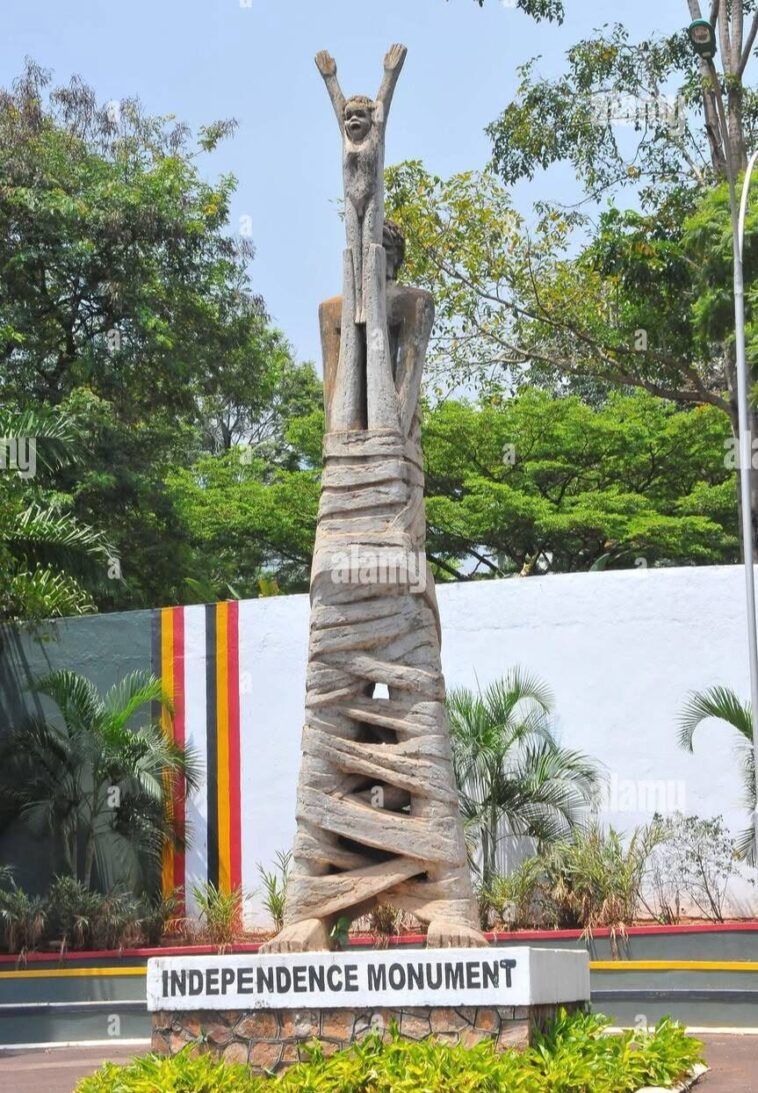
Whichever way you one looks, it is impossible to deny that for the most part, Uganda is a collection of peoples whose identity first and foremost, is ethnic. The positive spin we put on this is that we are one of the most diverse countries in the world. In truth, we are a country at war with ourselves and whose identity was defined by others. Even the country’s name is a historical mistake at best. Unlike Kenya, whose name was inspired by a natural feature of some national pride (Mt. Kenya) or Tanzania that is a portmanteau of two locally named places (Tanganyika and Zanzibar), Uganda quite bluntly, is simply the British’s misspelling of Buganda kingdom.
Who then, shall we say is truly Ugandan? The Baganda, from whom our name came? What would happen to the great kingdom then? And what should be done about the other great kingdoms, chiefdoms and people that would be pulled into this? At what point does one become accepted as a Ugandan? When they shed off everything perceived as foreign? When they forego everything they have known as being a part of them? When one among them ‘eats big’ in the central government? This question cannot be answered legally, for laws only clarify what society deems to be right or wrong, just or unjust. It is to anthropology, not law, that we must turn for answers.
David F. Mpanga famously posited that we shall never see the Uganda we want until we develop a central nervous system that enables us to feel each other’s pain. To do that, I propose that the only way we must look is backwards. Back into our history for a sense of where we went wrong. Back into our consciences for an inkling of what we may have got wrong. Back into our origin and the tumultuous and uncomfortable mess that is our past. For when you realise that you are headed in the wrong direction, going back to the starting point is, in fact, progress.
This post was created with our nice and easy submission form. Create your post!

Written by
Did this story move you? Every gift goes directly to Ganzi Isharaza — writers on Muwado earn from reader appreciation, not algorithms. Even $1 makes a difference.




Muwado weekly chart
Get Africa’s top 10 stories every Thursday
No account needed — just your email.
Want to follow Ganzi Isharaza and get notified every time they publish?
Create a free Muwado account →