

 Tema Innocent

Kawempe North was restless on March 13, 2025. Nomination day for a by-election had arrived, and the dusty roads twisted like veins of a giant that refused to sleep. The air carried both promise and threat, a tension that clung to the skin like humidity before a storm. The sun dipped low, shadows stretched long, but the real darkness was not in the sky—it was in the boots of men in uniform, in the masks that hid their faces, in the wires they carried like whips. This was the day journalism became the enemy of power, and the story was written not in ink but in bruises.
At the center of it all was Canary Mugume, the NBS TV anchor whose voice had cut through static for years, exposing land grabs, police brutality, and the silent screams of the abducted. With over a million followers on X, Canary was not just a journalist; he was a symbol of truth in a country where truth had become dangerous. On this day, he was simply doing his job, microphone in hand, camera rolling, chasing the story in Kawempe’s chaos. But the story chased him back. “Just survived an assault in Kawempe,” he posted later, his words trembling not from fear but from adrenaline. A masked soldier had lunged from a motorbike, wire whip slicing the air. Canary ducked, ran, the camera shaking like a heartbeat. Behind him, a drone vehicle screeched, doors flung open like jaws of a beast. His crime was simple: doing his work as a journalist.
The video attached to his post told what words could not. Dust rose like angry spirits as the soldier’s boots hit the ground. The wire sang through the air—zzzip!—missing Canary’s head by inches. The drone vehicle followed, its presence a reminder of the abductions that had haunted Uganda’s political landscape. But Canary did not freeze. He ran, but he ran with purpose—toward the people, toward the truth. His survival was not just personal; it was symbolic. It showed the face of the oppressor, even if hidden behind a mask.
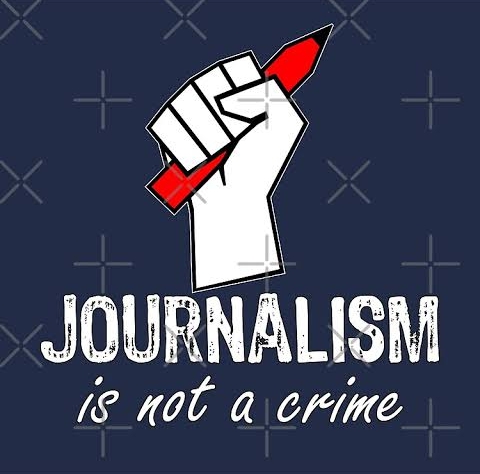
Across town, in the sterile white of Kampala Hospital, another chapter unfolded. Bobi Wine, the opposition leader often called the people’s general, stood over hospital beds where journalists lay broken. Francis Isano could not speak, his jaw swollen shut. Abubakar Lubowa struggled to walk, his legs bruised black and blue. “The extreme violence against journalists forced all media houses to withdraw them from the field,” Bobi posted, his words heavy with grief and fury. “Effectively giving room to Museveni’s goons to do whatever they wanted—assaulting leaders, raiding polling stations, ballot stuffing.” His voice, usually thunderous at rallies, was now a whisper over broken bodies. “Journalism is not a crime,” he said, and the words hung in the air like smoke from a dying fire.
NTV Uganda, usually the eyes of the nation, went blind that day. Their reporter Abubakar Lubowa had been live on air when soldiers descended. “Security officers arrived, armed with solid wires, batons, cables…” the station posted. “They came straight for us, first confiscating our cameras, then the beating began.” By evening, NTV pulled all crews from the field. The screen went black. The story died. But the storytellers did not stay silent.
Agather Atuhaire, lawyer-journalist with a tongue sharper than a panga, took to X like a warrior to battle. “Poor Francis Isano still can’t even speak or eat. Abubakar Lubowa still struggles to walk… These were journalists simply covering a small Parliamentary by-election… But no one will answer for this unnecessary brutality.” She named the officer. She demanded justice. The Uganda Parliamentary Press Association drew a line in the sand: “Journalists cannot continue to operate under hostile conditions.” Capital FM Uganda announced a boycott: no more coverage of police or UPDF events. The hashtag #JournalismIsNotACrime trended like a war cry, echoing from Kampala to the diaspora.
Even the winners spoke. Luyimbazi Nalukoola, newly elected MP for Kawempe North, posted days later: “The targeting of journalists during the by-election is a stain on our democracy. The media, the eyes and ears of the public, were silenced. Some journalists remain hospitalized, yet security forces have neither acknowledged wrongdoing nor held their officers accountable.” His words carried the weight of victory tainted by violence.
The pattern was older than 2025. In 2021, police had claimed they beat journalists “for their own safety.” NTV Kenya reported it with a straight face: “Ugandan police say they have been beating journalists to restrain them from going where there’s danger.” The lie was so bold it circled back to truth in the mouths of the powerful. But the people were not fooled. In the UK, the NUP diaspora chapter posted a warning that chilled the spine: “The election in Uganda is a fully fledged military operation… the cowardice dictator deploys soldiers to interfere in the election… and to harass, intimidate, threaten and terrorise political opponents, journalists and the general public.” And in the quiet of night, Mordecai Muriisa, the media host with a conscience, asked the question no one in power wanted to hear: “Why choose to align with NRM, a party whose structures are deeply intertwined with institutions often accused of repressing media freedom?”
The Committee to Protect Journalists counted 33 assaults in Kawempe alone that weekend. Human Rights Watch called it “a deliberate campaign to silence dissent.” But in the villages, people didn’t need reports. They saw the blacked-out TV screens. They heard the whispers of pre-ticked ballots. They felt the fear in their bones. Yet Canary’s survival became a rallying cry. His video, shared thousands of times, showed the face of the oppressor—even hidden behind a mask. His escape was proof that truth could still outrun lies, even if only by inches.
As January 2026 looms, the story is not over. The journalists are healing. The cameras are charging. The truth, bruised but unbroken, waits in the shadows. The hyena does not fear the night, but the night remembers the hyena’s howl. Kawempe’s dark night will be remembered. The howls of soldiers, the silence of screens, the courage of Canary Mugume and his fellow truth-tellers—they will echo into 2026. Journalism is not a crime. It is the fire that lights the path to freedom.
This post was created with our nice and easy submission form. Create your post!
Written by
A sports Journalist with RabSports Uganda, Advocate for Children’s Rights and Youths, Amazing Storyteller with DW Akademie and UNICEF, Independent Researcher, Student at Muni University
Did this story move you? Every gift goes directly to Tema Innocent — writers on Muwado earn from reader appreciation, not algorithms. Even $1 makes a difference.






Muwado weekly chart
Get Africa’s top 10 stories every Thursday
No account needed — just your email.
Want to follow Tema Innocent and get notified every time they publish?
Create a free Muwado account →