

 Caesar Obong Ng'bong ocen

The night did not release Okello easily.
By then he had walked through it long enough for darkness to recognize him. The battalion still called him Night Walker, not as a title but as a condition—something he had become rather than something he commanded. He moved ahead of men, ahead of orders, guided by instinct sharpened in bush rituals, quarry punishments, and wars that demanded obedience without explanation.
It was during one such operation that the world shifted.
The Necromancer had haunted operations for years—an architect of fear who left no signatures, only aftermaths. Villages emptied before his arrival. Units collapsed before contact. Orders were issued in his name long before he was ever seen. Intelligence listed him as non-capturable.
Okello did not receive that briefing.
When contact came, it was close, deliberate, and silent. The capture was not accidental. It was methodical. Okello brought the Necromancer out of the bush alive, restrained, stripped of myth, and still breathing. Instead of disappearing with him into the night, Okello did something no one expected—he marched him straight to Division Headquarters.
There was no celebration. Only shock.
Officers who had studied the Necromancer as an idea were forced to confront him as a man. The act itself became a weapon. By daylight, the enemy’s power had already begun to collapse—not because he was dead, but because he had been seen defeated.
The report did not remain local.
It crossed commands, borders, and oceans. Intelligence networks flagged the name. Military journals debated the implications. Diplomatic cables mentioned Okello without knowing where to place him. He was still a non-commissioned cannon, a battlefield instrument without office or insignia to match the scale of what he had done.
But names do not wait for paperwork.
Among soldiers first, then civilians, and finally beyond Uganda’s borders, a new name began to move faster than the original report:
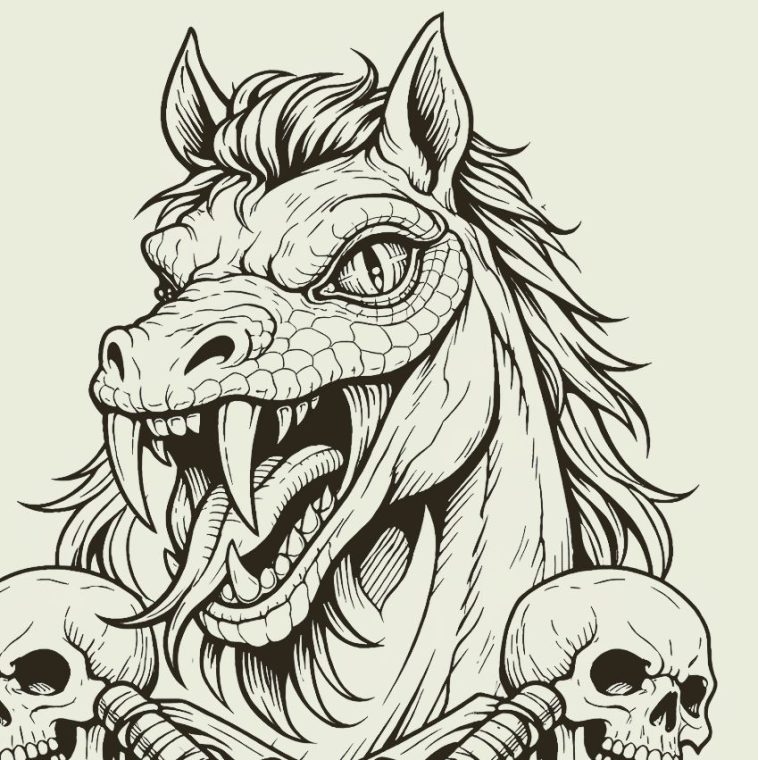
The Stallion of Uganda.
It spoke of force that could not be halted, of momentum that broke lines, of something bred for war yet impossible to domesticate. The old hunters would have understood it. The elders would have nodded. Even the Night Walkers recognized the truth in it.
Time followed with formality.
Okello was summoned from the field, processed through ranks that had never fully contained him. Authority was placed upon his shoulders—first under a Major, then elevated under General command. The institution caught up with the myth, and when it did, it gave him a name that fused both worlds:
General O — The Stallion with Fangs.
The fangs were not cruelty.
They were precision.
A reminder that even strength must bite when darkness refuses to yield.
From that moment, Okello was no longer defined by the night he walked through, nor by the battalion that followed him. He had become a figure of doctrine and legend alike—studied by strategists, feared by enemies, and remembered by those who survived the wars that reshaped them.
The Night Walkers did not lose a leader that day.
They gained a symbol.
And the night learned that some of its own could turn—and bare fangs.
This post was created with our nice and easy submission form. Create your post!

Written by
Caesar Obong Ng'bong Ocen is a Ugandan writer whose work traverses narrative fiction, cultural memory, and moral inquiry. Drawing on African cosmologies, and reflective storytelling, his writing engages with issues of power, identity, faith, and the human condition within post‑conflict societies. His series blends political realism with interior psychological struggle, articulating the tensions between duty and conscience, tradition and modernity, exile, redemption. Obong Ng'bong's work bridges literary and social worlds: it interrogates African historical and political realities while exploring philosophical and ethical questions that resonate across disciplines. His narratives are grounded in cultural authenticity and moral depth, making them relevant to both literary and humanistic inquiry. He also mentors emerging writers and contributes to dialogue on African storytelling traditions and their place in contemporary literature.
Did this story move you? Every gift goes directly to Caesar Obong Ng'bong ocen — writers on Muwado earn from reader appreciation, not algorithms. Even $1 makes a difference.







Next: https://muwado.com/general-o-subsurface-silence-behind-enemy-line/