

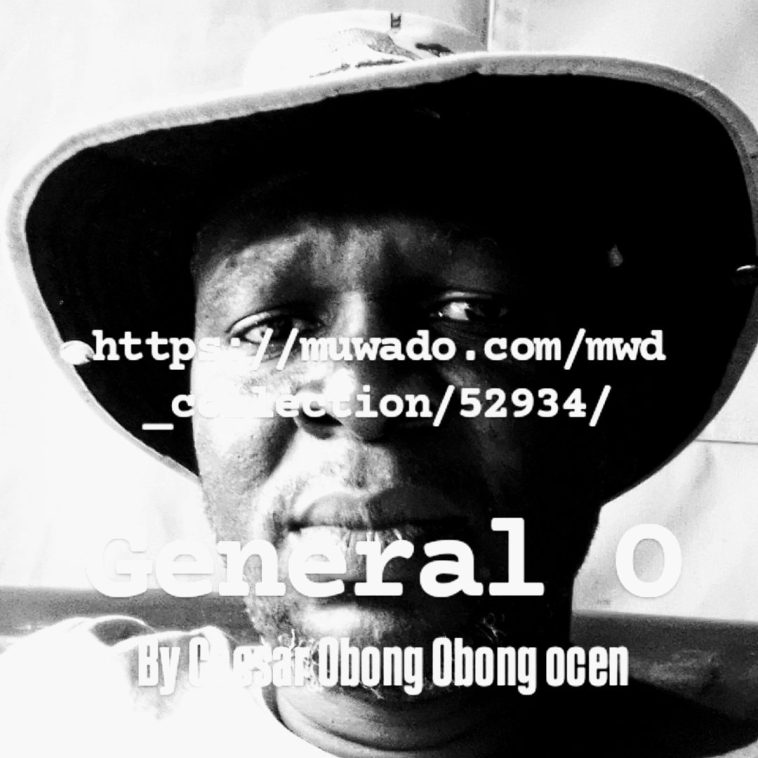
 Caesar Obong Ng'bong ocen

Major Felix sat behind his polished desk. Papers aligned, pen at rest, posture disciplined. The embassy hummed quietly around him—stone floors, muted flags, corridors smelling of polish and paper. Outside, the city moved in foreign rhythms. Inside, history waited.
His father’s right-hand man stood by the wide window, tall, emaciated, dry-jawed. Skin tight with years of duty. Clean-shaven. One hand held a Sportsman cigarette; the other, a glass of amber Bond 7 whiskey. Smoke curled. Light caught the liquid. Habit and ritual framed him like a sentinel of memory.
“Tell me more about my father,” Felix said, voice steady, curiosity edged beneath. “Before he joined the military… did he want to be a soldier, or did he have to become one?”
The man exhaled slowly, smoke curling upward. “Before the army, he belonged to the bush. Not a uniform. Not orders. He was a listener. A boy who read the wind, the grass, the animals. Hunting wasn’t cruelty—it was responsibility. Kill only what you needed. Waste nothing. Respect what fed you.”
He swirled the whiskey slowly, amber light dancing. “The ritual of fire burned childhood from him. Pain, endurance, discipline—he emerged stronger. Quieter. Sharper. The bush accepted him differently. That boy became the man who could move through silence and see what others missed.”
A pause. Voice hardened. “And then… the Night Walkers Battalion.”
“They moved at night. Feet barely brushing the earth. Breaths held. Shadows became allies. The first mission ended with no loss—only silence where enemies had stood. Your father led with instinct sharper than any orders. Every move measured. Deadly. Precise. The Night Walkers… they became legend.”
Felix watched, absorbing. Then: “How did he always find his way back home?”
The man lit another cigarette. Smoke drifted upward like a thought. “Ever wonder why he carried a hollow walking stick?”
Felix shook his head.
“Not just a stick. Look through it, point at the sky, even in daylight… the stars appear. That’s how he always knew his path.”
He paused. “And why we dug holes and slept by day. We moved like ghosts by night—unseen, unstoppable. Every step, every strike, every calculation… the bush taught him mastery, not just survival.”
He sank into the chair behind the desk. Polished shoes caught the light, black and gleaming. Whiskey at his side, cigarette smoke drifting.
“I was heartbroken when you were taken to the army court-martial,” he said, voice low. “Charged with killing that outlaw, Mr. Tribes. They would have killed you, but thanks to my underground network… you walked free. Not luck. Not mercy. Precision and eyes where no one else could see.”
Felix’s gaze flicked to the window, then back. “How did the term ‘Underground Network’ come about?”
The man smiled faintly, dry and knowing. “We didn’t inherit it—we earned it. Outside the bush, no one could see, coordinate, or protect without being noticed. It wasn’t a name handed down—it was a fact. Every informant, every safe house, every silent signal… it was survival. Control the unseen, and the seen becomes manageable.”
Felix nodded slowly. The network felt alive now, not legend, but a system built of foresight and discipline.
Curiosity sharpened. “Were you there when he met my mother?”
The man’s jaw tightened. “Yes.”
He set the glass aside, swirling the last drops. “Before the army, before uniforms, before Night Walkers, before the fires burned him into a man… your father moved through the museum in Nsambia like he moved through the bush. Quiet, careful, observing. She was at Makerere University, studying military history. Bright. Determined. Unafraid. And your father… irreverent, clever, funny. I tried to drive her away. Too curious, too sharp. But your father had another mission. She became a regular visitor at Mbuya Hill. That raised suspicion. Meetings were called. Eyes watched. And soon… her belly swelled. The burden of meeting a lion, whispered quietly among themselves. Your father… he embraced it. The boy who once belonged only to the bush now had a tether—a family, a life beyond the shadows.”
Felix’s chest tightened. The weight of history and love filled the room.
Finally, his voice barely above a whisper: “Father has traveled through many names… but how did he get the name Stallion with Fangs?”
The right-hand man stiffened. Rose slowly. Movements deliberate, controlled. Shadows played across his dry-jawed features. Anger, stress, and unspoken memory flickered in his eyes.
“There was silence,” he began, voice low, “as if the room held its breath. Then I’ll tell you the truth. One of the first missions… that’s when the name was born. We were deep in enemy territory. He instructed his men, including me: no noise, no thunder. Three days, we watched. Four more days, we waited. At night, we submerged in the bog, hiding in mud, invisible. They thought they were safe. They were not.
When the time came, we rose from underground, armed only with knives. By dawn, the battle was over. The war had been turned into a killing spree. Every strike precise. Every move deliberate. The spoils were taken… but back home, we were blamed for taking life. We were called poisonous to the system.
And that’s when the name was born: General O… the Stallion with Fangs.
Among the dead were our own. Our informant paid the price because we acted without guns, without hesitation. That mission taught us a crucial lesson: war is not just about killing. It is negotiation, patience, and the test of muscle and mind. Life is a tool, and sometimes a weapon. That is the weight behind the name you asked about.”
Felix felt a chill. Every word pressed like iron on his chest.
The right-hand man stepped closer to the window, shoulders stiff, gaze fixed on the horizon. “You do not carry that name lightly. Never try to live up to it. It is not a title… it is a warning. General O… the Stallion with Fangs.”
Felix swallowed, absorbing the full weight of history, morality, and legend. The embassy walls, polished and orderly, could not contain a man who had been hunter, strategist, father, and myth all at once.
This post was created with our nice and easy submission form. Create your post!

Written by
Caesar Obong Ng'bong Ocen is a Ugandan writer whose work traverses narrative fiction, cultural memory, and moral inquiry. Drawing on African cosmologies, and reflective storytelling, his writing engages with issues of power, identity, faith, and the human condition within post‑conflict societies. His series blends political realism with interior psychological struggle, articulating the tensions between duty and conscience, tradition and modernity, exile, redemption. Obong Ng'bong's work bridges literary and social worlds: it interrogates African historical and political realities while exploring philosophical and ethical questions that resonate across disciplines. His narratives are grounded in cultural authenticity and moral depth, making them relevant to both literary and humanistic inquiry. He also mentors emerging writers and contributes to dialogue on African storytelling traditions and their place in contemporary literature.
Did this story move you? Every gift goes directly to Caesar Obong Ng'bong ocen — writers on Muwado earn from reader appreciation, not algorithms. Even $1 makes a difference.





Muwado weekly chart
Get Africa’s top 10 stories every Thursday
No account needed — just your email.
Want to follow Caesar Obong Ng'bong ocen and get notified every time they publish?
Create a free Muwado account →