

 Caesar Obong Ng'bong ocen

A few weeks earlier, the Parliament and its subordinates had sat in bitter argument over the surveillance system. Charges were pressed. Calls for personal decertification filled the chambers. Every minister, every civil servant, every member of the oversight committee had something to say—most of it accusatory, some of it fear-driven. The system monitored even private moments: late-night conversations, whispered phone calls, what people read, what they ate. Nothing escaped its gaze.
A roadside salesman, a wiry man with more courage than sense, had demonstrated the system’s vulnerabilities. Using a small laptop, he shut down Sector 14 entirely in under ten minutes. Government officials had been rendered impotent before their own monitors. Okello had watched silently from the sidelines. He had seen this happen before: people believing they controlled the system, only to find out it controlled them.
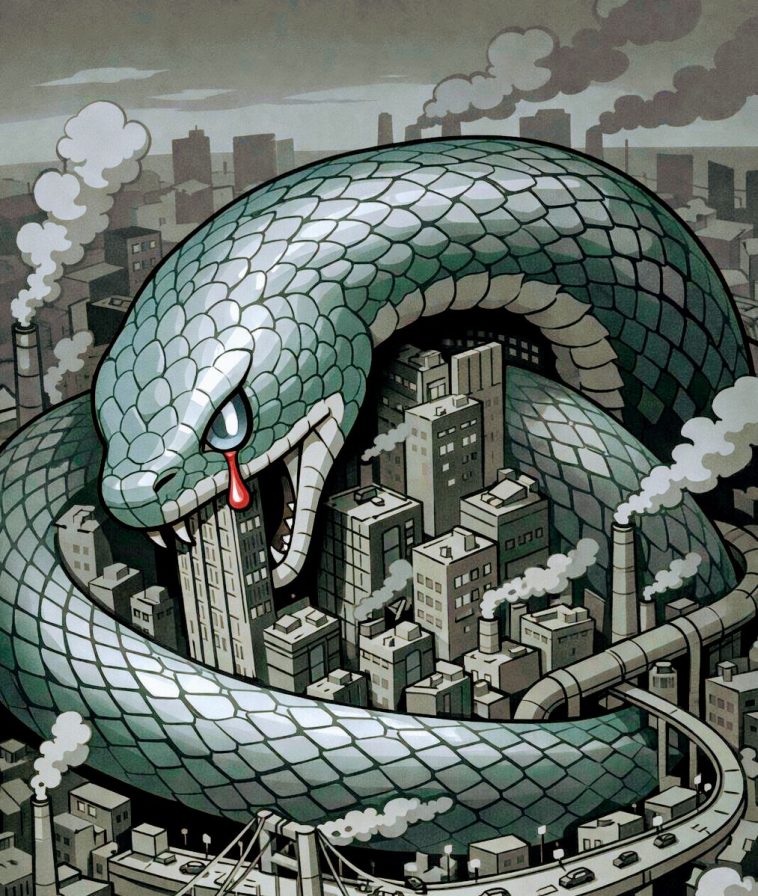
It was the first of its kind. Not merely a system failure—this was a harbinger. The delay, the complacency, the bureaucracy of oversight—it created openings. Real danger was waiting, patiently, in the shadows. And from those shadows, a new threat was emerging. One that could devour the city from its former glory. Away from Kampala and Entebbe, in the silent corridors of history, something dangerous was being written.
A consignment bound for rebel held territory somewhere deep in the democratic republic of Congo was passing through Uganda’s soil with an intent of firing back at Uganda in the near future if not intercepted.
The cargo plane descended just before dawn, its shadow stretching across the rust-colored earth and long pipelines of crude oil. It touched down at Kabalega International Airport with meticulous precision.
Hoima had been chosen carefully.
It was built for energy corridors. For discretion. For shipments that required no applause.
Container 13B was offloaded with military precision. Its manifest read: Energy Infrastructure Support. Diplomatic coding cleared it for overland transit toward the Democratic Republic of the Congo.
Too smooth. Too clean.
Hours earlier, in Kampala, Reverend Deacon Charles Opio of the Church of Uganda had received a strange email. There was no sender. No greeting. No subject. No explanation.
Just three words:
Container 13B. Access authorized. 02:30.
Opio had stared at it for several minutes, the phone trembling slightly in his hands. He had seen encryption like this once before, years ago, during what officials had called “infrastructure support.” At the time, he had asked no questions. He had prayed afterward. The kind of prayer that leaves your palms raw and your heart uneasy.
Now it had returned.
General Okello had retired. Officially.
But instinct does not retire.
When clearance for 13B passed through Hoima under petroleum exemption, something inside Okello shifted. He had built systems, monitored threats, manipulated signals, and read patterns that others missed. He knew that paperwork could be a weapon. Deception breathed through forms, codes, and diplomatic stamps.
He intercepted the convoy before it left refinery territory.
The label was suspicious.
The weight was suspicious.
The destination was suspicious.
But most of all—the markings.
13B. XX. Teardrop.
Symbols were never neutral. XX whispered of cartel operations and coded violence. The teardrop represented initiation. Death. Loyalty sealed in blood. Whether gang or military culture, the message was deliberate.
This was no ordinary container.
“Detain it,” Okello said quietly.
The weighbridge closed. Traffic was rerouted. Civilians were waved aside. Soldiers and police formed a cordon that stretched down the long, orange-tinted tarmac.
Reverend Opio was summoned. The calm, gray-haired man with a habit of wringing his hands was escorted by a motorcade of ferocious drivers to Kabalega International Airport. He had no idea why he had been called, only that the General’s voice over the phone had left no room for refusal.
“Open the padlock,” Okello instructed once Opio arrived.
Opio, a man who had devoted his life to sermons and sacramental guidance, hesitated. He looked at the container, then at Okello, then back at the padlock. “Sir… the email…” he began. His voice trembled slightly. “This afternoon I received this email. I—”
He handed Okello his cell phone. Words would not suffice.
The General nodded. Around them, a team of forensic experts from Naguru Police Headquarters had already assembled. They were not ordinary police. They were specialists—men and women who had trained in fields most others could not imagine. Afande Watmon was among them, a locksmith by trade, broad-shouldered, with eyes that missed nothing. He moved quietly, observing the container as a predator studies its prey.
“Let me handle this,” Watmon muttered, almost to himself. He ignited a blowtorch, the blue flame cutting the dim morning light. Within minutes, the padlock was gone.
The first compartment was opened.
Ceramic chalices. Bibles. Textiles. Rosaries.
Everything meant for church. Everything harmless.
All removed.
The container was weighed again. Still too heavy.
Okello tapped the inner wall, walked backward, and narrowed his eyes. Everything looked correct—but dull. Dense. Wrong.
“This,” he said evenly, “is what we are really weighing.”
Watmon stepped inside. A faint hydraulic hum answered him. The welded, lead-painted partition began to unlock. The mechanism had been disguised to avoid X-ray penetration, engineered to appear structural. It opened slowly, a deliberate slowness meant to unsettle the onlookers.
Outside, Afande Will—Chemumgezi William—watched from the perimeter. Will was younger than Watmon, more impulsive, with ambition flickering in his eyes like firelight. He was clever, reckless, and curious in equal measure. The kind of man who understood power but craved possession. Before Okello could enter the inner compartment again, Will had already moved.
With surgical stealth, he swindled a small sample of the silver-blue liquid into a sealed vial inside his jacket. No one noticed.
Inside, laboratory equipment lined the reinforced walls: shock-resistant racks, monitoring consoles, cylindrical containers that screamed of specialized engineering. At the center of the inner compartment, crates upon crates of glass vials held a dense silver-blue liquid. It did not reflect light—it absorbed it, seeming to drink the air around it. The atmosphere felt heavier, oppressive, almost sentient.
“What is this?” Watmon asked, his voice low and cautious.
Okello stepped forward. “This is no ordinary fuel,” he said evenly. “Chlorine Trifluorideluoride—CFI₃. Whoever is shipping this has a very dark agenda. It’s an upgrade. A compound that can convert almost anything into fuel.”
He paused, letting the words sink. “It consumes fire as it burns. Steel, concrete, stone—it all turns to ashes.”
Silence fell. Even Watmon, trained for decades in emergencies, felt the chill.
Years ago, Okello had used nanotechnology to spy on his own citizens. He had won battles, preserved stability, but at a cost. Privacy vanished. Rights dissolved. Parliament had abolished the program. His retirement had followed. He regretted it terribly.
Now he stood before something worse.
This was not surveillance. This was erasure.
“Seal the perimeter,” he ordered.
But Will was already gone. Ambition had replaced caution. He mounted his motorbike and accelerated toward Kampala.
Evening traffic thickened around Nansana. Bodabodas weaved between taxis. Vendors shouted over horns and engines. Life carried on, unaware.
Then—a swerve. A collision. Metal scraped asphalt. Both riders skidded violently.
Inside Will’s jacket, the vial shattered. For a half-second, nothing happened. Then a spark.
The liquid ignited. It did not burn like petrol. It consumed. Flames engulfed him silently, ferociously. Flesh, fabric, steel—all dissolved into incandescent fury. The motorbike collapsed into glowing fragments. The asphalt beneath liquefied.
Within minutes, there was nothing left. No body. No bones. No metal. Only a smoking crater carved into the road.
The people of Nansana stood frozen.
Someone whispered, “What does the government have in its sleeve?”
Another replied, “We thought they removed one thing…”
“…and replaced it with something more dangerous.”
Back at the containment site, Okello’s phone vibrated. He did not speak. He simply closed his eyes.
Nanotechnology had stripped citizens of privacy. CFI₃ would strip them of existence.
And someone had marked the container deliberately.
13B. XX. Teardrop.
This was strategy. And it had just begun.
Okello and his underground unit were back in business. Drake, Felix, and his wife were always close, acting as extensions of his instincts and vision. Normally, Okello directed from a distance, letting his lieutenants execute his plans. But this time, he had inserted himself fully into the system. The container, innocent to the untrained eye, carried civilian goods—but he knew better. Simple things could be weaponized. They could devastate a state.
Watmon’s hands twitched as he adjusted his tools, keeping his eyes on the container, wondering silently if he had been watching history unfold. Opio, standing near the perimeter, prayed quietly, palms folded and lips moving, wishing his faith could shield the city from the horrors that were now materializing.
And somewhere in the chaos of ambition and recklessness, Will had already shifted the first piece of this invisible war into the world, unaware that the consequences would be immediate, irreversible, and absolute.
The tro would have to find the sender. Understand their motives. Trace the container’s ultimate destination.
And they would.
Because this war, invisible though it might be, had only just begun.
This post was created with our nice and easy submission form. Create your post!

Written by
Caesar Obong Ng'bong Ocen is a Ugandan writer whose work traverses narrative fiction, cultural memory, and moral inquiry. Drawing on African cosmologies, and reflective storytelling, his writing engages with issues of power, identity, faith, and the human condition within post‑conflict societies. His series blends political realism with interior psychological struggle, articulating the tensions between duty and conscience, tradition and modernity, exile, redemption. Obong Ng'bong's work bridges literary and social worlds: it interrogates African historical and political realities while exploring philosophical and ethical questions that resonate across disciplines. His narratives are grounded in cultural authenticity and moral depth, making them relevant to both literary and humanistic inquiry. He also mentors emerging writers and contributes to dialogue on African storytelling traditions and their place in contemporary literature.
Did this story move you? Every gift goes directly to Caesar Obong Ng'bong ocen — writers on Muwado earn from reader appreciation, not algorithms. Even $1 makes a difference.




Muwado weekly chart
Get Africa’s top 10 stories every Thursday
No account needed — just your email.
Want to follow Caesar Obong Ng'bong ocen and get notified every time they publish?
Create a free Muwado account →