

 Oweyegha Afunaduula

Presented at the 23rd December 2025 Frank Muramuzi 1st Symposium
By Oweyegha- AfunaduulaRetired Environmentalist
Nawaka Village, Luuka District & Center for Critical Thinking and Alternative Analysis
Seeta, Mukono, Greater Kampala.
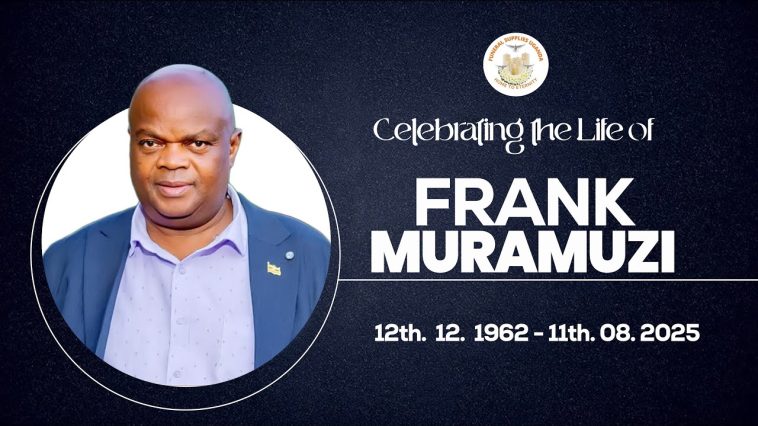
“The Frank Muramuzi I knew was, in my view, the father of practical environmental leadership in Uganda and East Africa. He combined resistance, protest, negotiation, advocacy, diplomacy, teaching, and effective interaction with all environmental actors across all levels of society – local, national, regional and global – in pursuit of environmental justice.
While doing postgraduate studies in conservation biology from 1980 to 1982 at the University of Nairobi, I never imagined I would ever come across such a person in Uganda. He despised academicising environmental conservation. He always told me “Academic conservation knowledge does not conserve the environment or nature. People do”.
It was not surprising, that he was able to develop a network of interactions with a diversity of organisations. By the time he passed on, his network of organizations included Both Ends, Rosa, Luxemburg, IUCN, Greenpeace, Friends of the Earth, UK Aid, UN Women, FAO, Open Society Initiative for Eastern Africa, African Biodiversity Network, among others. He had, therefore, become extremely successful at fundraising for different projects of NAPE, thereby making his organization more successful in the difficult task of fundraising than many established environmental and non-environmental institutions in Uganda and East Africa.
Frank was one of the founders of and actively participated in the Uganda Nile Discourse Forum from 2003 and as a member of the Board He supported me immensely when I was its Chairman from 2006 to 2010. He also supported me immensely when I was the Chairman of the Nile Basin Discourse (NBD) a regional NGO of 11 countries, from 2008-2010. Therefore, there was a strong bond between Frank and myself in national and regional civic leadership. When I retired from Makerere University he brought me closer to himself when he appointed me to be the pioneer manager of National Association of Professional Environmentalists’ (NAPE’s) Sustainability School. It was of course a big task for me having just emerged from the academia. However, I was helped by the fact that I had been serving as Secretary of NAPE for a long time. He helped me to settle in the task. When Frank Muramuzi was developing his unique environmental leadership I was by his side learning, unlearning and relearning environmental conservation. We wrote many articles together and had them published in influential media such as World Rivers Review, Research gate, Rivers Resource Hub and Pambazuka News.
I wrote a tribute to Frank Muramuzi, published in many media including Charmar News and MUWADO. I drew insights from that background. In its publication of the tribute, Charmar News summarised it as “Frank Muramuzi was a courageous and effective leader of environmental struggles”. The environmental struggles included, Save Bujagali Crusade, Save Mabira Crusade, struggle against the use of chemicals against water hyacinth on Lake Victoria, struggle against spraying houses in the North with DDT to combat the Anopheles mosquito, struggle against GMOs, struggle against oil palm growing Bugala Island in Kalangala District.
I am, therefore, delighted to be among those who were close to fallen Frank Muramuzi during his early formative and later years as a practical environmentalist that have been invited to the Frank Muramuzi First Environmental Sympseum on 23 December 2025 in Mbarara.
When Frank Muramuzi passed on I had just left Uro-Care Hospital Nansana where I underwent surgery on my prostate gland. I was too weak to travel to his rural home to bid farewell to him. However, my spirit was with who were on hand to say good bye to the effective environmentalist.
My first encounter with Frank Muramuzi was purely accidental. That was August of 1999. He may have heard about me before but I never knew him. The story of our encounter was This. The late Martin Musumba, the former Prime Minister of Busoga and Chairman, NAPE BOARD, and myself had formed a civil society effort to save Bujagali Falls from destruction for electricity.
We called the effort Save Bujagali Crusade. It required courage and resolve, which we had. However, it also required institutionalisation, which we knew was not easy. Musumba and myself decided that we sought partnership with an already registered and established organization committed to environmental conservation and with courageous leadership. Musumba tasked me to get such an organization.
I did not know how to start because by that time most leaders of the environmental effort were academic in their approach and fearful of the powers that be. In particular they were fearful to plunge themselves in the quagmire of Bujali Dam, which looked already desired by power and was being fast-tracked. If democracy was being abused then it was in the Bujagali dam process.
I immediately thought of a one Ms Byaruhanga who owned an environmental institute in Makerere Kavule and was teaching in Makerere University’s Faculty of Agriculture and Forestry. I met her in the Makerere Stanbic Bank. After briefing her on what I wanted she took me to Frank Muramuzi’s office. He was present. After introducing me she left. Muramuzi was businesslike. We immediately agreed that NAPE and Save Bujagali Crusade partnered up to save Bujagali Falls.
It was a fruitful partnership. Frank Muramuzi immediately provided effective leadership to save Bujagali Falls. We were able to cause the government to revise its fast-tracking plans of the dam and to ensure an environmental impact assessment was done by the initial dam developer Nile Power Ltd. We were able to cause debates that involved the dam-affected people. It was not easy but we were able to put sense where there was nonsense in the Bujagali dam process. Ultimately, Save Bujagali Crusade became integrated the structure and function of NAPe as a special project. However, big money defeated us. Constructing the dam started in 2008 and it was completed four years later at the exorbitant cost of $1.2 billion when initially it was estimated to cost $300,000. The explanation of the exorbitant cost is corruption of the Bujagali dam development process.
I wish this Frank Muramuzi First Environmental Symposium fruitful outcomes.
Rest in Peace Frank Muramuzi, For God and My Country
This post was created with our nice and easy submission form. Create your post!
Written by
I am a retired lecturer of zoological and environmental sciences at Makerere University. I love writing and sharing information.
Did this story move you? Every gift goes directly to Oweyegha Afunaduula — writers on Muwado earn from reader appreciation, not algorithms. Even $1 makes a difference.






Muwado weekly chart
Get Africa’s top 10 stories every Thursday
No account needed — just your email.
Want to follow Oweyegha Afunaduula and get notified every time they publish?
Create a free Muwado account →