

 gina bloom
City-Zen-Shape: noun — I have that identity that comes from intimate familiarity with a city. You and I have attachment to a city, a trail of sorrows, happiness, and realities lived, painted, and layered over time. The original state of those cities will always persist as memory, even as we watch them turn ghost and urban by the grinding wheel of time and machine. It’s the feeling of “home” that slowly rewrites our citizenships into “city-zen-shapes.”
There’s that route home you avoid due to a memory of a tragic accident, and yet it’s this very awareness that solidifies a place as your own. Hawkers calling for customers in a chaotic chorus with taxi callers and honks (make way for me in this city). All in a familiar chorus that sticks as a record you easily replay and repeat. The scent of street food and that of busy bodies, the aroma of wet soil and of dust, the odor of food markets that will occasionally mix with something untoward like sewage or burn. The usual roughness of walking pavements is shared among pedestrians and motorbike riders in quiet acquiescence, and an erection of monuments silently watches over you when you sleep.
Should people identify with cities as strongly as they do with countries? They carve us into who we are, binding us to them through the small, singular details that only our hometowns can offer. If you have lived in multiple cities, you could embrace them all, carrying parts of each within them, but with only one to truly call “home,” a place that resonates your larger story, a place you could always return, a place where you could or couldn’t “make it.”
Belonging to a city intimately, you’d assume it grants you depth and stake, a place to always return. A reliable source for daily necessities, a constant provider of familiar comforts. Even with this familiarity, the unknown lingers, and a shadow or two turns in a dark corner. You question the true essence of your city as you come to know it well: Who are its real guardians? Is it the ghosts of its past residents? A mighty hand called upon in the Friday communal faith and worship? What secrets lie in hidden places? What untold histories and bodies lie buried beneath those trenches? You wonder if the city is shaping you, or if your little turns and churns shape it instead. You wonder about whether it has a mind of its own, rewarding and punishing, or celebrating and mocking us. There are always layers to be uncovered, questions waiting to be asked, and the answers sometimes lie in the open for those looking, those listening, and those participating.
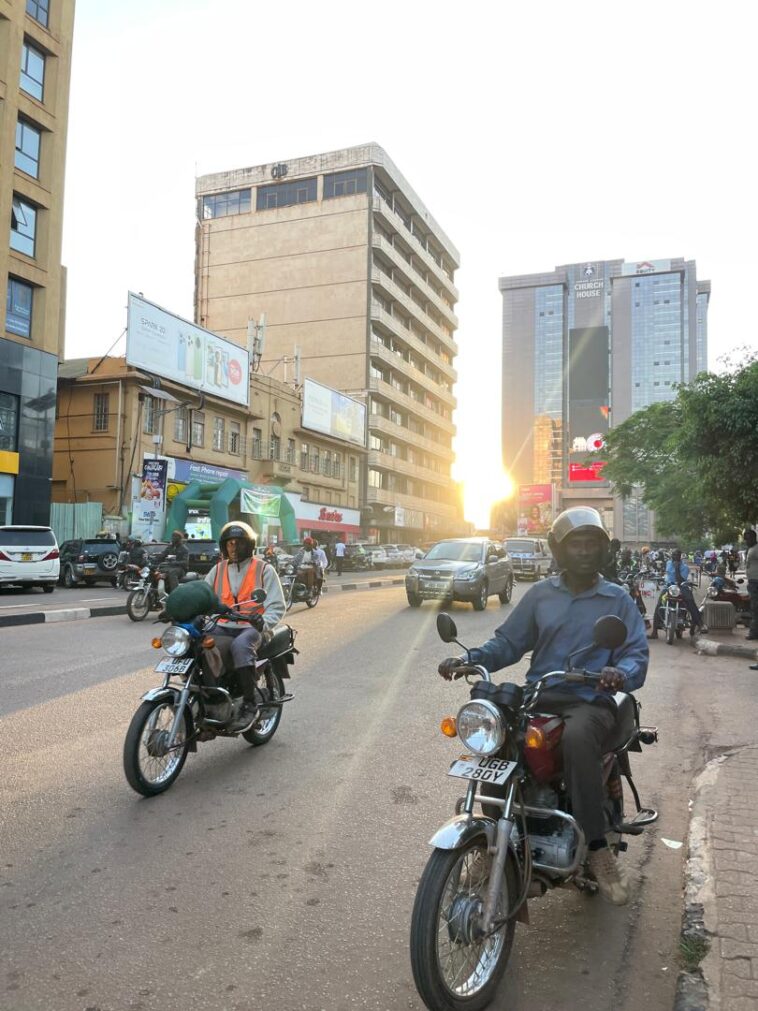
My city is Kampala. I huddle its complexities and in turn, it shapes my days. Dodging potholes, cutting through the noise and avoiding prison mostly, but I also party, dine, and tour to the newest additions. I know the dangerous corners to avoid and those to frequent. I wonder what outsiders judge about the nightlife in my city. What do they think of our work-hard, play-hard dynamic as we brag about being a city that parties seven days a week and twice on weekends? Do they assume we are a divided crowd of workers and party-goers? Every day of the week, a live music band entertains in my city, and the crowds, we join in singing and dancing, never forgetting the urgency of survival. Some have branded the nightlife as a reward for all the hustlers’ English spoken from eight to seven.
Mine isn’t a big city with the big lights and prestigious tourists, but our distinctions are just as big. And we most certainly live with the big-city attitude and sometimes the small-city plight. I have known my city, I have lived here my whole life, yet I remain a tourist to share in its essence with others who visit and those online who wonder about a distant chaos. I have lived and told a great story about it through photography and literature.
My city, Kampala, is also a dramatic stage for contrast. Think about the position of extreme wealth and abject poverty — on any given day, your view might be a sinking slum painted in old brown rusty iron sheets, contradicting a wealthy neighbourhood in modern glass buildings, the old alongside the new, the chaotic presence of traffic and hurried interactions alongside the corporate and the ambient. The blend fits perfectly in one way as a complement to each other and in another way, as a balance of powers.
If you haven’t reflected on your own “city-zen-shape”, you are called to thought.
This post was created with our nice and easy submission form. Create your post!

Written by
Did this story move you? Every gift goes directly to gina bloom — writers on Muwado earn from reader appreciation, not algorithms. Even $1 makes a difference.




Muwado weekly chart
Get Africa’s top 10 stories every Thursday
No account needed — just your email.
Want to follow gina bloom and get notified every time they publish?
Create a free Muwado account →