

 Oweyegha Afunaduula

By Oweyegha-Afunaduula, F.C.
Co‑founder, Save Bujagali Crusade (SBC) &
Former energy & environment advisor to civil society
Center for Critical Thinking and Alternative Analysis Uganda.
10th June 2026
To the Honourable Members of the 12th Parliament of Uganda
Today, 10 June 2026, you are scheduled to pass a supplementary budget of approximately Shs 734 billion, borrowed from UK Export Finance and Citibank, for a country‑wide solar‑powered irrigation scheme and domestic solar energy use.
I ask you to read this article before you vote.
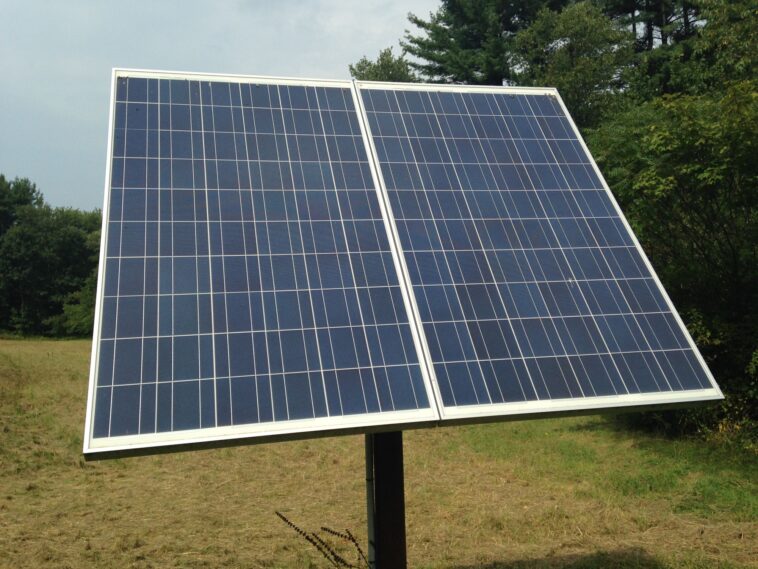
I am still alive – one of the three civil society voices who, 27 years ago, told the government and the World Bank that solar energy was the right path for Uganda’s rural poor. My two late colleagues, Martin Mukasa Musumba and Frank Muramuzi, are not here to see this day. But their struggle, and mine, has finally been vindicated – belatedly, and at great cost.
This is the story you need to know before you borrow another shilling for solar energy that should have been deployed a quarter of a century ago.
1. Introduction
On 10 June 2026, you are being asked to borrow €168,976,354 (approximately Shs 733.7 billion) from UK Export Finance (UKEF) and Citibank for Phase II of Uganda’s Solar Powered Irrigation Systems Project. The project is necessary. It will help farmers cope with drought, reduce water collection burdens on women and youth, and build climate resilience. But it should have been done in 1999 – not 2026.
Had the NRM government taken the solar alternative seriously when we in the Save Bujagali Crusade first placed it on the national agenda, Uganda would today be far advanced in solar energy use, with considerably lower costs and far less environmental sacrifice. You would not be borrowing Shs 734 billion today for a solar irrigation system; that system would already exist, paid for many times over by the money wasted on the corrupt, ecologically destructive Bujagali Dam.
I am still alive to write this. But my two colleagues – the late Martin Mukasa Musumba and the late Frank Muramuzi – who stood with me in that struggle, are not here to see this article. This piece is dedicated to them, and to every member of civil society who fought against the damming of the Nile.
2. The 2026 Solar Irrigation Loan: Belated but Welcome
The loan before you today finances Phase II of the Solar Powered Irrigation Systems Project, commissioned by the Ministry of Water and Environment. Phase I, which began around 2021, installed solar‑powered irrigation pumps and water distribution systems in selected areas. Phase II extends the programme to additional districts, particularly those vulnerable to prolonged dry spells. The contractor is Nexus Green Ltd (UK).
The Ministry of Finance states: “Solar irrigation is no longer a pilot. It’s a national strategy.” That is good. But it is also an admission that the big‑dam‑only policy of the 1990s and 2000s was a catastrophic mistake.
However, you must also know the debt context. By December 2025, Uganda’s total public debt had reached US$34.86 billion (UGX 131.5 trillion). The government plans UGX 28 trillion in new borrowing for FY 2026/27, pushing total debt close to 55% of GDP – exceeding the 50% ceiling set by the Charter of Fiscal Responsibility. For Phase I alone, the government had already borrowed €111 million (about Shs 463 billion). Had Uganda begun investing systematically in solar energy a quarter‑century ago, the cumulative cost would have been substantially lower, and the debt burden for solar expansion today might have been avoided entirely.
3. The Great Energy Debate of the Late 1990s: Big Dams versus the “Poor Man’s Energy”
3.1 The NRM Government’s Hydroelectric Obsession
From the end of the 1990s, the NRM government under President Yoweri Museveni was rigidly committed to large‑scale hydroelectricity, primarily through major dams on the River Nile. The centrepiece was the Bujagali Dam – a 250 MW project at Bujagali Falls, eight kilometres north of Lake Victoria. The official rationale was that hydropower would drive industrialisation and national development. But there was a fundamental flaw: most of the electricity generated at Owen Falls Dam, and any future dam, would inevitably be used for lighting people’s houses – not for heavy industry. Big dams were grossly mismatched to Uganda’s actual energy demand profile.
3.2 The Alternative Vision: Solar as the Poor Man’s Energy Source
My ecological stance from the beginning was that sacrificing the Nile’s waterfalls – especially Bujagali Falls – was ecologically, socioeconomically, eco‑spiritually and environmentally short‑sighted. Since most Ugandans would primarily need electricity for lighting and small‑scale productive uses, the rational path was decentralised renewable energy – chief among them solar energy, the “poor man’s energy source”. Solar could be deployed rapidly, affordably, and without massive environmental and social costs.
What many Ugandans did not know then – and what the World Bank and donor agencies never told us – is that solar energy technology was already fully mature and available in the United States by the early 1980s. The first modern photovoltaic cell was developed at Bell Labs in 1954. By the late 1970s, President Jimmy Carter had installed solar panels on the White House roof. Yet the 1980s saw a deliberate reversal: under the Reagan administration, those panels were removed, tax credits for renewables were slashed, and federal research funding for solar was cut by more than 80%. The strategic choice to promote large‑scale hydropower, nuclear and fossil fuels was not driven by technical necessity. It was driven by corporate interests – the same interests that later pushed big dams on countries like Uganda, with World Bank financing tied to procurement contracts for Northern engineering firms.
We in the Save Bujagali Crusade saw this clearly: the “money only for dams” narrative was never a technical constraint. It was a political and economic choice – one that enriched transnational corporations and corrupt local officials while leaving Uganda’s rural poor to wait a quarter of a century for an energy source they could have been using since the 1980s.
4. The Save Bujagali Crusade and the Struggle for an Alternative Energy Path
4.1 Formation of the Save Bujagali Crusade (SBC)
To advance this alternative thinking, I linked up with the late Martin Mukasa Musumba, Deputy Prime Minister of Busoga, and together we formed the Save Bujagali Crusade (SBC). We stressed the opportunity cost of the falls for local tourism (ecotourism): Bujagali Falls was a spectacular tourist attraction – six‑grade rapids offering rafting, kayaking and tubing – alongside being a cultural and spiritual site inhabited by the river spirit Budhagali. Submerging the falls would destroy a unique source of local revenue and employment, while failing to guarantee affordable electricity for surrounding communities.
4.2 Linking with Frank Muramuzi and NAPE
We later linked up with the late Frank Muramuzi, Executive Director of the National Association of Professional Environmentalists (NAPE), to turn the opposition to Bujagali Dam into a national struggle. Frank did not hesitate. Under his fearless leadership, our opposition reached civil society networks across the world. He believed, as we did, that solar was the path for the poor. He is not here to see the 2026 solar irrigation loan. But his fingerprints are all over this victory.
4.3 The 1999 Workshop and the Walk‑Out
Before Acres International of Canada and AES Nile Power were compelled to leave the Bujagali Dam process, they, together with the government of Uganda, organised a workshop at a Kampala hotel in 1999. Martin Musumba, Frank Muramuzi and myself were invited. When government and donor partners insisted that “there was only money for dams”, I read an alternative statement insisting that civil society active in the energy sector was committed to the development of alternative energy sources, specifically solar energy. I concluded by recommending that government and its donors commit money to developing alternative energy sources.
The World Bank and the government both responded: “There is no money for alternative energy sources but there is money only for big dams.” In protest, the three of us decided to walk out of the workshop. We did not even put our names on the list of workshop participants.
4.4 The Parallel Struggle: Save Mabira Crusade
Just as we fought to save Bujagali Falls, we later mobilised under the Save Mabira Crusade to protect the Mabira Rain Forest against President Museveni’s proposal to give away 7,100 hectares of this ecotone land to the Mehta family’s Sugar Corporation of Uganda Limited (SCOUL) for sugarcane plantation. An independent economic valuation found that converting part of Mabira would incur a net loss of US$15.2 million to Ugandans, while conserving the forest yielded a net present value of US$45.1 million. Once again, the government prioritised corporate profit over ecological integrity and public good – a pattern consistent with its energy policy.
5. The Corruption‑Laden Saga of Bujagali Dam
The Bujagali Dam project became notorious for corruption, validating every concern SBC and NAPE raised.
· Minister Richard Kaijuka: The then‑Minister of Energy was found to have allegedly received a bribe of US$10,000 banked in his account abroad in 1999. He was subsequently relieved of his duties as a member of the 22‑member Board of the World Bank.
· Acres International: The Canadian dam‑building firm was blacklisted by the World Bank for corruption in the Bujagali Dam Project.
· AES Nile Power: AES Nile Power Ltd, identified by the NRM government as the local builder, was also accused of bribery and was eventually forced to abandon the project.
The World Bank withheld its financing after corruption investigations by the US Justice Department and the Bank’s Fraud and Corruption Unit. Despite all this, construction eventually began in August 2007 and the plant began operations in October 2012, at a revised cost of $900 million – almost double the original projection. The falls were submerged, the rapids vanished, and the local communities lost a sacred site and a source of ecotourism revenue – all for a project that did not deliver affordable electricity to the rural poor.
6. The Hidden History: Solar Was Ready, But Was Suppressed
Let me pause here to drive home a point that every MP should understand. By the early 1980s, solar photovoltaic technology was already efficient enough to power rural homes, schools, health centres and water pumps. The United States had the technology. Europe had the technology. But instead of sharing it with the developing world, the global financial institutions – the World Bank, the IMF, and bilateral donors – continued to pour billions into large hydropower projects.
Why? Not because hydropower was cheaper or more effective for rural Africa. Because hydropower meant big contracts for big corporations: dam builders, turbine manufacturers, engineering consultants. It meant loans that kept poor countries indebted. It meant control.
We in the Save Bujagali Crusade understood this. When the government and the World Bank told us, “There is no money for solar, only for big dams,” we knew it was a lie of convenience. The technology existed. The money existed – it was simply allocated elsewhere, to serve corporate profit rather than human need.
Today, that lie has been exposed. The same World Bank and the same NRM government that rejected our solar proposal in 1999 are now borrowing Shs 734 billion for solar irrigation. The only question is: Why did it take 27 years and the loss of Bujagali Falls – a sacred, beautiful, tourist‑rich waterfall – for them to see what we saw in 1999?
7. What Might Have Been: The Counterfactual You Must Consider
Supposing the NRM government had taken our stand on solar energy 27 years ago seriously, would the country not be far advanced in solar energy use, and would the cost not be considerably far less?
The answer is unequivocal: Yes.
· Technological learning: Uganda would have had nearly three decades to build local manufacturing capacity, develop installation and maintenance skills, and reduce costs through economies of scale.
· Infrastructure rollout: A systematic, nationwide deployment of solar home systems, solar mini‑grids, and solar‑powered water pumps would have reached millions of rural households and farmers by now.
· Fiscal savings: Uganda would have saved the billions of shillings spent on the Bujagali Dam – a project whose corruption and cost overruns are well documented – and redirected those resources into renewable energy.
· Debt avoidance: The country would not need to borrow Shs 734 billion today for solar irrigation because the infrastructure would already exist.
· Climate leadership: Uganda would be a regional leader in climate‑smart agriculture and renewable energy, rather than playing catch‑up with belated, debt‑financed projects.
And here is the most painful part: Solar energy in the early 1980s was already cheaper for off‑grid rural applications than building transmission lines from a distant dam. The World Bank knew this. Their own internal studies admitted it. But they chose dams anyway.
8. A Call to Civil Society – And to You, Honourable MPs
This article is not just an academic exercise. It is a memorial. Martin Mukasa Musumba – Deputy Prime Minister of Busoga, co‑founder of the Save Bujagali Crusade – died without seeing the solar revolution he helped ignite. Frank Muramuzi – the fearless environmental defender who took our struggle to the world – also did not live to read this article.
But you, Honourable Members, are alive. You have the power to learn from history – or to repeat it.
The belated choice of solar energy, symbolised by today’s parliamentary debate on the Shs 734 billion solar irrigation loan, is welcome – but it is decades too late. It represents a tacit admission that the critics of big dams were right all along. The “poor man’s energy source” that we championed in the late 1990s is finally being recognised as a central pillar of Uganda’s agricultural transformation and climate resilience.
But recognition without reckoning is insufficient. Future energy planning must be guided by evidence, transparency and genuine public participation – not by the rigid ideologies of donors, the rent‑seeking of corporate interests or the top‑down instincts of political leadership.
And civil society must remain vigilant. Watch every new dam proposal. Question every loan. Demand access to energy data. And remember: When the government and the World Bank tell you there is no money for renewables, they are lying. The money exists. It always did. The question is whose interests it serves.
9. Conclusion: “I Told You So” – But That Is Not Enough
I, Retired but Not Tired, Oweyegha‑Afunaduula, F.C.am still alive today, at nearly 77. I saw the destruction of Bujagali Falls. I saw the corruption. I watched my government borrow billions for a dam that did not help the rural poor. And I watch now as the same government borrows again – this time for solar – at a cost that would have been far, far lower had they listened to us in 1999.
“I told you so” is a bitter satisfaction. It is not victory. Victory would have been Bujagali Falls still roaring, its rapids carrying tourists, its spirit Budhagali undisturbed – while solar panels glinted on every farmhouse roof across Uganda.
That future was possible. It was stolen from us – by corporate greed, by donor arrogance, and by a government that listened more to engineers and financiers than to its own people and its own environment.
But it is not too late to learn. The solar irrigation loan of 2026 is a belated step in the right direction. Pass it – but pass it with your eyes open. And then commit to this: never again will Uganda sacrifice its natural heritage for a corrupt, outdated, donor‑driven energy model.
Let us build the solar future that Martin Musumba, Frank Muramuzi and I dreamed of. Let us never forget: The poor man’s energy source was always within reach. The only thing missing was the political will.
Dedication
To the memory of Martin Mukasa Musumba and Frank Muramuzi – two giants who did not live to see this day, but without whom this day would never have come.References1. “Uganda: Parliament to Vote On Shs734 Billion Solar Irrigation Loan.” AllAfrica, 9 June 2026.
2. “Govt moves to borrow over Shs700b for solar-powered irrigation systems.” Daily Monitor, 9 June 2026.
3. “Parliament to Vote on Shs734 Billion Solar Irrigation Loan.” NilePost, 9 June 2026.
4. “12th Parliament To Kickoff Business With Approval Of UGX734bn Loan For Solar Irrigation.” Business Focus, 9 June 2026.
5. “Bujagali Falls Hydropower Dam, Jinja, Uganda.” Jinja City Government.
6. “Kaijuka Is Dam Bribe Suspect.” New Vision.
7. “AES Uncovers Bribery In Bujagali Dam Project.” New Vision.
8. Oweyegha-Afunaduulu, F.C. “A tribute to Mr Frank Muramuzi.” Daily Express, 12 August 2025.
9. “Uganda: The same old story about dams.” World Rainforest Movement, 17 July 2000.
10. “Bujagali Falls: The Lost Wonder of the Nile.” HereinUganda, 28 January 2024.
11. “Following the proposal to give away 7100 ha of Mabira Central Forest Reserve to Mehta Group of Companies for sugar growing in 2005.” BirdLife International.
12. “2007 memo warned Museveni, Cabinet to stay off Mabira.” Daily Monitor, 24 January 2021.
13. “World Bank Supports Renewable Energy Program in Uganda.” RenewableEnergyWorld, 18 February 2002.
14. “Solar Power now Uganda’s cheapest energy as tariff drops to 5.1 US cents.” The Observer, 28 May 2025.
15. “Solar power is solution for Uganda’s energy challenge.” Daily Monitor, 3 September 2025.
16. “The Renewable Energy Policy for Uganda.” Climate Change Laws of the World, 29 March 2007.
17. “Solar Power Subsidy.” Climate Policy Database.
18. “Performance of Uganda’s UgIFT micro-scale irrigation program.” IFPRI, 8 August 2025.
19. “Putting Solar to Work: Climate-Smart Irrigation That Pays Off.” GOGLA, 24 November 2025.
20. “Solar initiative targets 80,000 Ugandan farmers to combat climate-driven yield loss.” PML Daily, 29 January 2026.
Issued this 10th day of June 2026
Retired but Not Tired Oweyegha-Afunaduula, F. C.
Kampala, Uganda.
This post was created with our nice and easy submission form. Create your post!
Written by
I am a retired lecturer of zoological and environmental sciences at Makerere University. I love writing and sharing information.
Did this story move you? Every gift goes directly to Oweyegha Afunaduula — writers on Muwado earn from reader appreciation, not algorithms. Even $1 makes a difference.





Muwado weekly chart
Get Africa’s top 10 stories every Thursday
No account needed — just your email.
Want to follow Oweyegha Afunaduula and get notified every time they publish?
Create a free Muwado account →