

 A'ita Jaffer Joel

IS THE COMMON USER FACILITY THE MAGIC BULLET?
In the year ending October 2025, Uganda did something historic: it overtook Ethiopia to become Africa’s largest coffee exporter, earning more than USD 2.4 billion in a single year. It is a genuine national triumph. But read the fine print and a sobering truth appears almost all of that coffee left the country as raw, green beans. The roasting, grinding, branding and packaging that capture most of coffee’s value happened somewhere else, on someone else’s payroll, in someone else’s economy.
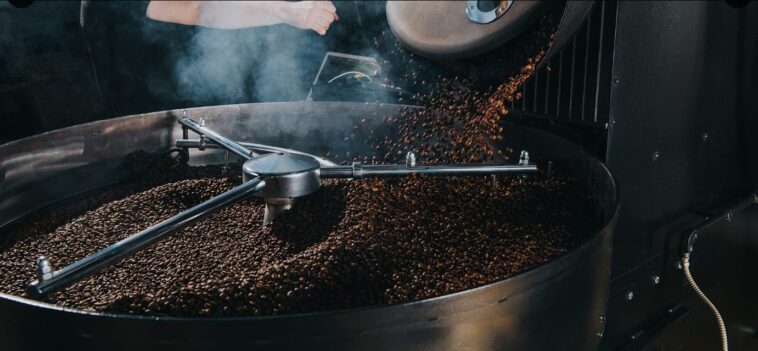
Nowhere is this clearer than in West Nile, where women who grow some of the finest Arabica in East Africa load their coffee onto vehicles and send it on a 500-kilometre journey to Kampala simply to have it roasted and packaged. The skill to grow the coffee is theirs. The value created by processing it belongs to someone else, half a country away.
Hold that image, because it explains both why two decades of skilling programmes have produced so little lasting transformation, and what it would finally take to change that.
The problem is measurable and it is bleeding money
Women and youth make up 77 percent of Uganda’s agricultural workforce. They dominate production and informal trade in nearly every value chain and they capture the least value from all of it. Women-owned microenterprises earn, on average, 30 percent less than their male-owned counterparts. In regions like West Nile, as much as 70 percent of fruits and vegetables are lost after harvest for want of cold storage. Uganda still imports 60 to 70 percent of its edible oil, despite a third of our land being suitable for oilseed crops. Every one of those percentages is a number with a shilling sign in front of it and it leaves the country, or never enters it, every single year.
Why skilling alone never closed the gap
Governments, foundations and development partners have spent enormous sums teaching young people and women to do things to weld, to bake, to process honey, to make soap, to roast coffee. The training has often been excellent. The certificates are real. And yet, year after year, the graduates walk out of the classroom and straight into a wall.
The conventional explanation is that they lack capital. That is true, but it is not the whole truth and getting the diagnosis exactly right is the difference between another failed intervention and one that finally works. The real problem is that the thing a trained honey processor needs to turn her skill into a business is indivisible and expensive. A food-grade processing line, a UNBS-compliant facility, a cold room, a quality-assurance laboratory, certification, professional packaging — these are not costs you can shrink to fit one micro-entrepreneur. You cannot buy five percent of a pasteurizer. You cannot rent a corner of a Q-mark.
This is why the microfinance era, for all its good intentions, did not graduate a generation of women out of subsistence. You cannot lend someone across a threshold that only makes economic sense at scale. So the skilled, financed entrepreneur returns to the same informal trade she started in, selling raw, unprocessed, uncertified produce at the bottom of the value chain. The skill atrophies. The certificate gathers dust. We have, in effect, mass-produced capability and then released it into an environment with no means of production waiting to receive it, like training a generation of drivers and giving them no roads and no cars.
The Common User Facility: shared access to the means of productionOnce you see the problem as one of access to the means of production rather than access to cash, the solution changes shape. You stop asking how to get every trained woman across the fixed-cost threshold a question with no affordable answer and you start asking how to let a thousand trained women share it.
That is precisely what a Common User Facility does. A CUF is publicly catalyzed, institutionally anchored, professionally managed industrial infrastructure that women and youth enterprises access on an affordable, pay-per-use basis. The processing line is built once, to UNBS standards, and rented by the hour. Around it sits the things that actually convert a skilled person into a viable business: training in local languages, a quality-assurance laboratory so products earn the Q-mark, branding and URSB registration, market linkages and access to finance plus childcare and sliding-scale fees so women with young children and early-stage entrepreneurs are not priced out. It is the contract manufacturer, the shared kitchen and the testing lab that no individual can afford alone, built as public infrastructure for those who need it most.
“The Parish Development Model creates producers. The CUF creates processors.”
This is where the model speaks directly to Uganda’s own flagship programme. The Parish Development Model puts money into the hands of parish enterprise groups so that they can produce. It is working but it produces raw commodities into the same trap: maize that is sold as maize, milk that is sold as milk, coffee that is sold as cherries. Without a processing and off-take layer, PDM beneficiaries graduate from subsistence only as far as the farm gate.
The Common User Facility is exactly that missing layer. It gives PDM enterprise groups somewhere to take what they produce and turn it into a certified, branded, higher-value product with a buyer at the other end.
The Parish Development Model creates producers. The Common User Facility creates processors. Together, they complete the value chain.
This is not a theory it is a proven model ready to scaleThe most common objection to ambitious proposals is that they have never been tested. This one has. Every element has already been piloted at the Muni University Business Incubation Centre in Arua, in partnership with the Mastercard Foundation, the IKEA Foundation, NSSF Hi-Innovator, the US Embassy and the Government of Uganda. The Centre has trained more than 400 farmers in apiary management and post-harvest handling, equipped 60 honey processors, supported more than 20 women’s shea groups across Yumbe, Moyo and Koboko, and reached into refugee-hosting districts under a programme targeting 100,000 young people, 60 percent of them women. It pioneered Chumba Baridi an off-grid, solar-powered cold room engineered in Uganda to attack the very post-harvest losses that destroy our horticulture.
So — is it the magic bullet?
No. And anyone who claims to have found a magic bullet for African development is either selling something or has not read the history. A CUF can become a white elephant if poorly utilized. It can be captured by the well-connected. Its equipment can break and sit idle. What makes this model serious is that it treats each of those risks as a design problem: utilisation driven by district outreach and demand already proven on the ground; capture guarded against by enforced women-and-youth quotas and boards with entrepreneurs seated at the table; maintenance funded from a ring-fenced share of user fees; and ownership vested in permanent public institutions rather than a time-bound project. It is not magic. It is well-engineered plumbing which is far more durable.
From political liberation to economic liberation
For four decades, one idea has run consistently through Uganda’s transformation agenda: that our people must move out of subsistence and into the money economy, adding value to what we grow rather than exporting it raw. The Parish Development Model put money into producers’ hands. The Common User Facility puts the means of production within their reach. Together, they finish the journey from peasant to processor, the journey from a country that grows wealth for others to one that keeps it.
“The first-generation liberated Uganda politically. The next generation must liberate it economically by democratizing access to the means of production.”
That is the historic transformation a national network of Common User Facilities makes possible. Not a handout. Not another certificate. Durable industrial infrastructure, owned by permanent institutions, that turns a nation of producers into a nation of processors and does it with women and youth, the 77 percent who grow Uganda, finally at the centre rather than the margins of the value they create.
The point
The Common User Facility is not a magic bullet, because there is no such thing. It is something more valuable: the missing piece of plumbing that finally lets skilling, finance and the Parish Development Model pay off. The woman in West Nile already knows how to grow extraordinary coffee. The only question left is whether she must keep sending it 500 kilometres away to become a product — or whether, this time, we build the roaster next door.
Joel Aita is an engineer and entrepreneur.
This post was created with our nice and easy submission form. Create your post!

Written by
An Infrastructure Consultant, Entrepreneur and Motivational Speaker. CEO Joadah Consult
Did this story move you? Every gift goes directly to A'ita Jaffer Joel — writers on Muwado earn from reader appreciation, not algorithms. Even $1 makes a difference.






Muwado weekly chart
Get Africa’s top 10 stories every Thursday
No account needed — just your email.
Want to follow A'ita Jaffer Joel and get notified every time they publish?
Create a free Muwado account →