

 Asha Mirriam

In June 2022, the Democratic Republic of the Congo buried a tooth.
Not a body. Not a skeleton. Not a grave recovered from history. A tooth.
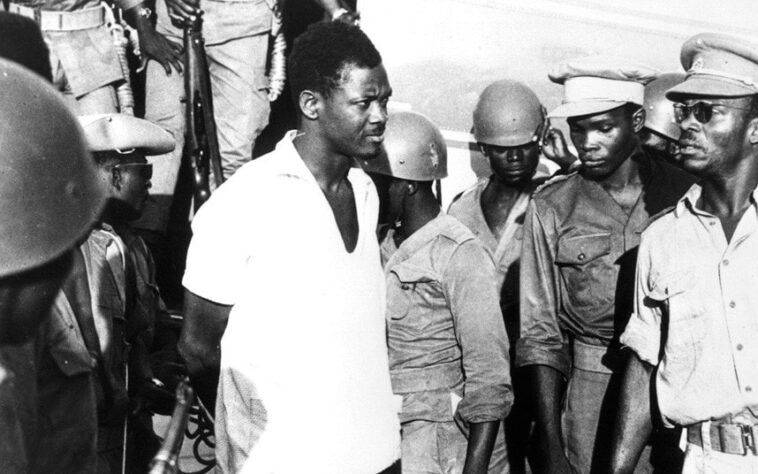
It was all that remained of Patrice Lumumba, the Congo’s first Prime Minister and one of the most uncompromising champions of African self-determination. More than sixty years earlier, Lumumba had been executed, his body dismembered and dissolved in acid. The men responsible hoped to erase him so completely that no shrine, grave, or monument would remain. Yet history has a habit of preserving what violence seeks to destroy. A single gold-capped tooth survived where an entire body did not.
For many Africans, Lumumba’s story has long symbolized the brutality of colonial interference. We remember the Belgian officials, the Cold War intrigue, and the foreign interests that feared the emergence of a truly independent Congo. We remember the external enemies. What we speak about less often are the African hands that helped deliver him to them.
Lumumba was not dragged from power by Europeans alone. Congolese rivals arrested him. Congolese soldiers guarded him. Congolese leaders negotiated against him. The foreign powers supplied the pressure, but Africans carried out much of the work. It is an uncomfortable truth, perhaps because it forces us to confront a question larger than Lumumba’s death.
Why do Africans repeatedly become instruments against other Africans?
As a young Pan-African, this question does not feel abstract to me. It feels like something that repeats itself in different clothing, in different cities, under different flags but with the same logic underneath it.
The question echoes across the continent’s history. It echoes in military coups justified as necessity. It echoes in ethnic conflicts where neighbors turn on neighbors. It echoes in corruption scandals where leaders enrich themselves while their own people sink deeper into poverty. And it echoes today in the streets of South Africa, where African migrants are harassed, assaulted, and sometimes killed by people whose own freedom was made possible through the sacrifices of other African nations.
The tragedy of Africa has never been simply that it was exploited from outside. Every continent has known conquest, domination, and foreign interference. Africa’s deeper tragedy is that external forces have often succeeded by finding willing partners within. Again and again, Africans have been persuaded to carry burdens that are not theirs, defend systems that do not serve them, and attack people whose struggles mirror their own.
This pattern did not begin with Lumumba, nor did it end with him. But his story offers a lens through which we can examine a recurring wound in the African experience: the tendency to direct our anger sideways at one another while the structures responsible for our suffering remain untouched.
The question is not whether Africa has enemies. History has already answered that. The question is why those enemies so often find Africans ready to do their work for them.
This post was created with our nice and easy submission form. Create your post!

Written by
Asha Mirriam is a creative writer passionate about African story telling, social justice and emotionally rich narratives
Did this story move you? Every gift goes directly to Asha Mirriam — writers on Muwado earn from reader appreciation, not algorithms. Even $1 makes a difference.






Muwado weekly chart
Get Africa’s top 10 stories every Thursday
No account needed — just your email.
Want to follow Asha Mirriam and get notified every time they publish?
Create a free Muwado account →