

 Asha Mirriam
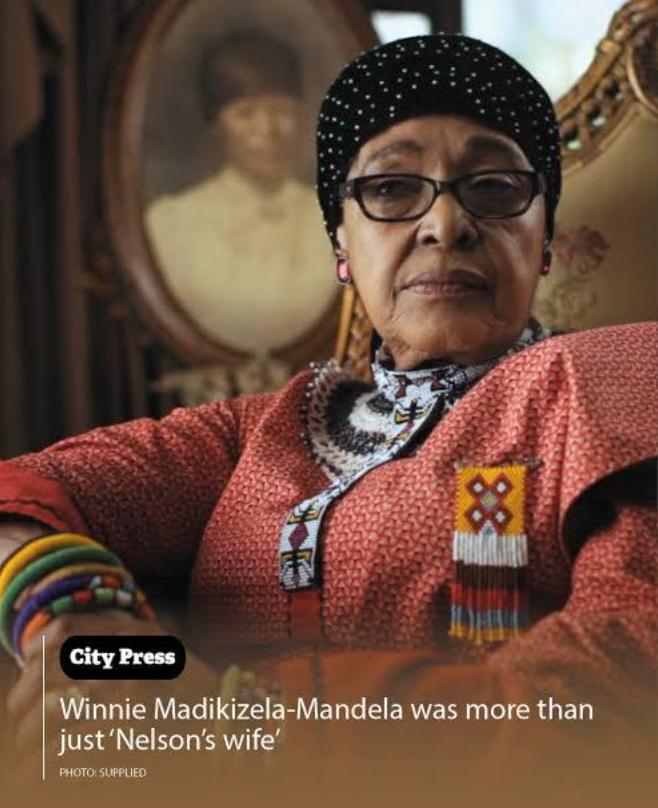
Growing up as a Gen Z , I believed I understood who Winnie Mandela was. Or rather, I knew the version history and the media had taught me to accept. I had seen the headlines and grainy news clips that framed her as a villain: a murderer, a kidnapper, a woman who had somehow deviated from the path of the “saintly wife.” I was taught to see Nelson Mandela as the hero and Winnie as the complication.
But while watching The Trials of Winnie Mandela on Netflix, something shifted within me. For the first time, I was not looking at a caricature shaped by headlines and political narratives; I was seeing a woman who endured unimaginable suffering in pursuit of freedom for her people. I saw a woman banished and exiled for years, dragged repeatedly through prison cells, and held in solitary confinement for nearly 500 days. I listened as she recounted torture, isolation, and the constant threats against her life. Yet despite everything, she refused to surrender.
What struck me most was the realization that Winnie did not have the luxury of becoming a distant symbol of resistance sheltered behind prison walls. She was on the front lines. She was visible, vulnerable, and deeply feared by the apartheid state.
That was the moment I began to understand that the campaign against her was not simply about justice or accountability. It was also about power about punishing a woman who dared to lead loudly, fiercely, and unapologetically. When imprisonment failed to destroy her spirit, they attempted to dismantle her legacy instead. Her womanhood became a weapon used against her. Her anger was scrutinized, her morality dissected, and her temperament condemned in ways that male revolutionaries rarely experienced. A powerful Black woman who refused silence became intolerable to the system, so she was recast as a monster.
Watching her story from Uganda, I could not help but reflect on our own history. How many of our female freedom fighters have been erased or diminished in similar ways? How many women were branded “difficult,” “immoral,” or “controversial” simply to push them out of public memory? We are often taught to celebrate the “Big Men” of liberation movements, yet Winnie’s story suggests that women were frequently the ones sustaining those struggles while enduring violence, surveillance, and political erasure.
As a young Ugandan, unlearning these narratives feels deeply political. I am beginning to understand that official history is often shaped by those with the power to control memory itself. Winnie Mandela was not merely a villain or a martyr; she was a revolutionary who refused to conform to the expectations imposed upon her. Her trials were not confined to the courtroom. They were part of a lifelong struggle against systems determined to punish women who resist submission.
Now, I find myself looking at the so-called “villains” of history with far greater caution and curiosity. Because I finally understand the price many women pay for refusing to bow their heads.
This post was created with our nice and easy submission form. Create your post!

Written by
Asha Mirriam is a creative writer passionate about African story telling, social justice and emotionally rich narratives
Did this story move you? Every gift goes directly to Asha Mirriam — writers on Muwado earn from reader appreciation, not algorithms. Even $1 makes a difference.





Muwado weekly chart
Get Africa’s top 10 stories every Thursday
No account needed — just your email.
Want to follow Asha Mirriam and get notified every time they publish?
Create a free Muwado account →