

 Tema Innocent
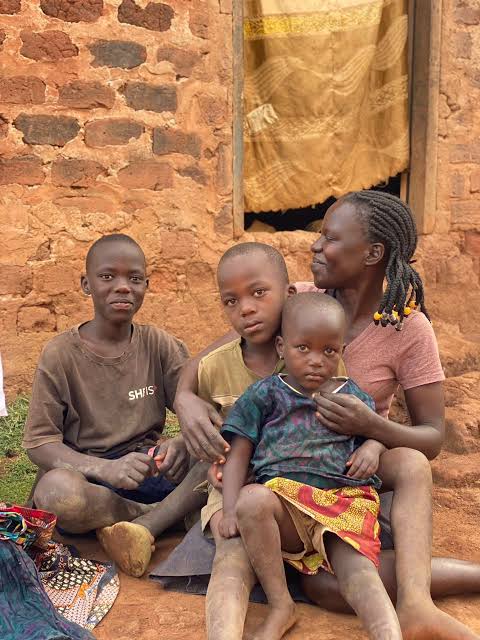
The Bundibugyo mist clung to Amina Nakato’s face as she awoke. Before dawn painted the Rwenzori Mountains, the scent of damp earth and eucalyptus filled the air, a constant reminder of the relentless struggle for life here. At 28, Amina was a widow, her husband lost to a sudden malaria complication three years prior, a stark reality in a country where the silent epidemics claimed too many lives, as UNFPA reports underscored.
She’d buried him under their mango tree, whispering prayers in Luganda, seeking the strength to carry on. Now, with three children under ten, Amina was the family’s unwavering anchor, the “silent backbone,” as Muwado would say, holding their world together amidst a nation grappling with the weight of motherhood.
Amina’s day began with the chorus of clucking hens and the soft whimpers of Kato, her six-month-old, strapped to her back. Posho and beans were a luxury; today, it was cassava leaves and wild greens. “Mummy, school?” Sarah, her eight-year-old, asked, her threadbare uniform a painful reminder of the fees they couldn’t always afford. Costs like those drove children from school, and teenage pregnancy, a reality for so many young girls, compounded the cycle.
As the sun crested the hills, Amina walked the two kilometers to the market, Kato bouncing gently on her back. The path, scarred by recent floods, was a harsh reminder of climate shocks, as UNICEF warned. At the market, she bartered greens for maize flour, her voice steady despite the ache in her shoulders. Whispers followed her: “Another single mother, struggling.” Uganda’s single mothers were swelling in number, mirroring the rising waters of the Nile, a consequence of abusive relationships, economic hardship, and the legacies of war.
One X post from a Kampala resident (@KampalaLife) captured the shock: “The rate at which single mothers are increasing in Uganda is shocking… 4 young single mothers, most got pregnant at 17, 18, or 19—now raising kids of 4 or 5 years.”
Like Muwado, Amina understood the weight these women carried. She knew their struggles with depression, their fight to build something sustainable. Family life coach Sylivia Arinda (@syliviaarinda) shared on X that nearly one in three mothers, especially singles, battled depression. She was one of the 30% of households headed by women, a statistic that didn’t fully capture their resilience. She remembered her own girlhood, stolen too early.
Teenage pregnancy was a shadow that haunted the nation: 23.5% of girls aged 15-19 had begun childbearing. Amina dropped out of secondary school, a fate she fought to prevent for Sarah. Violence, both physical and emotional, was a constant threat, and she was haunted by the practice of widows being inherited, cultural chains that bound women, as Jesca Ataa of Uganda Women’s Network (@uwonet) noted on X.
By midday, Fatuma, a Somali refugee and single mother of seven, arrived with shared ugali. “Sister, how do you do it?” Fatuma asked, her hijab framing eyes etched with exhaustion. Amina smiled, “We are the backbone, unseen but unbreakable.” They discussed their entrepreneurial spirit, the driving force behind many Ugandan women’s efforts to build a better life, but how that entrepreneurial fire was so often stunted by the unequal burden of unpaid care work. The Government Citizen Interaction Centre (@GCICUganda) had posted on X that unpaid care work consumed 3.5 times more of Ugandan women’s time than men’s.
Amina dreamt of scaling her basket-weaving, but without childcare it meant sacrificing her children’s meals. She found inspiration in Ruth Kwagalakwe’s transformation from stone-breaking to hair-braiding, sharing stories of hope, learning soap-making from a youth-led initiative Empower, Nurture, Uplift (@ENUorg).
Challenges mounted; 42% of pregnancies unplanned, a statistic that Mondo Kyateka, Assistant Commissioner for Youth (@ChrismasMKhan), shared on X. In the Karamoja region, childhoods were vanishing, one in four girls giving birth by 18, and Amina’s heart ached for them, as notifier media (@notifiermedia) warned on X. She told her children stories of strength, of mothers finding redemption.
As evening descended, she whispered, “We rise, because we must.”
In Kampala, Esther Okello, a single mother of four, mirrored Amina’s strength. She faced the daily grind with a resolve forged from escaping domestic violence. She began her day at 4 a.m., sorting wares under a lantern’s light. Her struggle mirrored stories shared by Muwado of other mothers’ strength in the face of incredible hardship. She was a testament to the resilience of women leaving abusive homes, navigating the challenges of HIV/AIDS and job losses.
Esther joined AWAC Uganda’s camps and learned family planning. She accessed Uganda’s women entrepreneurship push. Esther’s stall grew; she hired help, breaking the burden of care work, as Uganda Media Centre (@UgandaMediaCent) highlighted on X.
Challenges lingered, mirroring the hurdles faced by so many Ugandan women.
In Gulu, Grace Anek, a community elder and widowed by conflict, led a women’s group fostering child-headed households. Inspired by her commitment to the children, she led her community through the pain of the LRA wars. Her group, inspired by others, advocated for re-enrollment.
“We protect, we persist,” Grace vowed.
Back in Bundibugyo, Amina, ending her day, dreamt of a future where Uganda’s mothers found the resources to truly thrive. She envisioned a nation where the silent backbones received the support they deserved. Like Rogers Wanambwa (@rogers_wanambwa), she understood that safe motherhood demands dignity, justice, and accessible care. Her story, like those of Esther and Grace, amplified from X and into UNICEF reports, demanding action: CUPFs, access to family planning, laws against violence. For in the silent strength of these mothers lay Uganda’s roaring future, one child, one basket, one unbreakable bond at a time.
This post was created with our nice and easy submission form. Create your post!
Written by
A sports Journalist with RabSports Uganda, Advocate for Children’s Rights and Youths, Amazing Storyteller with DW Akademie and UNICEF, Independent Researcher, Student at Muni University
Did this story move you? Every gift goes directly to Tema Innocent — writers on Muwado earn from reader appreciation, not algorithms. Even $1 makes a difference.





Muwado weekly chart
Get Africa’s top 10 stories every Thursday
No account needed — just your email.
Want to follow Tema Innocent and get notified every time they publish?
Create a free Muwado account →