

 Shadreck Chikoti

Archaeological Evidence Confirms Mang’anja Primacy on Malawi’s Highest Massif
Never get afraid of your history. For centuries, Mount Mulanje has stood as a silent sentinel over southern Malawi, its dramatic granite peaks piercing the clouds. Yet beneath its mist-shrouded forests lies a historical identity that challenges contemporary narratives. New archaeological research and re-examined oral traditions reveal that long before the district was labelled a “Lomwe belt,” the mountain and the surrounding areas were an exclusively Mang’anja domain for approximately four hundred years, a sacred frontier of the vast Maravi Empire.
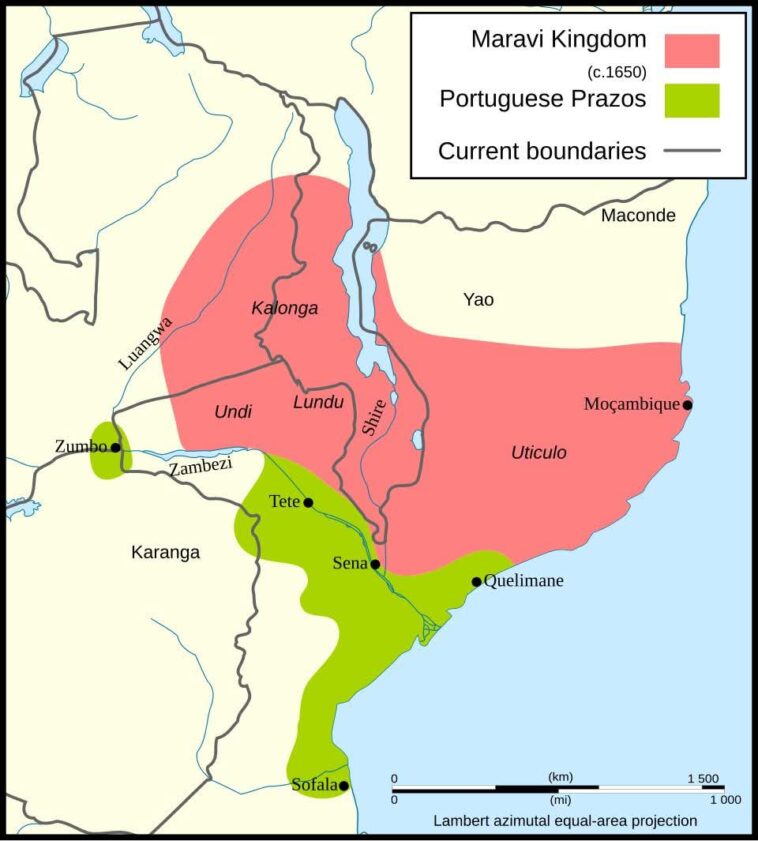
To understand Mulanje, scholars argue, one must first comprehend the magnitude of the Maravi Confederacy. Flourishing from the 12th to the 19th centuries, this powerful, centralised African state encompassed large portions of modern-day Malawi, Mozambique, and Zambia. The Maravi were skilled ironworkers, long-distance traders, and sophisticated agriculturalists. The name of the modern nation of Malawi itself derives from this historical empire.
As the Maravi expanded southward from the central lakeside plains, they fractured into distinct cultural branches. The Chewa retained the spiritual and political core around Lake Malawi, while the southern migratory wave, the Mang’anja, pushed into the Shire River Valley and eastward towards the towering inselberg of Mulanje. Historical evidence, including recent archaeological investigations, confirms that the Mang’anja were the first organised Bantu settlers in Mulanje, establishing their presence there roughly 400 years before the arrival of any other tribal group, including Lomwe and Yao. For centuries, the rolling hills, dense forests, and high-altitude plateaus of Mulanje were exclusively a Maravi world.
The very name of the mountain preserves the linguistic heritage of its original Chewa-Mang’anja inhabitants. Contrary to later etymological speculations, “Mulanje” is derived from the proto-Chichewa Nyanja word Mlenje, which means “hunter.” In the early Maravi oral tradition, the mountain was not merely a passive landmark but an active economic territory. It was referred to as Mwalenje, meaning “a place of the hunters.” The dense forests of the lower slopes were rich with antelope, buffalo, and other game, making the massif a prime hunting ground for the Mang’anja. This linguistic root is exclusively Chewa-Mang’anja, providing unambiguous evidence of who first named and claimed the mountain.
The most compelling evidence of Maravi occupation comes from the first systematic archaeological investigations conducted on Mount Mulanje itself. These excavations have transformed scholarly understanding of the mountain’s human history. At a high-altitude sacrificial site located approximately 1,900 metres above sea level on the edge of the mountain plateau, archaeologists recovered distinctive Mawudzu pottery. This ceramic tradition has been scientifically dated to the period between the 12th and 16th centuries CE, a timeframe that corresponds precisely with the expansion of the Maravi Confederacy and the establishment of Mang’anja hegemony over the Shire Highlands. The location of these finds, nearly two kilometres above sea level on difficult terrain, demonstrates that Maravi peoples were conducting organised ritual activities on the upper reaches of the mountain long before any European or later migrant groups arrived. The difficulty of accessing such locations required intentional effort, indicating that these sites held genuine religious significance.
The investigations identified two separate sacrificial sites representing different periods of Maravi ritual practice. The plateau site at 1,900 metres, characterised by Mawudzu pottery, represents the earlier phase of Maravi occupation from the 12th to the 16th centuries. This high-altitude placement aligns with broader East Central African patterns where oral traditions and early colonial records indicate that major shrines were preferentially located on mountaintops, places believed to be closer to the spiritual realm. A second sacrificial site located at the mountain’s base dates clearly to the 19th century. This later site demonstrates the resilience of Maravi ritual traditions well into the colonial period, showing “aspects of continuity and change in Mang’anja ritual practice” over approximately 700 years. One excavated site, the 19th-century piedmont sacrifice location, was specifically abandoned “for sacrilege by colonial forestry officers and early tourism at the sacred pool.” This provides archaeological confirmation of the collision between Maravi religious practice and European colonial administration, which deliberately suppressed indigenous rainmaking cults.
Politically, the Mulanje district was integrated into the southern tier of the Maravi Empire under the jurisdiction of the Lundu Dynasty. While the Kalonga ruled the central Maravi state from the lakeside, the Paramount Chief Lundu governed the Shire Highlands and its eastern frontier, including Mulanje. The Lundu appointed regional governors and sub-chiefs from the aristocratic Phiri clan, who were ethnically Chewa and Mang’anja. For hundreds of years, the chieftainship structure of Mulanje reflected this exclusive Maravi hegemony. The key evidence is stark: until 2008, there was no Lomwe paramount chief and no Lomwe Traditional Authority in Mulanje district. All senior chiefs at the Traditional Authority level, including TA Juma and TA Mthiramanja, were either Mang’anja or Yao. Below them, at the Group Village Headman level, Lomwe chiefs were exceedingly rare. The Lomwe, who began migrating from Mozambique in significant numbers only in the late 19th and early 20th centuries, at least 400 years after Mang’anja establishment, settled as occupants on land whose political and spiritual title was already held by the Mang’anja and Yao.
The most enduring footprints of the Maravi on Mulanje Mountain are not political but spiritual. The Mang’anja brought a complex religious cosmology centred on the veneration of ancestors, known as Mizimu. They believed that the supreme creator, Chauta (also known as Leza or Namalenga), was distant, and that communication with the divine occurred through the spirits of the departed. The ritual practices on Mulanje, offering sacrifices of black cloth, beer, and flour at sacred pools, were identical to the Chewa traditions of the central plains, proving that the mountain was a core expression of Maravi spirituality. Mulanje was also tied to the legend of Mbona, a semi-divine rainmaker of the Banda clan. While Mbona’s primary shrine is at Khulubvi in Nsanje, oral traditions confirm that Mbona and his disciples frequently took refuge in the thick forests of Mulanje Mountain, which functioned as an auxiliary sanctuary for the most powerful rainmaking cult in southern Malawi.
Two locations on Mulanje Mountain crystallise the Maravi spiritual footprint through unmistakable Chewa and Mang’anja names. Dziwe la Nkhalamba, the Pool of the Elderly, is a natural pool located high on the massif that served as a primary shrine for territorial rainmaking. The name is pure Chichewa: Dziwe means pool, la means of, and Nkhalamba means elders. Here, community elders offered sacrifices to the Mizimu during times of drought. The colonial forestry service’s suppression of these sacrifices, confirmed archaeologically at the 19th-century piedmont site, led to the location becoming spiritually compromised. Sapitwa Peak, the Forbidden Place, is the highest peak on Mulanje. The name is derived from the Chichewa phrase “Sa pitwa” or “Sapita,” meaning “a place where no one can go,” or “one does not go there.” This name is not a description of physical danger but a spiritual prohibition. Sapitwa is revered as the “capital city of the spirits” (mzinda wa mizimu), inhabited by powerful ancestral spirits who can cause trespassers to disappear or suffer madness. The name functions as a boundary marker between the human world and the divine.
Despite overwhelming linguistic, political, and archaeological evidence of Mang’anja primacy, contemporary discourse often labels Mulanje as a “Lomwe belt.” Scholars identify this as a historiographical error born from late 19th and 20th century migration patterns. When the Lomwe trekked away from Mozambique, they settled in large numbers in Mulanje’s fertile lowlands and assimilated among the Mang’anja. Through intermarriage and cultural integration, many adopted the Chichewa language and aspects of Mang’anja culture, leading to the current confusion. However, the historical record is clear: the Mang’anja were the first inhabitants, arriving 400 years before the Lomwe. The chieftainship structure proves this definitively. Prior to 2008, there were virtually no Lomwe chiefs at the Traditional Authority level, very few at the Group Village Headman level, and no Lomwe paramount. The senior traditional authorities, Juma, Mthiramanja, Nkanda, and others, were predominantly Mang’anja. And yes, if your last name sounds Mang’anja, your roots definitively trace back to the Maravi kingdom.
This post was created with our nice and easy submission form. Create your post!

Written by
Did this story move you? Every gift goes directly to Shadreck Chikoti — writers on Muwado earn from reader appreciation, not algorithms. Even $1 makes a difference.





Muwado weekly chart
Get Africa’s top 10 stories every Thursday
No account needed — just your email.
Want to follow Shadreck Chikoti and get notified every time they publish?
Create a free Muwado account →