

 Denzel Maniple Everd

Director: Brent Foster
Producer: Tammy Foster
Genre: Short Documentary [8 minutes], Social Justice
Introduction
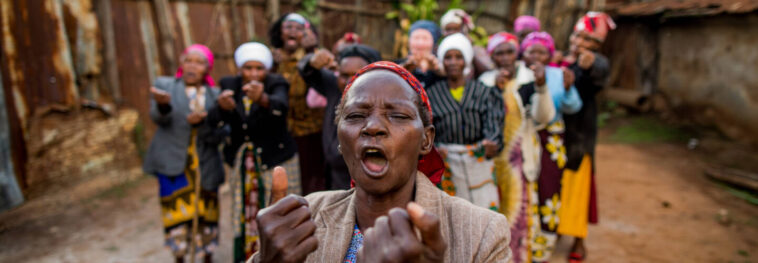
The Empowered Women of Korogocho (2018) is a short documentary set in Korogocho, one of the largest informal settlements in Nairobi. The film centres on a group of women, led by Beatrice Nyariara (77), who organize themselves to protect old women and vulnerable members of their community from sexual violence.
Produced during a period of record national femicide with the deaths of women like Sharon Otieno and Monica Kimani, alongside the global discourse around women’s rights and gender-based violence (post-#MeToo era), the documentary situates local activism within a broader global conversation on women reclaiming agency. Director Brent Foster’s style leans toward immersive, observational and stylized storytelling. His approach combines lived experience and powerful narration, allowing subjects to articulate their realities.
Central Thesis
The central thesis of the film is that when formal systems of protection fail, marginalized women can and do create their own structures of justice, security, and empowerment. However, the film also subtly raises a secondary, more critical question: Why must these women assume roles that should be fulfilled by institutional authorities? Their empowerment is both inspiring and symptomatic of systemic neglect.
Scene Descriptions & Narrative Progression
The film opens with strong establishing shots of Korogocho, narrow pathways, corrugated iron-sheet homes, children playing, women washing and local businessmen going about their day. These visuals effectively situate the viewer within the story’s setting. The mise-en-scène immediately communicates the people’s adaptation to life in poor socioeconomic situations.
We are introduced to the female protagonist, Beatrice Nyariara, through a fly-on-the-wall montage of her morning routine and her narration. The early scenes establish the central conflict: rising cases of sexual abuse and the flawed rationale of the men involved in it. It also indirectly highlights the failure of formal protection systems, such as the police in the community. This introduction is efficient and emotionally hooks us to the story.
As the story progresses, the women are shown organizing themselves and working out different solutions to their problem. Through the narration from Beatrice, it is revealed that they intend to use three methods. 1) Fighting back with boxing. 2) Screaming for help with the code words: No! No! No! I don’t want to do anything with you! 3) Assessing the situation.
These scenes move the film fluidly without a break in momentum.
The resolution, however, is where tonal conflict emerges. The film stylizes empowerment with uplifting visuals and music, which seemingly undermines the gravity of sexual violence. While this cinematic choice reinforces the women’s strength, it risks simplifying the structural depth of the problem, and the systemic issue remains unresolved.
Narrative Structure & Cinematic Techniques
Narrative Structure
The film follows a classical short documentary arc: introduction → complication → action → emotional resolution. It is concise, focused, and character-driven. Beatrice’s narration provides guidance and direction, while group activity scenes provide visual dynamism.
Cinematography
The cinematography stands out as one of the film’s strongest elements. The camera often uses well-framed and meaningfully lit shots to create a strong visual appeal and hold our attention to the subject matter. Handheld movements create immediacy, and natural light maintains authenticity.
Lighting philosophy appears largely naturalistic and low-key. The use of available light in interiors produces hard shadows, creating strong contrasts which enhance realism. In some scenes, the women are framed against brighter backgrounds and flares, subtly positioning them as figures of hope despite their hardship.
Mise-en-scène
Set Design & Location:
Korogocho itself is the primary set. The corrugated metal walls, narrow alleys, and improvised domestic spaces create a raw authenticity. The environment is a symbol of adaptation to life with meagre resources by the people of Korogocho.
Props:
Minimal props are used, mostly everyday objects and the punching bags in the boxing classes, which are used to train the women. This highlights the research that went into the documentary and the reality of the people in this setting.
Costumes:
The women wear ordinary community attire. Their presentation is meant to capture the humble reality of the ladies fighting for their lives.
Acting / Performance:
Although documentary subjects are not “actors,” Beatrice Nyariara delivers a powerful and emotional presence. Her narration is compelling because she speaks with authority and vulnerability, strengthening the film’s emotional credibility.
Sound Design
The sound design effectively blends: Diegetic sound: ambient street noise, children playing, the women’s chants of self-defence (NO!), and conversations. These sounds immerse the viewer in Korogocho’s story.
Non-diegetic music: Inspirational scoring heightens emotional stakes and frames the women’s actions as triumphant and powerful.
Editing
The editing is clean, symbolic and purposeful. Cuts between candid moments on the Korogocho streets, Beatrice with her community of fighters and training sequences maintain rhythm and clarity. There is a smooth balance between exposition and movement. The pacing fits the short format well, never lingering too long but allowing emotional beats to land.
However, the compression of the story into a short runtime limits deeper exploration of systemic accountability. We see the women’s solution, but less of the structural failure in detail.
Colour & Visual Tone
The colour palette leans toward earthy tones, browns, greys, rust-reds and navy blues, reflecting the physical environment of Korogocho. The grading highlights the beauty of Korogocho despite the turmoil brewing in it.
The film’s thesis that marginalized women create justice structures when institutions fail is supported by direct testimony describing systemic neglect and the visual documentation of group meetings that demonstrate collective agency. The documentary frames women as leaders in the fight for their community’s safety and dignity.
Final Thoughts: Significance & Impact
The Empowered Women of Korogocho succeeds as a visually compelling and emotionally powerful short documentary. Its greatest strength lies in the world-building and character-led narrative. The opening sequences establish tone, stakes, and environment with clarity and punch. The film’s stylized resolution may soften the harsh structural realities of gender-based violence, but the empowerment arc is inspiring. It often risks appearing as a complete solution to what is, in reality, a gaping systemic failure and a cultural evil that must be studied further and eliminated with finality.
Nevertheless, the film’s impact is undeniable. It documents the fight for security and justice and amplifies voices often unheard. In a global era of women reclaiming spaces and agency, this story contributes meaningfully to conversations about community-led security and resilience in traumatized communities.
Ultimately, the film is both a celebration of women’s assertiveness and an indictment of institutions that made such a reaction necessary.
Written by Denzel Everd Maniple
This post was created with our nice and easy submission form. Create your post!

Written by
Storyteller, amateur poet and photographer (IG: @denzel_everd || @some_things_denzel_sees), and film-maker.
Did this story move you? Every gift goes directly to Denzel Maniple Everd — writers on Muwado earn from reader appreciation, not algorithms. Even $1 makes a difference.






Muwado weekly chart
Get Africa’s top 10 stories every Thursday
No account needed — just your email.
Want to follow Denzel Maniple Everd and get notified every time they publish?
Create a free Muwado account →