

 Tema Innocent

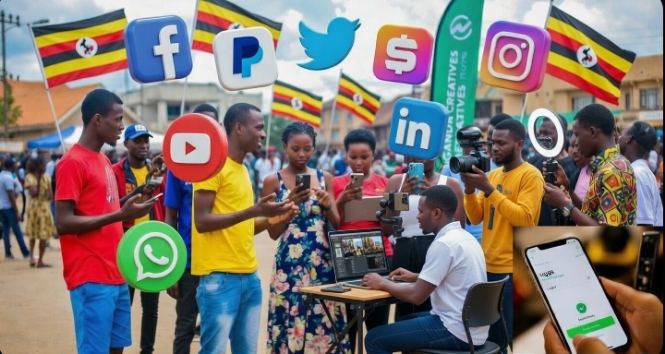
The notification lights up your phone. A clean, crisp ping that signals revenue has landed in your account from X, the global platform where your voice reaches thousands, sometimes millions. For a creator in Nairobi, this is victory. For someone in Lagos, it’s dinner on the table. But for a Ugandan content creator staring at that same screen in Kampala, Jinja, or Gulu, that ping has become a taunt. A cruel joke. You earned it. The platform confirms you earned it. But when you try to pull that money out of the digital ether and into your mobile money account to pay school fees, buy data, or simply survive, you hit a wall. An invisible, infuriating, government-made wall that stops you cold.
This is the great digital lockout of Uganda, and it is one of the most absurd and damaging policy failures of our time. We have a generation of young people doing exactly what the world asks of them—being creative, building audiences, participating in the global digital economy—and we are punishing them for it. We are telling them, “Go ahead, generate wealth, but you cannot have it.” And while they fight this daily battle, fresh data from 2026 confirms what we already feared: the youth unemployment crisis is no longer looming; it has arrived with crushing force.
Let the numbers sink in. Over 72 percent of this country is under thirty years old. That is roughly 33 million human beings, pulsing with energy, ambition, and the desperate need for meaningful work. Of those, 10.77 million are aged eighteen to thirty—the exact demographic that should be driving Uganda’s economic transformation. Instead, they are drowning. The latest UNDP data, released just months ago, reveals that 51 percent of these young people are NEET: Not in Employment, Education, or Training. For young women, the figure is a staggering 57.5 percent. Half a generation is sitting on the sidelines, not because they lack talent or drive, but because the formal economy has absolutely nothing to offer them.
The government will point to official UBOS figures showing 16.1 percent unemployment, but anyone walking the streets of Kampala or scrolling through the timelines of young Ugandans knows that is a fiction. Underemployment is rampant. Desperation is real. And the jobs being promised under NDP IV—roughly 884,000 positions annually—fall laughably short of the 700,000 to 800,000 young people entering the job market every single year. The math does not work. It has never worked. And it will never work if we keep looking backward for solutions.
But here is what does work. Here is the silver bullet that is already firing, even as we refuse to provide the ammunition. The creator economy. Digital platform work. Freelancing. Remote employment. These are not buzzwords from a Silicon Valley conference; they are the lifelines that thousands of young Ugandans have already grabbed onto with both hands. The International Labour Organization conducted a survey of 647 Ugandan platform workers in 2024, and the findings were unmistakable: this is real, it is growing, and it pays. Young people are designing logos for clients in Canada, writing code for startups in Europe, selling goods through social commerce, and building YouTube channels that reach audiences across the continent. They are doing exactly what the digital age demands, and they are doing it from bedrooms, cafes, and shared workspaces in Bwaise, Mbarara, and Gulu Town.
The earnings from these digital jobs often dwarf what the local formal sector can offer. A freelance graphic designer in Kampala can make more in a week than a fresh graduate working at a bank makes in a month. A content creator with a decent following can earn in dollars, shielding themselves from the volatility of the shilling. For women, the flexibility of remote work and social selling is nothing short of liberation—a way to generate income while navigating the barriers that traditional employment throws in their path.
And yet. And yet.
That money, earned in dollars and generated on global platforms, becomes toxic the moment it tries to cross into Uganda. The platforms are ready to pay. The creators are ready to receive. But the financial plumbing that should connect them is deliberately, inexplicably clogged. Global payment processors like Stripe and PayPal, the very companies that serve as the arteries of the internet economy, are not allowed to operate as full merchants in Uganda. They are not here. They will not touch us. And so the money stops at the border.
This is where the story moves from economic analysis to raw human frustration. In the past six months, Ugandan creators have stopped whispering about this problem and started screaming. And because they are creators, they are screaming on the very platforms that cannot pay them, using their voices to demand what should be a basic right: access to their own money.
Gideon Nova Kwikiriza has become the face of this movement, and his X feed reads like a diary of a nation held hostage by its own policies. In January 2026, after trudging through meetings with the Bank of Uganda, Equity Bank, and the Uganda Communications Commission, he posted something that should haunt every policymaker who reads it. “Lack of government goodwill,” he wrote. “If UCC took deliberate steps, we would be much further ahead.” Think about that. A young Ugandan, doing everything right, building something of value, and he is begging his own government for the goodwill to simply let him be paid.
In March, after hosting an X Space that drew hundreds of creators all sharing the same horror stories, he reported a glimmer of progress. A meeting with ministry officials. A “strong beginning,” he called it. But his follow-up post, viewed over nineteen thousand times, was not a celebration. It was a challenge hurled directly at the Minister of ICT. “Someone tell the Minister,” he wrote, “I’m willing to meet him. Engage Stripe and have them open operations in Uganda.” He noted that X monetization is already feasible here, unlike some other platforms. The infrastructure exists. The will is there. Only the government’s action is missing.
He is not alone in this fight. Wes Kambale, a tech analyst whose voice carries weight in Uganda’s digital circles, posted in January with a frustration that resonated across the platform. “We pray and hope that global payment processors like Stripe and PayPal open shop in Uganda to allow us to fully participate in digital monetization,” he wrote. Then came the kicker, the line that stopped people mid-scroll: “You cannot preach ‘digital transformation’ while practicin’ digital sabotage.”
Digital sabotage. Let that phrase sit with you for a moment. It reframes everything. This is not a technical glitch. It is not an unfortunate oversight. It is sabotage. It is the active, ongoing prevention of Ugandans from accessing the global economy, carried out not by hostile foreign actors, but by our own inaction.
The absurdity reached new heights in March 2026 when X’s revenue-sharing program, the holy grail for creators on that platform, became a source of pure torture. Creators watched their earnings accumulate. They saw the numbers climb. And then they discovered that Uganda is simply not on the list of countries eligible for direct payouts. Kenya is on that list. Rwanda is on that list. Uganda, the self-proclaimed pearl of Africa, the regional hub for innovation and entrepreneurship, is not. The message could not be clearer: your content is welcome, your engagement is welcome, but your bank account is not.
Ola Di Gbolu captured the collective horror when he reacted to the news. “That will be a tragedy,” he posted. “Stripe platform or banks should be able to receive those money’s. Uganda and Ugandans should not be prevented or cut out of this global creator economy.” Tragedy is exactly the right word. It is tragic to watch young people build value on the world’s stage and then be forced to watch that value evaporate because the adults in the room cannot get their act together.
The workarounds that creators have devised are a testament to their ingenuity and a indictment of the system. They open bank accounts in Kenya, traveling across the border just to register an address. They use third-party intermediaries like Payoneer, which charge fees that would make a loan shark blush, eating up margins on every transaction. They ask friends in countries with proper payment systems to cash out and send the money through informal channels, hoping they can trust someone with their hard-earned dollars. Some even resort to VPN tricks, masking their Ugandan IP addresses to pretend they are somewhere else, gambling that the platforms won’t catch them and ban them forever. It is a digital underground railroad, and it is hemorrhaging foreign exchange that should be flowing directly into Uganda’s economy.
Doreen Kabareebe Harris, an influencer with tens of thousands of followers, cut through the bureaucracy with a single, devastating post that racked up fifteen thousand views in March. “Influencers should have asked Sevo to have social media platforms fully monetized in Uganda so they don’t have to go through 3rd parties.” She is right. This is a problem that requires presidential attention. It requires someone at the very top to pick up the phone, call Stripe, and say, “What do you need? Let’s make this happen.” But that call has not been made, and young Ugandans are paying the price.
The excuses are tired and transparent. Regulators mutter about anti-money laundering concerns, about the need for robust KYC frameworks, about licensing hurdles. But these are not insurmountable problems. They are excuses. Kenya solved them. Rwanda solved them. Tiny Estonia built an entire digital society on the back of seamless payments. The truth is that Uganda has simply not prioritized this, and every day of delay is a day that young people lose faith in the system.
Let us be clear about what is at stake. This is not about a handful of influencers buying fancy cameras. This is about the macroeconomic future of the country. Every dollar that a Ugandan creator earns and cannot access is a dollar that stays outside our economy. It is forex that should be flowing in, strengthening the shilling, and being spent in local communities. Instead, it pools in foreign accounts or is devoured by intermediaries.
For every successful creator, there is a ripple effect of jobs. Editors, videographers, graphic designers, sound engineers, marketers, managers. This is an industry that grows with talent, not with capital. A young person with a smartphone and a data plan can become an economic engine. Enable monetization, and you could turn ten thousand creators into a hundred thousand digital jobs. You could take a significant bite out of that 51 percent NEET rate. You could give young women, in particular, a pathway to economic independence that does not require navigating the harassment and barriers of the traditional workplace.
The creators have already handed the government a roadmap. They are not asking for handouts. They are asking for action. They want the Ministry of ICT and the Bank of Uganda to do what every other forward-looking regulator in the region has done: engage Stripe, offer a sensible licensing framework, and get them operational here. They want direct negotiations with X, YouTube, and TikTok to create Uganda-specific payout mechanisms, ideally integrated with mobile money at fair rates. They want an update to the National Payment Systems Act that explicitly accommodates the realities of the global internet economy. They want a national digital ID system that makes compliance easy for global players, so the excuse of “we can’t verify users” dies forever.
And they want something even simpler: they want the government to stop undermining trust. When you shut down the internet during elections, when you make it clear that connectivity is a privilege rather than a right, you are telling the world that Uganda is not serious about the digital economy. You are telling platforms and payment processors that investing here is risky. You are telling your own young people that their work can be cut off at any moment. That is not transformation. That is sabotage.
The moment is urgent. The data is in. The voices are loud. Gideon Nova Kwikiriza, after months of meetings and advocacy, is still waiting for the goodwill he asked for. Wes Kambale is still waiting for the prayers he posted about to be answered. Ola Di Gbolu is still waiting for a system that does not treat his earnings as a tragedy. Doreen Kabareebe Harris is still waiting for someone at the top to make the call.
The creators have done their job. They built the audiences. They created the content. They articulated the problem and the solution with stunning clarity. They are earning, but they are locked out. The ball is now in the court of the policymakers, and it has been there for far too long.
This is not a technical problem. It is a problem of will. It is a test of whether Uganda is serious about its young people, about its digital future, about its place in the global economy. The world is moving at internet speed. Payments that once took weeks now take seconds. Creators who once needed studios now need only talent. The barriers are falling everywhere except here.
How much longer will we make our young people beg for permission to be paid? How much longer will we watch them build value that they cannot touch? How much longer will we preach digital transformation while practicing digital sabotage?
The conversation has started, thanks to the creators who refuse to be silent. The work—the real policy work—must now begin. And it must begin now, because a generation is waiting, and their patience, like their money, is running out.
This post was created with our nice and easy submission form. Create your post!
Written by
A sports Journalist with RabSports Uganda, Advocate for Children’s Rights and Youths, Amazing Storyteller with DW Akademie and UNICEF, Independent Researcher, Student at Muni University
Did this story move you? Every gift goes directly to Tema Innocent — writers on Muwado earn from reader appreciation, not algorithms. Even $1 makes a difference.





Muwado weekly chart
Get Africa’s top 10 stories every Thursday
No account needed — just your email.
Want to follow Tema Innocent and get notified every time they publish?
Create a free Muwado account →