

 Ulokcwinyu Ubia
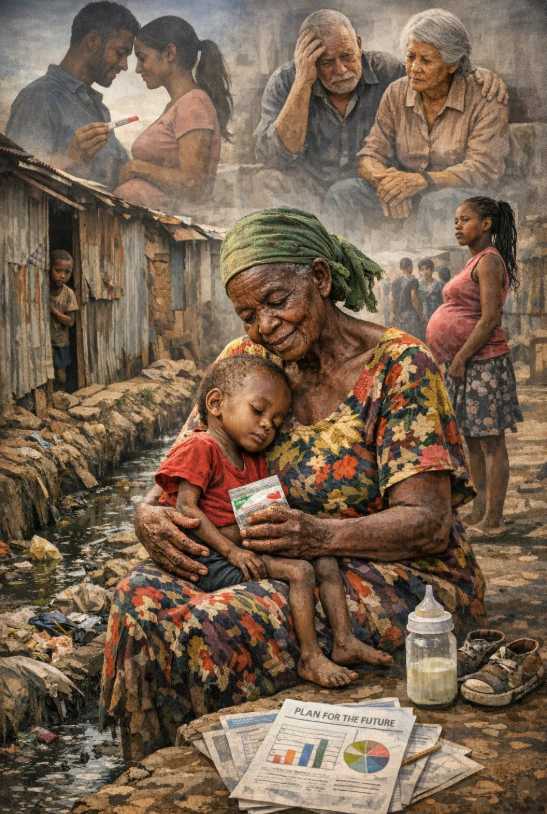
Yesterday, I went with my team at Eloi Ministries to a community in Kiwatule for a follow-up visit after an assessment they had previously conducted. One of the key needs identified in this community was malnutrition, so we visited families with a few donated food supplements for children who were underweight and malnourished.
The second-last home we visited belonged to an elderly woman caring for a child of about two years. The child was visibly underweight. When we arrived, she welcomed us with the widest smile. One filled with hope, but also the quiet fulfilment of a promise our team had made during the first assessment. Our programs manager took time to explain how to feed the child, what quantities were needed, and when. She listened attentively, nodding, asking questions, absorbing every word.
The whole time, I found myself thinking, “What a sweet grandmother.” I assumed this was her grandchild. One she was caring for with the kind of devotion only grandparents seem to master.
Then she began to narrate her story. She told us this child came with blessings. That he was left with her as a tiny baby by a sex worker who promised to return and pay her for taking care of him. The mother never came back. She never showed her face again. And then the old woman added, calmly, almost casually, that if she had not agreed to take the child, he would have been thrown into the trench beside her house.
My heart sank.
I looked at the trench. Dirty water. Garbage. Filth. Right next to her home. I held back tears. I found myself thinking, “How cruel must the world be for a mother to even consider this?” And yet, I knew the answer was not simple. Poverty, desperation, fear, lack of options. None of these excuse abandonment, but they explain how close society pushes people to the edge. As we left her home, a debate sparked within my team. We talked about pregnancy, children, and the pressure society places on young women and men to give birth. It reminded me of the countless times I’ve been asked when I am “giving my man a child,” as though marriage is incomplete without immediate reproduction. As though babies are milestones to tick off a list.
I have always said I am not planning to give birth any time soon. Not until my partner and I are actually ready to groom and nurture a child in this cruel world. Until then, I am the baby. This statement does not sit well with many people. Some say I am immature. Others say I am selfish.
But here is my truth: I do not want my child to go through the hardships I went through.
My parents may not have had control over resources while raising me. Something many people refuse to acknowledge and instead label as disrespectful. But I do. I have the ability to make conscious choices. I can decide to wait. I can decide to plan. I can decide to try, just maybe, to make my child a planned child. People will say, “A child is raised by the community.” Yes, the child is raised by the community until the child falls sick and the hospital asks for cash before even touching the child. Until school fees are due and the community suddenly has silence to offer. Until you want to take the child to a decent school and are told you should have “known your level.”
If the same community complains when I ask for 20k because I am broke, how much more will they complain when I ask for one million for school fees? And if I fail to provide, the same mouths will say, “Why did she give birth to a child she couldn’t afford?” That is hypocrisy, and we need to call it what it is.
Just last year, a friend shared a story about a girl who got pregnant to keep a man. Three months into the pregnancy, the man had disappeared. No support, no antenatal visits, no care. She was reaching out just to get a meal for the day. Then there are girl groups getting pregnant together so they can “twin.” Somewhere along the journey, during pregnancy or after childbirth, one realizes her friends had plans, support systems, or partners who showed up. Meanwhile, she is alone. Numbing the pain with weed and drugs. Nothing in the house. That is when the idea of taking the child to the grandparents enters the conversation.
Your parents raised you, and now they must raise your child too because you wanted to “twin.”
I am not saying having a child is bad. I am saying, plan for that child. Your parents should not be forced into another cycle of survival because you chose impulse over intention. They should not be parenting again when they should be resting. Love should not be inherited as exhaustion. Even sexual and reproductive health conversations have shifted. SHRH now clearly states that you have the freedom to keep a pregnancy or not. Choice is not evil. Choice is responsibility. Planning is not selfish. It is protective.
That grandmother in Kiwatule did not plan for that child, yet she chose humanity. But choice should not always be an emergency response. Sometimes, the most loving thing we can do is to wait. To prepare. To say, not yet.
Because when I finally bring a child into this world, I want them to arrive into readiness. Not rescue.
@UlokcwinyuUbia.
This post was created with our nice and easy submission form. Create your post!

Did this story move you? Every gift goes directly to Ulokcwinyu Ubia — writers on Muwado earn from reader appreciation, not algorithms. Even $1 makes a difference.




Muwado weekly chart
Get Africa’s top 10 stories every Thursday
No account needed — just your email.
Want to follow Ulokcwinyu Ubia and get notified every time they publish?
Create a free Muwado account →