

 Isabelle Ugochukwu

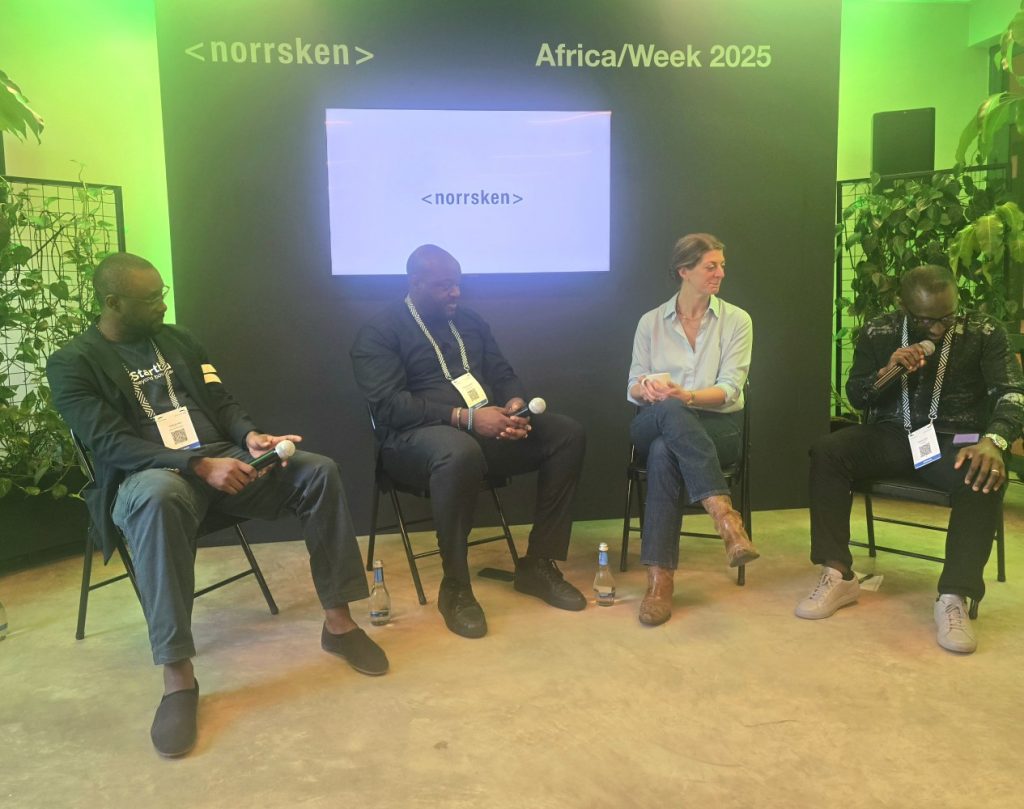
Founders often get the spotlight (rightly so) – but this Norrsken Africa Week “Beyond the Founder: How Operators Help Build Successful Startups” session held on day two, was a love letter to operators – the ones who hold everything together when it feels like everything is falling apart. And a powerful reminder that behind every “overnight success” is an operator who has been quietly going to war for years.
With Seni Sulyman ( Talstack ), Anthonio P. ( Colepin Advisory Services ), Sara Leedom ( Inkomoko ), and Charles I. ( Startbutton Africa ), we explored what great operators really do – and what it takes to thrive as one.
Here’s what stayed with me:
1. Operators are chameleons – and the best ones are GMs, not specialists. The strongest operators don’t just “run ops.” They translate the CEO’s vision across every function, adapting to whatever is needed with maximum efficiency. Today it’s sales. Tomorrow it’s real estate for a new office. The next day, it’s setting up systems, events, or travel in a country you’ve never been to. You didn’t know anything yesterday. Tomorrow you’re the in-house expert. That’s how you earn your scars.
2. Operators own the cohesiveness of the organisation. They tie the functions together. That’s why so many operators eventually become Founder/CEOs – it’s the natural next step. They see across: People, Processes (ideally touchless)and Data, and they know when to delegate because they understand where they fall short and who can do it better.
3. A great sales leader-operator becomes the voice of the customer. When your sales leader is strong, they don’t just “hit numbers.” They are the pulse of the market. They influence the product roadmap. They bring the outside world into the boardroom.
4. This work is not glamorous. Building a business is one thing. Operating it in fragile contexts is another entirely. Sometimes, it’s literally life and death. Operating across Africa sometimes means working in war-torn or politically unstable environments, where security and safeguarding are part of the job. Constantly serving others – your team, your customers, and your partners – keeps you focused on what truly matters.
5. The right team turns trauma into testimony. Having a strong team that will go into battle with you makes all the difference. In the moment, it can be traumatic. But then you look back and think: “We did that.” And the next time something big hits? It doesn’t feel as scary because you’ve lived through worse.
6. Not every partnership works. Sometimes you build it. Sometimes you buy it. Sometimes you cut your losses and leave. Operators need the discernment to know which is which, and the courage to act – especially when they know that they need to walk away.
7. Great operators “dive for pearls.” You must be able to go right down into the weeds to find the real problem – and then ride the elevator back up to the penthouse to translate that solution at a strategic level. Floor by floor. Detail to big picture. Ground truth to board narrative.
8. Startups are like going to war. You must trust the people you follow, and the people who follow you. This means that high EQ is non-negotiable. Things move fast. Things break often. And people, with all their fears, egos, and blind spots, are often the biggest obstacles. You don’t work in isolation, so to get things done, you must:
- Read people and situations
- Rally teams around a shared cause
- Navigate tension and conflict
Your success as an operator is anchored on three bedrocks: Consistency. Competence. Character.
If people trust your work ethic, they’ll do what you ask of them. If they trust your expertise, they’ll follow your lead.
If they trust your integrity, they’ll listen to you.
9. Ownership and trust are key! Of all the balls you’re juggling, you need to know which ones are your glass balls and which ones are your rubber balls. Some responsibilities are glass – they cannot drop. Those are your non-negotiables as an operator. Others are rubber balls – you can throw them to others so they keep moving, or let them fall until another time, so that you can focus on what only you can hold.
10. Tools, policies, and the AI reality can harm or hinder. Recommended tools include: Asana, Looker, Google Workspace, Calendar, Slack (or equivalent for shared workspaces), Power BI, and CRMs like Pipedrive/Zoho.
Startups need to create clear policies to tackle a new and flagged frontier: AI transcription tools that record meetings, including sensitive ones like performance reviews – sometimes invisibly in the background. These policies about what can and cannot be recorded should be often communicated and enforced. This is not optional.

Other helpful advice given included…
The PEAR framework for making hard, ethically challenging decisions.
P – People
E – Environment
A – Assets
R – Reputation
If your people are harmed, you don’t come back from that. Protecting people is the highest priority. Everything else is a trade-off – as long as you can defend your values to your board, you’re still on solid ground.
All Operators hiring should read “Hypergrowth and The Law of Startup Physics.” The Founder/CEO’s growth is exponential. All other people often grow linearly. This is why you never give big titles at the beginning, because when you get to Series A, your VP/Director should be comparable to a Senior Executive Leader with the same title, which equates to a couple of decades of experience in an MNC. Most of the time, this does not happen. This means some people will need to move roles, or move on, as they will not be able to keep up with the demands of the role as the company grows.
So, hire for thinking logic, not just experience.
Use live case studies. Think about what the role will need in 6/12/18 months and how you’ll keep that person motivated as the company evolves.
Don’t neglect legal, continuity, and data sovereignty. You need:
- Solid legal foundations.
- A business continuity plan for government changes, coups, geopolitical shocks, force majeure, legal issues.
- Government Relations and legal teams that can respond when things change overnight.
And yes, data sovereignty matters – especially as you scale. But there are trade-offs. When you’re tiny, there are other fires to fight first. As you grow, it must move up the priority stack.
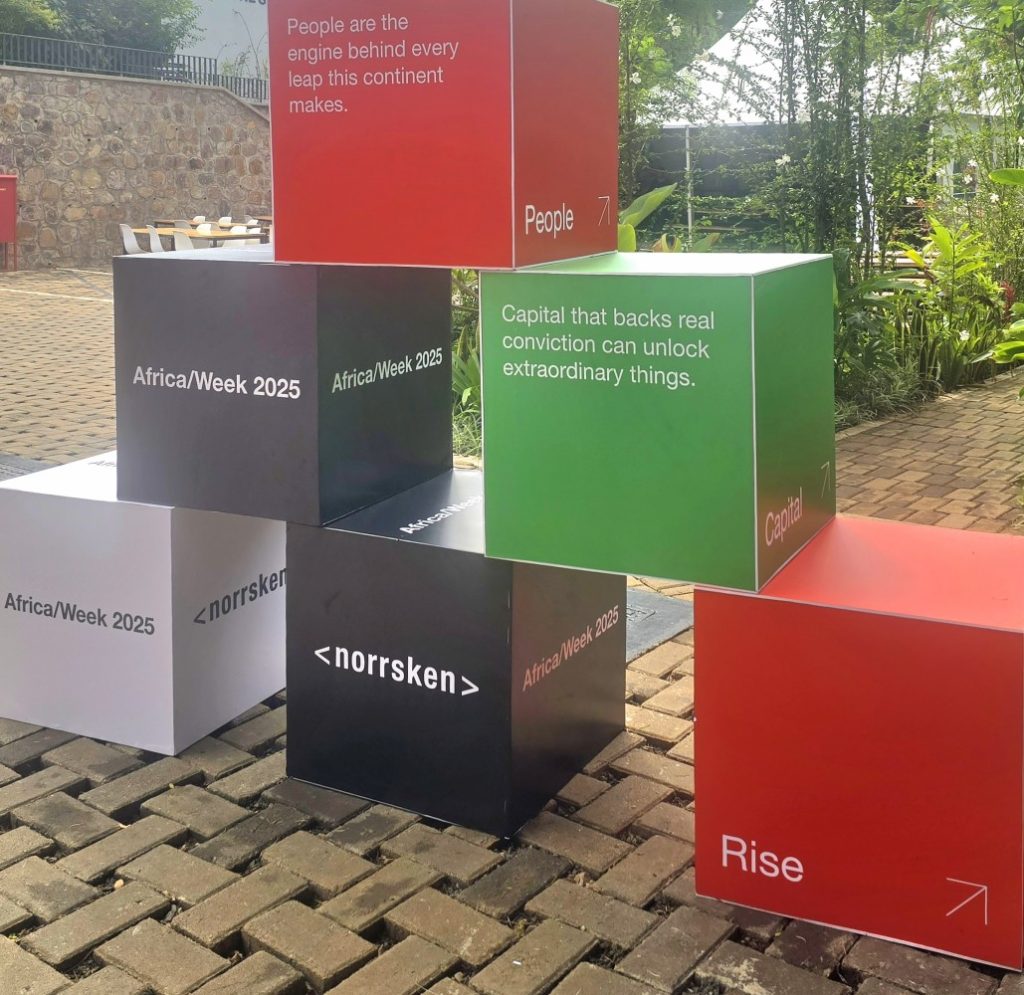
Follow Seni Sulyman, Anthonio Pinheiro, Sara Leedom, and Charles Idem – leaders who have built, scaled, and held the line inside some of the continent’s most demanding environments.
And plug into Norrsken East Africa , where founders, operators, and investors are learning how to go to war together, and win
This post was created with our nice and easy submission form. Create your post!

Written by
Founder & CEO MedTech Solutions | Building Health Data Infrastructure for Africa | Powering Global Health Intelligence | Advancing Global Health with Data
Did this story move you? Every gift goes directly to Isabelle Ugochukwu — writers on Muwado earn from reader appreciation, not algorithms. Even $1 makes a difference.






Muwado weekly chart
Get Africa’s top 10 stories every Thursday
No account needed — just your email.
Want to follow Isabelle Ugochukwu and get notified every time they publish?
Create a free Muwado account →