

 Francis Ssessaazi
For decades, nations across the world have depended on foreign-built operating systems to power their governments, businesses, schools, hospitals, financial institutions, and digital infrastructure. From desktops and servers to cloud systems and enterprise platforms, most of the world runs on software designed thousands of miles away.
But as countries increasingly begin adopting sovereign technologies and custom-built operating systems to secure their digital futures, Uganda is stepping into a new era with an ambitious vision of its own:
Introducing Nervous OS — an AI-powered operating system designed and engineered completely in-house by Uganda.
This is more than just another operating system.
It is a declaration of technological independence.
The Problem With Foreign Operating Systems
Today, the majority of African institutions rely heavily on operating systems such as Microsoft Windows and Linux distributions developed and maintained outside the continent.
While these systems are powerful, they were never designed specifically for Africa’s realities, priorities, or long-term sovereignty goals.
This dependence raises major concerns:
- National data sovereignty risks
- Dependence on foreign vendors
- Limited control over critical infrastructure
- Potential backdoors or undisclosed telemetry
- Exposure to geopolitical software restrictions
- Licensing and compliance challenges
- External influence over digital infrastructure
- Lack of localized AI integration
- Weak optimization for African public systems and infrastructure
For many governments and institutions, this creates a dangerous imbalance: critical national systems running on technologies fully controlled by external entities.
As cyber warfare, surveillance, and digital espionage become global realities, countries are beginning to realize that true sovereignty is impossible without technological sovereignty.
And that is where Nervous OS enters the conversation.
What Is Nervous OS?
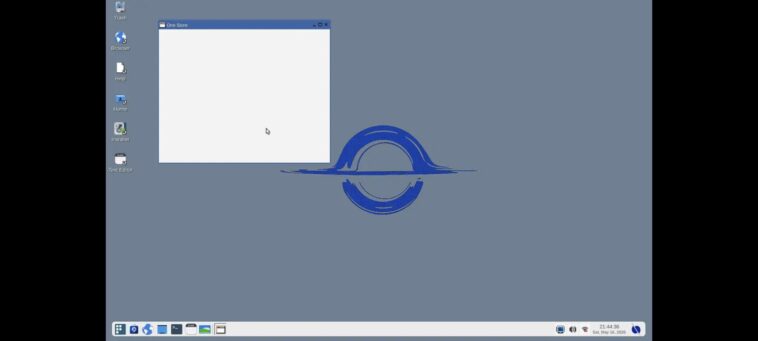
Nervous OS is a next-generation AI-native operating system conceptualized and designed in Uganda.
Unlike traditional operating systems that simply run applications, Nervous OS is envisioned as an intelligent digital foundation — an operating system built around automation, machine intelligence, security, and adaptive computing.
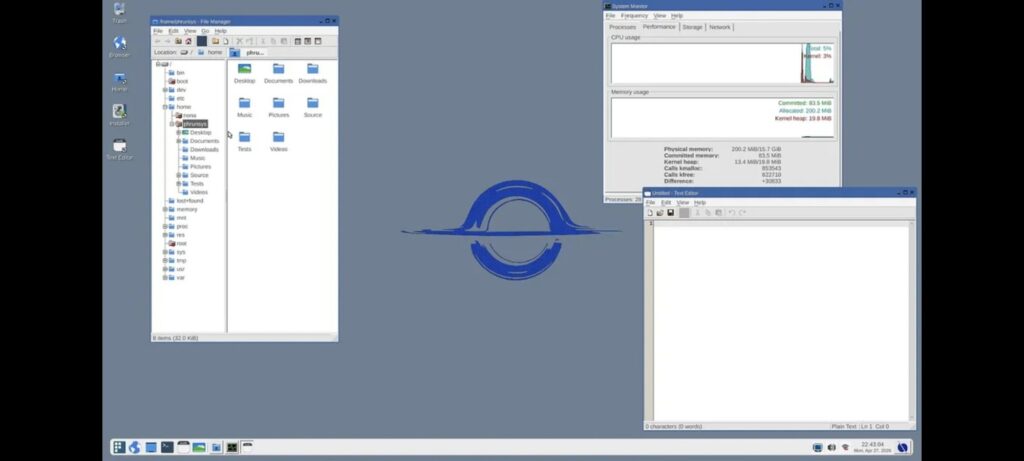
Image Credit: Francis Ssessaazi
Rather than treating AI as an external tool or optional assistant, Nervous OS integrates intelligence directly into the core of the operating system itself.
The goal is simple but revolutionary:
To build an operating system that understands, assists, optimizes, automates, and evolves alongside its users.
What Makes Nervous OS Different?
Unlike conventional systems that rely heavily on manual workflows, Nervous OS aims to become a fully AI-native environment capable of intelligent interaction with applications, services, hardware, and user behavior.
Key Advantages of Nervous OS
1. AI-Native Architecture
Unlike legacy systems retrofitting AI features onto decades-old architectures, Nervous OS is designed from the ground up for artificial intelligence.
This enables:
- Intelligent task automation
- AI-assisted workflows
- Context-aware computing
- Predictive resource optimization
- Autonomous system maintenance
- Smart process orchestration
- Natural language interaction with the OS itself
The operating system becomes more than software — it becomes an intelligent computing partner.
2. National Data Sovereignty
One of the strongest arguments for Nervous OS is digital sovereignty.
Critical national systems could operate on infrastructure fully controlled, audited, and managed locally.
This means:
- Reduced dependence on foreign vendors
- Greater control over government systems
- Improved visibility into core infrastructure
- Local security auditing capabilities
- Better compliance with national digital policies
In an age where data is power, sovereignty matters.
3. Security-First Design
Traditional operating systems were built for a different internet era.
Nervous OS proposes a modern security-first architecture focused on:
- Reduced attack surfaces
- AI-assisted threat detection
- Kernel-level behavioral monitoring
- Intelligent anomaly detection
- Secure software deployment
- Controlled application permissions
- Advanced isolation mechanisms
Instead of reacting to threats after compromise, the system aims to predict and prevent attacks proactively.
4. Built for African Infrastructure
Many global operating systems are optimized primarily for high-end hardware and Western infrastructure assumptions.
Nervous OS could prioritize:
- Low-resource optimization
- Better performance on older hardware
- Offline-capable AI systems
- Efficient bandwidth usage
- Local language support
- Region-specific deployment needs
This could dramatically improve accessibility across Africa.
5. Unified AI Productivity Layer
Nervous OS envisions deep AI integration across the entire desktop environment.
Imagine:
- AI controlling workflows directly
- Intelligent automation between applications
- Autonomous document processing
- AI-assisted development environments
- Smart administrative systems
- AI-driven enterprise productivity
Instead of users manually moving between dozens of disconnected tools, the OS itself becomes the orchestrator.
6. Local Innovation Ecosystem
A sovereign operating system creates opportunities far beyond software itself.
Nervous OS could stimulate:
- Local operating system engineering
- Driver and hardware development
- Cybersecurity industries
- AI research ecosystems
- Educational innovation
- African cloud infrastructure
- Enterprise software ecosystems
This has the potential to create entirely new technology sectors within Uganda and across Africa.
Beyond Software: A Symbol of Technological Confidence
Historically, Africa has largely consumed technology built elsewhere.
Nervous OS challenges that narrative.
It represents a shift from technology consumption to technology creation.
It sends a message that African nations are capable not only of using advanced systems — but of architecting them.
Building an operating system is one of the most technically demanding undertakings in modern computing. It requires expertise in:
- Kernel engineering
- Hardware abstraction
- Security architecture
- Filesystems
- Memory management
- Networking
- AI systems
- Distributed infrastructure
- Human-computer interaction
For Uganda to pursue such a vision demonstrates enormous ambition.
Could Nervous OS Spark a New African Tech Revolution?
This raises an important question:
Could Nervous OS mark the beginning of a new technological era in Africa?
For years, conversations about African innovation have focused heavily on fintech, mobile apps, and digital services.

Image Credit: Francis Ssessaazi
But Nervous OS enters a far deeper layer of the technology stack: foundational infrastructure.
If successful, it could inspire:
- African-built operating systems
- Sovereign cloud platforms
- Indigenous AI ecosystems
- Local semiconductor initiatives
- National cybersecurity platforms
- African software standards
- Regional digital alliances
It could redefine how Africa participates in the global technology industry.
Not merely as a market.
But as a creator.
The Road Ahead
The journey will not be easy.
Building a world-class operating system requires immense investment, engineering talent, infrastructure, research, testing, and long-term commitment.
Competing against decades-old ecosystems backed by trillion-dollar corporations is an enormous challenge.
But every major technological revolution began as an ambitious idea that seemed impossible at first.
What matters is not whether Nervous OS immediately replaces existing systems.
What matters is what it represents:
- Technological ambition
- Digital sovereignty
- African innovation
- AI-native computing
- Long-term independence
And perhaps most importantly:
The belief that Africa can build foundational technologies for itself.
Final Thoughts
Nervous OS is more than an operating system concept.
It is a vision for a future where Uganda and Africa are no longer dependent solely on external technological powers for critical digital infrastructure.
In a world increasingly shaped by artificial intelligence, cybersecurity, and data sovereignty, owning the foundations of computing may become one of the most important strategic advantages any nation can have.
And perhaps, years from now, historians may look back at projects like Nervous OS as the beginning of Africa’s next technological revolution.
This post was created with our nice and easy submission form. Create your post!

Did this story move you? Every gift goes directly to Francis Ssessaazi — writers on Muwado earn from reader appreciation, not algorithms. Even $1 makes a difference.




Muwado weekly chart
Get Africa’s top 10 stories every Thursday
No account needed — just your email.
Want to follow Francis Ssessaazi and get notified every time they publish?
Create a free Muwado account →