

 Crystal Butungi Rutangye
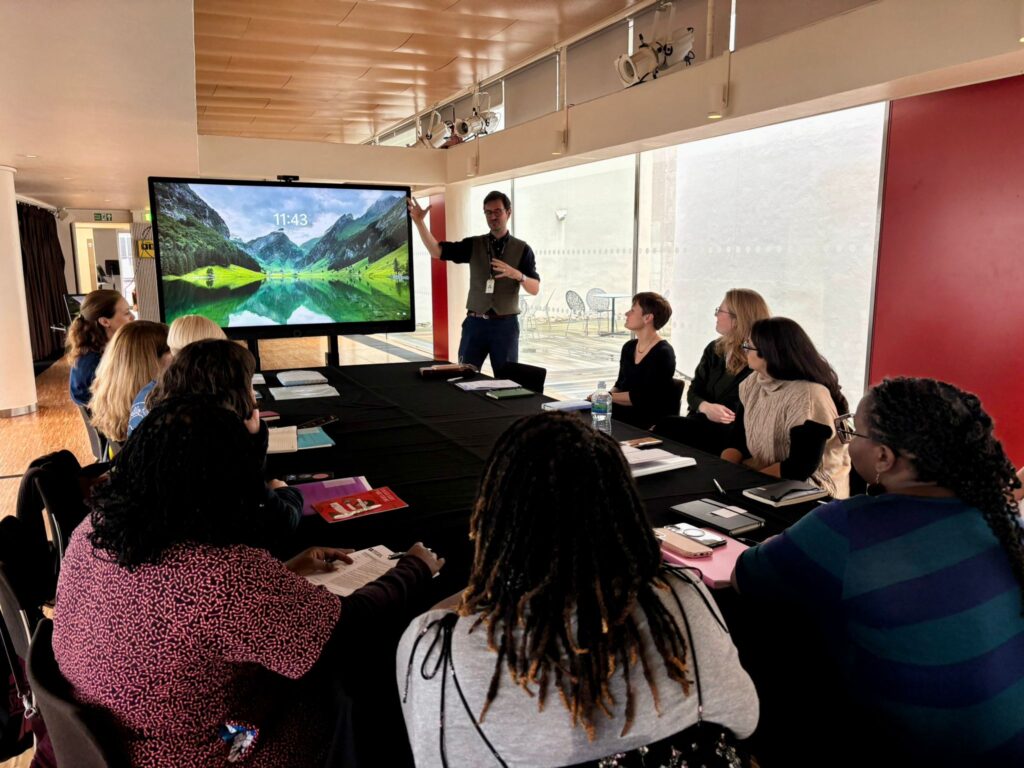
Last week I shared about our utopic visit to the Penguin Random House headquarters on the morning of day one. Still riding that high, we left PRH and walked to the Southbank Centre, the UK’s largest arts centre, for our next session.
At one of the halls, the Southbank team welcomed us and gave a brief overview of the centre and its work. Then the workshop began.
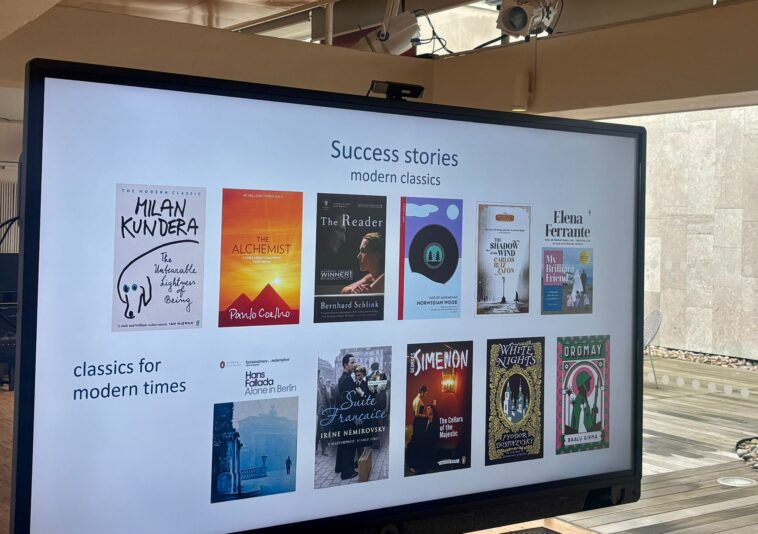
The moment Katharina Bielenberg pulled up her first slide, I felt like the honeymoon was over. It was time to mean business. Serious things now. The slide showed eleven book covers in two neat rows. The first included titles like The Alchemist by Paulo Coelho. The second, labelled Classics for Modern Times, featured books like Oromay by Baalu Girma and Alone in Berlin – Hans Fallada. Her session focused on acquiring books for translation.
As she spoke, it became clear why we carry notebooks and pens to these things. We were no longer touring offices. We were in class. Being schooled. I reached into my bag for mine, sat up straight, and started taking notes.
Buying and selling rights was not completely new to me, but it is not common practice in my company. Scribe House has explored rights deals a few times and may do so again when book distribution in East Africa becomes more functional. That is a long story. The short version is that I understood the basics, I knew something about rights, but clearly not enough!
Katharina opened up a whole new side of publishing that I had never fully considered. To avoid misrepresenting the technical details, I will share what stood out to me in layman’s language – there is a thriving niche where publishers or agents buy rights to publish a book in another language and sell it in regions not covered by the original publisher. Both sides benefit by reaching new markets thus and earning more royalties. It works much like selling rights for films, merchandise, or digital formats based on the book.
Beyond expanding sales, this trade matters because some books perform far better in translation than in their original markets. Katharina shared examples of successful non-fiction titles on surprisingly ordinary topics, including a book on chopping, stacking, and drying wood. Rights selling can generate serious capital far beyond their first market. My mind was blown.
My head was full of questions. If we published our books in local languages, would others buy the rights to translate them into English? But now if Ugandan publishers mainly produce books in English, where do we fit into this trade? We are competing with every other English language book worldwide. Why would a publisher in Eastern Europe, or Japan, choose an African English title over one from the UK or the US? I noticed my mind was veering to the question of whether are books are good enough or why aren’t our books taken up by the Big 5 and all that. To clear my spinning mind, I jotted down my thoughts:
a) Exposure: do we not have as much representation at key places where buyers and sellers of rights meet – international book fairs. Let alone the fact that we barely have literary agents on the continent representing our authors. Or is it
b) Our books are not as compelling and bestselling as titles from other English-speaking countries whose names I won’t mention. Or:
c) Would it make business sense to buy the rights to translate a popular title, like Chimamanda’s books, into Luganda or Swahili?
d) Is our content too African to be picked up by the rest of the world (read the publishing journey of Jennifer Makumbi’s ‘Kintu’)?
I could not keep the question to myself, so I asked why there were few African titles on Katharina’s slides. Was it because of any of the above? I loved Katharina’s graceful, authentic approach to answering my question on her perception of and exposure to African books in the places where rights are sold. Very insightful thoughts. Exposure was part of the discussion. It was a necessary conversation, that led neatly into the next session.
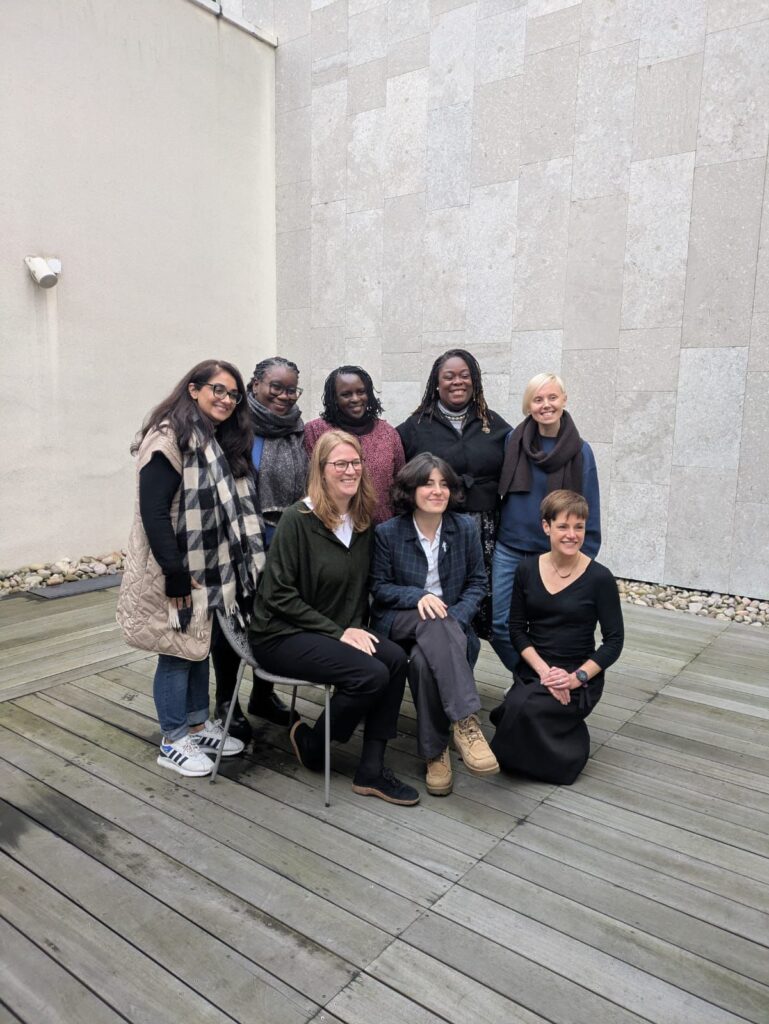
That session was led by Emma Shercliff, an agent many Ugandan authors admire and hope to work with. I felt honoured to even be in the same room as her. Emma is known for supporting authors from diverse backgrounds and for looking beyond the usual publishing centres. One thing I learnt that day is how much London publishers tend to focus on London-based authors, often overlooking storytellers from outside London. I listened closely as Emma talked about her research on women storytellers, sharing experiences, templates, and practical guidance on rights trading. I had many questions, more than time allowed, and I did not even manage to ask them at the evening reception. I hope one day I will.
For now, I will ask one here. Authors of Uganda, how far with selling rights to your books? Have you considered this or you can explain?
TO-RESEARCH LIST:
- Who is buying and selling rights to African-authored titles?
- Who is representing Ugandan books at international trade fairs?
- Is our content too African, or can we entice publishers to translate and sell our work globally?
- Do we even need to sell our work globally or we are amazing just the way we are?
TO-DO LIST:
Edit this post again to remove every hint of naivety and ignorance on this topic.
This post was created with our nice and easy submission form. Create your post!

Written by
I delight in the power of the written word to share ideas, thoughts, stories, memories, and other aspects of humanity. With over 14 years' experience, my expertise includes editing fiction and non-fiction trade books, ghostwriting, book production management, and training new writers/editors. I lead a team of zealous book editors, graphics designers, and illustrators at Scribe House.
Did this story move you? Every gift goes directly to Crystal Butungi Rutangye — writers on Muwado earn from reader appreciation, not algorithms. Even $1 makes a difference.





Muwado weekly chart
Get Africa’s top 10 stories every Thursday
No account needed — just your email.
Want to follow Crystal Butungi Rutangye and get notified every time they publish?
Create a free Muwado account →