

 Caesar Obong Ng'bong ocen

The City was always alert—twenty four hours seven days a week, from dusk to dawn and dawn to dusk.
It did not sleep. It recalibrated.
Streetlights hummed like low-frequency surveillance devices. Traffic lights pulsed in disciplined rhythm. Even the potholes seemed to remember tires that passed over them. Kampala was not chaotic. It was observant.
And in that City, justice did not always mean innocence.
Sometimes it meant timing.
Nick believed in timing.
As a judicial officer presiding over high-stakes commercial cases, he understood delay as power. Adjournment could exhaust an opponent. Technical dismissal could bury a scandal. Interpretation could redirect millions.
He was educated. Decorated. Feared.
When he entered a courtroom, authority entered with him.
He was not a man. He was an institution.
But institutions decay from within.
I was never meant to be in his orbit.
No law degree. No pedigree. No elite connections.
General O’s bureau did not recruit me for credentials. They recruited me because I was forgettable. Because I listened more than I spoke. Because I could enter rooms without altering temperature.
Drake once told me, “The best weapon is the one no one notices.”
He did not mean guns.
He meant me.
He meant the nano-bugs flowing inside my bloodstream.
I had agreed to it.
Or at least, I think I had.
The injection had been clinical. Efficient. Explained in technical language that minimized its intimacy. “Microscopic adaptive recorders,” they called them. “Non-invasive.” “Strategic advantage.”
They did not describe what it feels like to know your thoughts are no longer entirely private.
They did not describe the moment you wonder whether a desire is yours—or suggested.
The Central Police Station stood a stone’s throw from the Court of Appeal, rigid and official. I passed it that morning on my way toward the Commercial Court near Watoto Church.
Stopping briefly at young women’s Christian Association to enjoy my favourite meal.
Pig’s tail and a bottle Guinness beer.
Yeah!!
That gives the kind of energy needed for an afternoon judicial hearing.
The choice felt spontaneous.
Later, I would question why, but for now thirst of beer and fatty food was all I needed as a true city linker and a professional beer enthusiast.
A waiter stood waiting. Pigs tails, with a serving of rice, and a slice of millet bread, gete also a serving of ox tail if redly available. I ordered and just minutes after my servings, and before I could begin dismantling, and reassembling the pigs and ox tail,Nick barged in.
The City arranges certain meetings the way chess arranges sacrifice.
He scanned the room with mild discomfort—judges prefer distance from ordinary appetite. The only empty seat was across from me.
He sat.
We exchanged polite nods.
His hands were clean. Fingernails trimmed. Wristwatch precise.
He reached for the salt.
Our fingers touched.
Less than a second.
No spark. No visible transfer.
But nano-bugs do not require ceremony especially when you are under surveillance, a millisecond is all that is required.
They travel through warmth, through sweat, through microscopic friction. They migrate silently, obediently, invisibly.
He felt nothing.
I felt a shift in gravity.
Nano-technology had altered intelligence work fundamentally.
Officers no longer rushed into action. They did not storm offices or interrogate aggressively.
They observed.
They waited like predators who understand that the hunt is won before the leap.
The nano-bugs inside Nick began mapping him immediately.
Heart rate variability.
Hormonal fluctuations.
Micro-neural spikes during memory recall.
They did not judge morality.
They recorded deviation.
Predators do not chase when prey walks willingly into the circle.
In court, Nick was composed.
He presided over corruption, money laundering, and illicit financial activity with intellectual elegance. He quoted precedent. He corrected counsel. He leaned back with controlled authority.
But when specific account numbers were mentioned—offshore transfers linked quietly to advisory boards he privately chaired—his pulse shifted.
Barely.
Invisible to human eyes.
Not invisible to the nano-bugs.
When a prosecutor referenced a shell company registered under a distant relative’s name, cortisol levels rose measurably.
When defense counsel suggested procedural dismissal, his breathing normalized.
Patterns formed.
By the afternoon recess, guilt was no longer suspicion.
It was biometric architecture.
Behind Drake, Ms. Okello, and Afande Liyon, there was another presence.
General O.
He rarely appeared in operational briefings. His presence was architectural rather than physical. Decisions carried his imprint even when his voice was absent.
He had once deployed nano-bugs in an operation code-named Eagle Talon. That mission had rewritten the bureau’s understanding of power. It had also revealed consequences no one had anticipated.
Nano-bugs did not merely hear.
They reconstructed thought.
Passwords were not hacked from devices.
They were retrieved from recall.
Operation Eagle Talon had succeeded, but not without cost. Some agents reported residual echoes—other people’s memories bleeding into their own.
General O understood that power without restraint destabilizes the wielder.
So with Nick, he authorized patience.
No arrest.
Not yet.
Confirmation first.
When they arrived at the lobby of the secure bureau, Nick was certain of his control.
Until the locked desktop glared at him.
“That… that belongs to my grandson,” he stammered. “I—I don’t have access to it.”
The City seemed to pause with him. Even the hum of fluorescent lights felt oppressive.
Through the intercom, General O’s voice cut cleanly across the room: calm, measured, authoritative character by character
“Password: ##@#£12 Kamala&UganDa 1973+%##@#£13,” he said.
Nick’s breath caught. His chest tightened. Sweat beaded along his temples and ran down the back of his neck. Hands trembled as he instinctively pressed against his thighs, trying in vain to control rising panic.
The lock clicked. The screen unlocked. Files popped up—archived evidence, financial transactions, sensitive communications. His grandson’s desktop had betrayed him before he had even touched it.
Nick’s face drained of color. Heart hammering, he felt an unfamiliar heat crawl down his legs—a mortifying, uncontrollable sign of fear. His composure, the carefully cultivated imperial authority, evaporated.
He glanced at the documents on the screen—evidence of corruption, misappropriation, and complicity. He wanted to speak, to deny, to explain, but no words formed. His mouth went dry.
The man of God he had once considered himself to be—the judge, the moral arbiter—was now fully exposed, earthing himself in terror before powers he could not comprehend.
Even the walls seemed to lean in, observing, recording, confirming every involuntary response.
Nick realized, with nauseating clarity, that General O and his team did not just see his actions—they saw his fear, his hesitation, his body’s betrayal. Every heartbeat, every memory, every instinct had been catalogued and weaponized against him.
By the time he slumped into the nearest chair, he was no longer a predator. He was a dead prey.
Nick now sits in a maximum-security prison.
Concrete walls. Steel bars. Fluorescent light that hums without sympathy.
He is still wondering how these rotting state operative made the best use of him, even as of now he is not yet aware of the Nano technology and sometimes feels the irony of the Government opparatives on his compound that day.
The lobby. The desktop. The password read aloud. Some one telling him that nothing was hidden from the hands that ask, and the asking hand had inserted nano-bugs inside him. The brush of fingers reaching for salt…
How had they known?
How had they spoken thoughts he had only imagined?
How had they accessed every secret he held?
He presses his palms to his temples. The imperial robe is gone. Authority evaporated. Fear humbles him completely.
He shakes his head in disbelief.
“Predator turned into easy prey,” he mutters.
Then, staring at the blank concrete wall, he whispers with reluctant awe:
“The army has always been thirty-five years ahead of its time.”
Outside, the City continues its rhythm—twenty four hours seven days a week, from dusk to dawn and dawn to dusk.
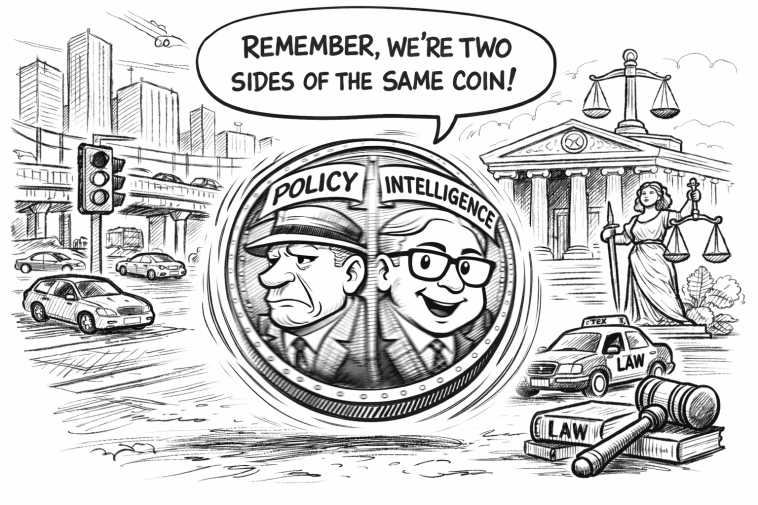
Two sides of the same coin.
Justice and corruption.
Hunter and hunted.
Observer and observed.
And somewhere beyond visible power, General O remains patient.
Because in this City, conclusions are not accidental they are planned and engineered.
This post was created with our nice and easy submission form. Create your post!

Written by
Caesar Obong Ng'bong Ocen is a Ugandan writer whose work traverses narrative fiction, cultural memory, and moral inquiry. Drawing on African cosmologies, and reflective storytelling, his writing engages with issues of power, identity, faith, and the human condition within post‑conflict societies. His series blends political realism with interior psychological struggle, articulating the tensions between duty and conscience, tradition and modernity, exile, redemption. Obong Ng'bong's work bridges literary and social worlds: it interrogates African historical and political realities while exploring philosophical and ethical questions that resonate across disciplines. His narratives are grounded in cultural authenticity and moral depth, making them relevant to both literary and humanistic inquiry. He also mentors emerging writers and contributes to dialogue on African storytelling traditions and their place in contemporary literature.
Did this story move you? Every gift goes directly to Caesar Obong Ng'bong ocen — writers on Muwado earn from reader appreciation, not algorithms. Even $1 makes a difference.






Muwado weekly chart
Get Africa’s top 10 stories every Thursday
No account needed — just your email.
Want to follow Caesar Obong Ng'bong ocen and get notified every time they publish?
Create a free Muwado account →