

 Caesar Obong Ng'bong ocen

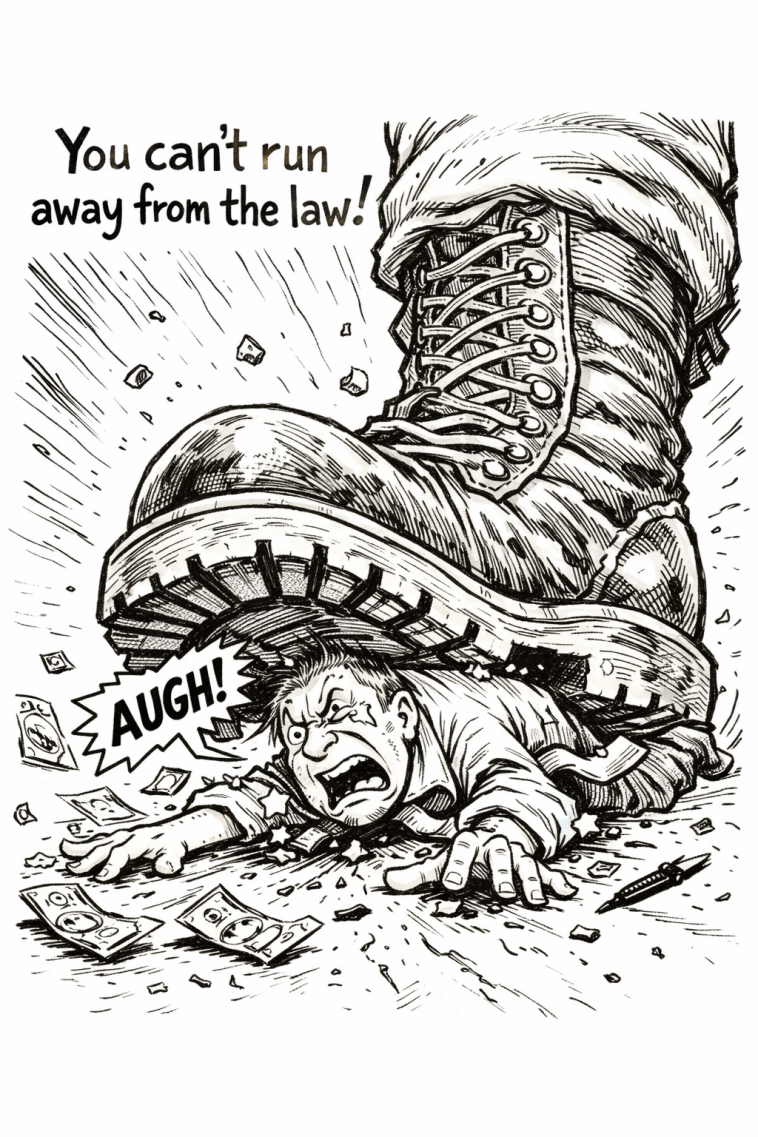
Uganda — the Pearl of Africa, or perhaps Africa itself — is vast only to the ordinary man. To Afande Watmon, the land had once been generous, offering fertile soil, solid walls, and a life built quietly with discipline and diligence. He had served Uganda for twenty-seven years, twenty-seven years of silent labor in the shadows, opening doors for men who never said thank you, maintaining order where chaos threatened, and gathering respect in forms invisible to the untrained eye: a well-fenced rental unit in Kulambiro, another in Kakungulu Estates, and a farmland in Mityana where the soil was dark and filled with rich manure from the alluvium swamp. Here he cultivated over fifty hectares of plantain banana, the greenery stretching in neat rows, nourished by the forgiving earth that had sustained generations before him. To outsiders, he seemed stable, secure, respectable; to himself, he had always been just a locksmith, a quiet craftsman capable of opening safes and doors without asking what lay inside. That skill had brought him into contact with General Okello, not through grand battles or parliamentary debate, but through rooms that whispered with secrets and contained power measured in metal, codes, and trust.
But now, Uganda shrank around him. Borders closed without notice. Roads grew narrower. Strangers became familiar, and every shadow seemed to know him. Afande Watmon had become a fugitive. His wealth felt like chains, his homes like cages, and each step outside was a calculation in survival. Weeks earlier, one of their colleagues had perished in a fiery inferno along the Northern Bypass, flames devouring metal before flesh, yet reports called it a “fuel accident.” Watmon knew the truth, and that truth had followed him like smoke. Then came the vials — five containers of chlorine trifluoride, a chemical that behaved more like judgment than liquid, burning through almost anything with terrifying efficiency. Watmon had been entrusted with the entire impound, tasked by Okello himself to escort it to the storage facility. Yet greed and circumstance had conspired: he swindled four vials from a crate of twenty-four, while Afande Will had already spirited away the fifth, disappearing at Nansana along the Kampala–Hoima road. Will’s death had ignited a wave of terror across the city, with blame pinned on General O, making him the most feared name among any uniformed men in Uganda.
A year before, Okello had been scrutinized for surveillance technology — Nano bugs rumored to inhabit traffic lights, ceilings, and imported electronics. He had called it “national security optimization,” but the public whispered a darker word: control. That same year, Watmon built his bunker in Luzira, a nondescript suburb of Kampala, with concrete thick enough to discourage casual intrusion, ventilation manually filtered, mechanical locks painstakingly installed. No biometrics, no digital trails — just walls, steel, and human foresight. Inside that bunker, he kept the four vials, the fifth floating somewhere in the wind, and the knowledge that the man who once trusted him now hunted him like prey.
Okello had only impounded what he intended. Other shipments moved forward on the road, appearing ordinary to the casual observer, yet scrutinized under invisible eyes. The fleet transporting the containers was the most monitored in the country; hidden cameras recorded every movement, every vibration, every fork lifted or crate shifted. Even the men loading cargo were unwittingly observed. Those suspected of complicity with CFI₃ had been detained along the River Nile in a facility built like a fortress, with reinforced doors, thick walls, and corridors monitored around the clock. Calls were permitted only under quarantine pretenses, every message filtered. Inside, there was no escape from Okello’s shadow.
Then came the Order. Okello appeared not as the retired pastoral figure he now often portrayed but as the disciplined general he had always been. His gaze swept over the stockroom, scanning ledgers, crates, and camera feeds. “Where is Officer Watmon?” he demanded. “And where are the missing vials from these crates?” The question cut through the hum of forklifts and murmuring clerks. Watmon was already secluded in his Luzira bunker, which had become less a sanctuary and more a self-imposed prison. Every lock, every wall, every ventilation shaft was a testament to his mistrust of human loyalty and digital eyes alike. Okello noticed anomalies instantly — a crate slightly off-center, a door subtly ajar, movements caught on hidden cameras that did not align with manifest records. Only three men had ever known the full story: Watmon, Okello, and Afande Will. But with Afande Will now dead, Watmon found himself completely isolated, bearing dangerous secrets alone, every one of them capable of destroying him if revealed. He was a man trapped by knowledge, a locksmith who had once opened doors for others but now could not open a single escape route for himself. The absence of Will made the shadows around him deeper, the walls of his Luzira bunker heavier, and the weight of responsibility unbearable. Every thought, every breath, carried the possibility that a single misstep could alert Okello or the Trinity, exposing him to consequences he was no longer equipped to face.
Above ground, life carried on as usual. Boda bodas argued with traffic. Vendors haggled over tomatoes. Radios debated ethics and security. Below, a different clock ticked, one measured in fear, anticipation, and the claustrophobic rhythm of concrete walls. Watmon was no soldier, merely a locksmith, yet he had become the door itself, and everyone sought the key. In the shadows, the Trinity — Felix, Okello’s wife, and Drake, his right-hand man — observed. When these three sat with Okello, nothing escaped their scrutiny. Orders rippled outward. Watmon’s cellphone betrayed him, reporting movements to Drake constantly. Supplies were cut off, lifelines severed, every access point monitored.
Two days passed. Watmon remained underground, convinced concrete and steel could shield him from consequences, yet the walls began to tremble. Dust fell from the ceiling, metal shelves vibrated. Panic surged. “I should have accepted the consequences,” he muttered, cursing his own greed. Above, Drake had already located him, a road compactor rolling deliberately over the bunker’s surface — not to destroy, but to communicate. Each vibration carried the same message: We know where you are.
Twenty-four hours later, Okello called. “Afande, aren’t you the ASP? And you will still be.” Whether manipulation or mercy, Watmon felt fleeting relief. “Listen, my friend,” Okello said calmly, “we have worked to protect this country. Your service is needed. Another container requires your attention, yet you remain locked away. Yesterday, I considered digging you out, but if I did, you would be treated as a criminal. You are a good man.” Silence followed. Supplies dwindled. Air grew heavier. Time was no ally.
Within thirty minutes, Okello had analyzed Watmon’s locks using his advanced automated unlocking device. The door yielded. He entered carrying a loaf of bread, calm, measured, his presence cutting through fear itself. “Afande… Afande,” he said lazily, as if the outcome were already written. Watmon trembled, seeing the man he had feared as the embodiment of power and judgment. Okello gestured to the vials. “What are these doing here?” he asked. Watmon could not respond. “I trusted you. But why?” Okello’s tone was neither angry nor accusatory; it was final, as though the truth itself had been laid bare. “It is useless to take what you cannot understand simply because you were assigned to it. Your duty was to deliver it safely, not endanger yourself.”
He tapped the shelf lightly. “So I will not take these. They belong to you.” Watmon stared. The vials were untouched, perfectly sealed. But they were not originals. Drake had executed the switch flawlessly, leaving perfect replicas. No forced entry, no disturbed locks, no sound. Watmon was left guarding fakes treated with Nanobots, a trap of observation and strategy, designed to expose every subsequent move. The counterfeit vials traveled silently across borders, toward the Democratic Republic of Congo, while Watmon believed himself a courier of lethal power. He was transporting emptiness.
From that point on, every call, every movement, every contact was monitored. Greed had not destroyed him in one spectacular fall; it dismantled him slowly, precisely, strategically. Intelligence networks, layered cells, operations within operations, had rendered his every action visible. Watmon’s obsession with control, with leverage, became his undoing. He could not escape. He could not hide. He had become a tool of the very system he had attempted to manipulate. And somewhere, in the shadows, the Trinity watched — not reacting, but confirming.
Watmon kept running, financing his own troubles, moving from city to city, from Kampala to distant towns along the Congo border, eventually reaching Kinshasa by road. He became wanted not only by Okello’s men but by those who had sought the chemical for their own gain. They whispered that the locksmith had stolen their golden chance. Greed had propelled him from a slowly simmering pot into roaring fire. He remained vigilant, isolated, haunted by a truth he could never escape: the vials were fake, the mission known, the road to Congo merely a corridor under observation, and every step forward was watched, measured, and recorded. His power, once tangible in locks and keys, became illusory. His wealth, his skills, his judgment, all had led him into a web he could not unravel. And through it all, the Trinity remained in the shadows, orchestrating, confirming, ensuring that every piece moved exactly as intended, proving once more that in the world of espionage, control is never given, only seized — and those who think themselves clever are often the first to be unmasked.
This post was created with our nice and easy submission form. Create your post!

Written by
Caesar Obong Ng'bong Ocen is a Ugandan writer whose work traverses narrative fiction, cultural memory, and moral inquiry. Drawing on African cosmologies, and reflective storytelling, his writing engages with issues of power, identity, faith, and the human condition within post‑conflict societies. His series blends political realism with interior psychological struggle, articulating the tensions between duty and conscience, tradition and modernity, exile, redemption. Obong Ng'bong's work bridges literary and social worlds: it interrogates African historical and political realities while exploring philosophical and ethical questions that resonate across disciplines. His narratives are grounded in cultural authenticity and moral depth, making them relevant to both literary and humanistic inquiry. He also mentors emerging writers and contributes to dialogue on African storytelling traditions and their place in contemporary literature.
Did this story move you? Every gift goes directly to Caesar Obong Ng'bong ocen — writers on Muwado earn from reader appreciation, not algorithms. Even $1 makes a difference.





Muwado weekly chart
Get Africa’s top 10 stories every Thursday
No account needed — just your email.
Want to follow Caesar Obong Ng'bong ocen and get notified every time they publish?
Create a free Muwado account →