

 Shadreck Chikoti
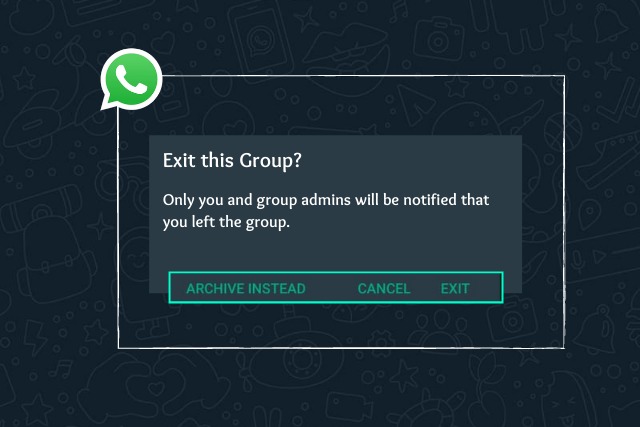
They almost chased me out of our family WhatsApp group because of politics. Imagine that, expelling someone from his own bloodline over colours on a party flag. I refused, of course. Not out of pride, but out of a quiet conviction: in all my days in that group, I had never, not once, spoken about politics. My only “crime” was that I supported a party different from the one my relatives supported. In that entire digital village of ours, I stood alone on my side of the fence.
My mother was a daughter of Mtambanyama in Thyolo. All her people, grandparents, great-grandparents, her father and mother, sprang from the same ridges and slopes of Thyolo. One of my grandfathers came from Chisoka; the other shared roots with the people of Goliati and the neighbouring hills. Family hums say my great-grandfather, a preacher in the days of the colonial missionaries, carried bloodlines that intertwined with those of the current ruling family. That grandfather, Reverend Thom, lived during the era of the incumbent’s patriarch; somewhere in the past their blood touched and branched apart again.
We are Mang’anja by heritage, like most families in Thyolo, but people, including my own blood, often brand us Lhomwe simply because of geography. They forget how history muddies clean lines. They forget how marriage stirs languages and lineages together. Even our surnames tell the story: names like Kantora, Mphepo, Chaponda, Phiri, Somba, Bodza, they dance to Chewa rhythms. True Lhomwe names ring differently: Muvaliwa, Mutharika, Navitcha, Muhahaleya, Khoviwa.
My grandfather served under the Nyasa Mission, and I myself was born at Malamulo Hospital in Thyolo, a thread tying me to my mother’s land. If loyalty to a region determined political allegiance, then yes, perhaps I should have supported the same party as my relatives. But life shapes us differently; we choose our own roads. For me, it is a matter of principle and freedom, exercising my God-given rights.
During the campaign season, I never hid where I stood. I wrote freely on Facebook, sometimes playfully, sometimes with passion. Isn’t that the beauty of democracy? The right to support any party you wish, even the infamous Odya Zake Alibe Mulandu Party, if one so desires.
But when my party lost and theirs triumphed, the winds in our family WhatsApp group shifted. At first it was harmless chatter, the kind that follows any election. Then it turned personal. Some cousins began dredging up my Facebook posts, pasting them in the group, twisting them into sharp jokes meant to embarrass me. As family we tease and laugh at each other, but this laughter felt different, crafted to wound. Still, it’s difficult to truly upset me, especially if someone is trying so hard to upset me.
I tried to cool the rising heat. “Let’s celebrate,” I said, “but let’s not turn this into cyber-bullying, although you children can’t really bully me.” Had I known how those words would land, I would have swallowed them. I had poured fuel on a fire they were eager to ignite. It was as if they had been waiting for that very moment, to push me into a corner, a place where I would appear pressed and troubled. A place of weakness, where I would be expected to plead: Please spare me, I am also human. That was the stage they had hoped for.
I felt as though they had been watching me from a distance, waiting patiently the way a lion waits to pounce on a gazelle. Except, somehow, I was both the lion and the gazelle at once or a Kasongo may be.
Then one of the group admins delivered the blow, cold as a bureaucrat stamping a form: “You are free to leave.”
“Leave? To go where?” I asked.
Should a man exile himself from his own clan because of political winds?
Perhaps I was born with a flicker of stubborn fire in me—just enough to keep me from walking away. Perhaps age had taught me that politics is a masquerade where no one wins forever. Who eats politics? Who is born loyal to a party? So I stayed.
Growing up in Mtambanyama, my parents and siblings often called me stubborn, troublesome, christening me with names that reflected exactly that. I remember being called Bondowe, after some legendary goalkeeper, I was called Nkhutukumve, and other playful mockeries. My mother always said my childhood was scandal after scandal; as she put it, milandu yosayenera msinkhu wako, mischief far beyond my age. And so it was this same infamous stubbornness that rose to defend me.
I spoke to the younger ones, my nieces and nephews born in the 2000s, half laughing, half serious: “Kids, do you think I’m sulking because I lost? Because my party lost?” In the end, the sting dissolved into laughter. We remembered ourselves.
Not long ago, just a few weeks back, some of my cousins came to Parliament to accompany their MP as she took the oath. One cousin called me. I picked up.
“We’re at Parliament,” she said proudly, “here to witness our MP being sworn in.”
“I’m here too,” I replied. “I’ve come to see some friends.”
“Come to our side so we can greet you. And don’t come empty-handed, we’ve been here for hours!” she joked.
I was nearby, so I walked over. When I spotted my relatives, they were wearing party colours from head to toe. That didn’t stop me from feeling joy at seeing them. I rushed toward them, hugged them, joked with them, pulled them aside to chat. After a while, I noticed their friends staring at us in confusion. Soon I understood why.
I was wearing a T-shirt from my party, while my cousins were dressed in the colours of their party. But in the moment we met, none of us had given that a single thought. Our hearts were filled with family, time spent apart, the relatives back home, the weather, the maize planting season, and life in between. When we realised how strange we must have looked, we burst into laughter.
Politics, I realised once again, should never be allowed to climb into the heart. At its core, it is no different from the great Manoma vs. Bullets rivalry, fierce, emotional, but harmless if kept in the right place. A game of banter. A spark of identity. Nothing more, sometimes needing Bwede to remind you it’s just a game and fun sometimes.
One cheeky relative even wrote to me privately:
“Uncle, you’ve eaten your last salary.”
I replied, “And which salary is that? I am over forty, and whatever salary you’re talking about only fed me for a tiny fraction of my life.” We both laughed and I continued, “Will you need anything from me in the future since I am no longer receiving this salary?”
And so I remained in the family group. I remained with my chosen political colours too. Because families outlast elections, and politics, no matter how loud it shouts, is only temporary and there is no blood in it.
DISCLAIMER: Ndalemba dala mchizungu.
This post was created with our nice and easy submission form. Create your post!

Written by
Did this story move you? Every gift goes directly to Shadreck Chikoti — writers on Muwado earn from reader appreciation, not algorithms. Even $1 makes a difference.






Muwado weekly chart
Get Africa’s top 10 stories every Thursday
No account needed — just your email.
Want to follow Shadreck Chikoti and get notified every time they publish?
Create a free Muwado account →