

 Odoki Jimmy
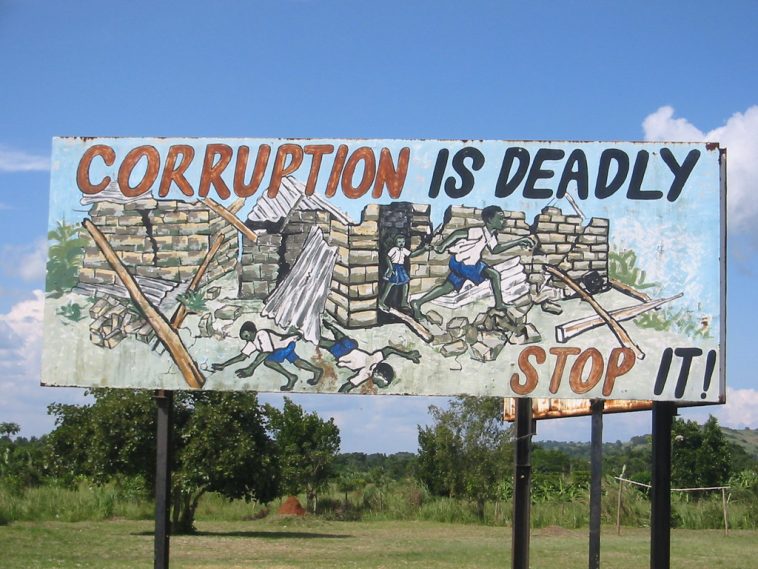
On Wednesday, December 4, 2019, President Yoweri Museveni led an anti-graft walk and he was joined by the head of State House Anti-Corruption Unit, Lt. Col. Edith Nakalema, legislators and other government officials. The President used the event to criticize anti-corruption agencies for recruiting personnel who lack integrity to fight the vice. “I have received reports about people who are mandated to fight corruption, being involved in corrupt practices”, said Museveni. The President has on many occasions lamented about corruption in the country. The construction sector is highly prone to corruption. Thus in May 2008, President Museveni wrote to the Prime Minister, Rt. Hon. Apollo Nsibambi to express his disappointment.
The reference read: CORRUPTION TENDENCIES IN GOVERNMENT DEPARTMENTS. He raised the issue of hiring private contractors to construct roads instead of using Government departments (Ministry of Works & Transport and Ministry of Local Government). In the letter, the President says this daylight robbery stops the Government from effectively delivering services to the people, e.g. roads and schools.
In the ongoing political campaigns, presidential candidates have been confronted with questions from the electorate about the alarming rate of corruption in the country and what they intend to do about it, if elected in January 2026. Last year, the Inspector General of Government (IGG) Beti Kamya in a report to Parliament said Uganda loses Shs9 trillion to corruption in one year. This costs the government 44 percent of its total revenue according to the ombudsman. Analysts agree that corruption is rampant in Uganda but some opine that the figure in the IGG report is too high. However researchers have estimated that 2-4% of annual growth can be shaved off by corruption. Poor people bear the brunt of corruption. Public services are undermined and the cost of provision inflated.
Corruption, especially in government, is the abuse of office for private gain, involving actions bribery, embezzlement, nepotism, etc. People in authority, officials use their power, position or public resources for personal benefit instead of for the good of the public. In Uganda, investors have been frustrated by the demand for a “cut”, kickbacks before being granted license to invest in the country. Corruption impedes business growth. The World Bank identified corruption as the single greatest obstacle to global investment. Both petty and grand corruption is costing economic development dearly. The impact of corruption itself may vary, for example according to how much of the proceeds are banked or spent overseas, rather than domestically. President Museveni in the past controversially stated that he is less concerned about corrupt officials who invest stolen money locally in Uganda, as the money remains within the country’s economy, creating jobs and promoting economic activities. However, recently the President called for an audit into service delivery as an effective way to fight corruption in Uganda.
In his victory speech on Wednesday, November 5, 2025, upon being elected Mayor of New York City (NYC), Zohran Mamdani highlighted the problem of corruption as an issue to be addressed seriously. He said, “We will put an end to the culture of corruption that has allowed billionaires like Trump to evade taxation and exploit tax breaks.” This shows how widespread corruption tendency is and the global impact, not just in Uganda or Africa. Twenty years ago, the World Bank estimated that US $1 trillion was being paid in bribes each year globally. This is without factoring in unknown figure for the embezzlement of public funds or theft of public assets by corrupt officials. The Bank estimated ‘tainted procurement’ at US$1.5 trillion and the unquantified volume of fraud within the private sector. The extent of petty corruption varies enormously and is even harder to quantify. The scale of corruption overall is immense.
Almost on a daily basis, there are stories on corruption in Uganda published in Uganda’s mainstream media. Today in the New Vision newspaper, November 10, 2025, is one about the Anti-Corruption Court in Kampala that freed the commissioner for land registration, Baker Mugaino, who had been charged with corruption and abuse of office. There are many cases of corruption in courts which have not been concluded in years. In the 10th Parliament, President Museveni promised that it would be a kisanja of Hakuna Muchezo (no joke), especially for government officials who are implicated in corruption. Junior Labour minister Herbert Kabafunzaki was a victim as he was ordered by the President to step aside because of an allegation of corruption levelled against him. A number of government officials and workers have been accused of corruption and some were tried in court. Some have served their sentences and released from jail. Some corrupt individuals who are related or connected to people in powerful positions in government continue to engage in corrupt acts with impunity.
Among the top corruption scandals in Uganda over the years in no particular order are;
- The sale of Uganda Commercial Bank (UCB),
- Global Fund for Health (2005),
- Junk Helicopters (1990s),
- The Commonwealth Heads of Government Meeting (CHOGM) (2007),
- The Parliamentary “Service Awards” and Budget Manipulation.
The huge sums of money lost in corruption scandals like these could help improve salaries of public servants like medical workers and teachers who lately have been taking part in industrial action. This would help ameliorate the situation if these monies could be saved and given to those critical education and health sectors. The suspension and withdrawal of funding of activities and programs by donors because of corruption often puts more pressure on government to deliver more services with a tight budget.
During the Anti-Corruption Walk in 2019, the Deputy Speaker, Rt. Hon. Jacob Oulanyah (RIP) said, “The corrupt are glorified and worshipped, thus escalating the vice. Corruption can only be overcome with change of attitude and reorganization of institutions”. Similarly, earlier this year, the now former IGG Beti Kamya said one of the biggest enablers of corruption in Uganda is the public mindset that glorifies rather than condemns wealth of questionable origin. The developmental costs of corruption extend beyond the actual money lost; indirect effects include losses in investment, private sector development and economic growth. Where corruption becomes endemic the drag on development can be all-encompassing. Weak governance and lack of institutional structures greatly increases opportunities for corruption.
Freelance storyteller, Jimmy Odoki Acellam(@OdokiJ) . Img: futureatlas.com
This post was created with our nice and easy submission form. Create your post!

Written by
Jimmy Odoki Acellam is Coordinator of Heartsounds Uganda and a Mental Health Advocate.
Did this story move you? Every gift goes directly to Odoki Jimmy — writers on Muwado earn from reader appreciation, not algorithms. Even $1 makes a difference.





Muwado weekly chart
Get Africa’s top 10 stories every Thursday
No account needed — just your email.
Want to follow Odoki Jimmy and get notified every time they publish?
Create a free Muwado account →