

 okello etik

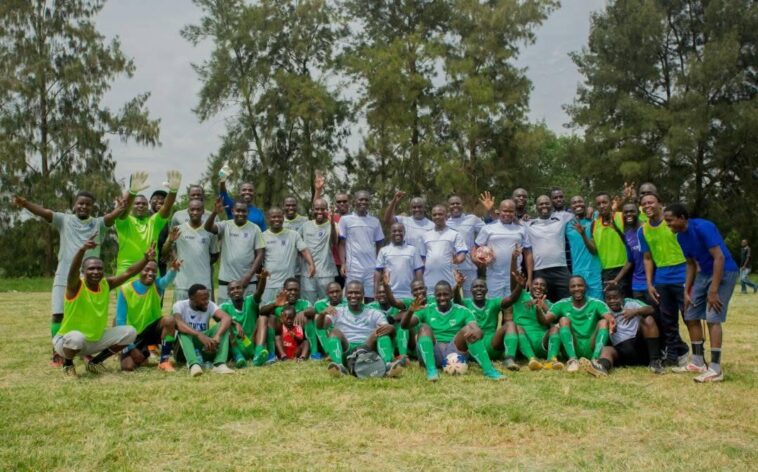
Seven years ago, during the AGM of the Kiira College Butiki Old Boys Association (KICOBA), a suggestion was made from the floor by Sam Wenyala “Why don’t we start a league for Old Boys?”
As simple as it sounded I took up the challenge and together with Sam we set out to organize what would eventually become the Butiki League.
What started off as a one day Gala with 4 teams has today grown into 21 teams, attracting over 1,000 people every match day, and bringing together more than 3,000 people during the Grand Finale.
Looking back, the journey has taught me lessons that go far beyond football.
1. Never carry a burden alone
In the early stages, the league was basically managed by two people. We received the money, planned the fixtures, organized logistics, solved disputes, handled communication, and dealt with every challenge imaginable by ourselves.
Money was scarce ,trust was hard to earn and the temptation for people to question every decision was always there. This led to numerous pitfalls that almost ended the league at its infancy. It was until several members came in to ensure we got a bank account, collective decisions were made that the league somehow stabilized.
I learned that growth becomes easier when many people own the vision. When responsibility is shared, progress becomes sustainable.
2. Involve the people who care enough to complain
One of the best decisions I made was co opting Old Boys who were passionate about the league into the Executive Committee even those who complained the loudest. Not to silence them but so they could experience the challenges firsthand.
Many of them have since become some of the league’s strongest supporters and contributors a testament to the fact that sometimes people don’t need explanations. They need involvement.
3. Make people feel ownership
The league could never survive if it felt like a personal project. There are several leagues that had started way before ours did and have not enjoyed the same level of success like ours because of management and ownership issues. From the beginning, we made it a point to ensure everyone felt it belonged to them. This was the logic behind the formation of the Team Leaders Committee which directly represented the different cohorts.Ideas were welcomed, responsibilities were shared, and successes were celebrated collectively. People support what they help build.
4. Relationships matter
I cannot thank enough the different alumni who have came in and directly or indirectly contributed to the organic growth of the League in their various capacities. Their guidance, networks, credibility and resources have helped open doors that would otherwise have remained closed. These have influenced the growth of the league through their vocal support during consequent AGMS , direct financial support and even just their presence and endorsements , they are the backbone that the league has had for a very long time.
Sometimes progress comes from the people who believe in your vision before everyone else does.
5. Some decisions will never be popular
Leadership is not a popularity contest , it definitely is not about pleasing everyone or getting their approval. There were moments when difficult decisions had to be made for the good of the league. Some were unpopular, some were questioned, but delaying decisions would have been worse. Sometimes it is easier to work backwards from a firm decision than to keep pushing ideas that will never move forward.
Of course the league has improved because people spoke up, challenged ideas, offered alternatives, and pointed out weaknesses
But ultimately progress often comes from action, not perfection
6. It is okay to ask for help
There were moments when the league genuinely struggled. I still remember Season 2, when members of Nulya FC stepped in and directly helped with fundraising efforts to keep the league going. I also recall the different times we went to Old Boys individually to support the league and they came through. A special mention to Counsel Musangala Simon Peter who has bailed us out on several occasions . That experience taught me that seeking help is not weakness. It is often the smartest thing a leader can do.
7. Small contributions beat waiting for one big sponsor
In my cohort (2004–2009) particularly , we learned that depending on a few individuals was not sustainable and could take us thus far. Instead, everyone was encouraged to contribute whatever little they could manage. This built a culture of giving and contributions which became reflected in other different projects. I can recall how as a class we contributed close to 5 Millions to an Old Boys wedding.
That simple approach strengthened participation, created accountability, and eventually led to the formation of a class executive that continues to drive many class activities today.
Final Thought
The Butiki League has never really been about football. It has been a masterclass in leadership, teamwork, trust, community building, fundraising, conflict resolution, and bringing people together around a shared purpose.
What started as a suggestion at an AGM has become a movement powered by hundreds of Old Boys who continue to show up, contribute, and believe.
To everyone who has played, volunteered, sponsored, complained, advised, supported, and challenged us over the last seven years thank you.
The journey continues.
The writer is the Current Corporate Affairs Manager of the Butiki League and Outgoing Publicity Secretary of the Kiira College Butiki Old Boys’ Association (KICOBA)
This post was created with our nice and easy submission form. Create your post!
Written by
Did this story move you? Every gift goes directly to okello etik — writers on Muwado earn from reader appreciation, not algorithms. Even $1 makes a difference.





Muwado weekly chart
Get Africa’s top 10 stories every Thursday
No account needed — just your email.
Want to follow okello etik and get notified every time they publish?
Create a free Muwado account →