

 Isabelle Ugochukwu

This is the post that may break the internet – a special post dedicated to all female founders.
Female founders seldom get funded. Why?
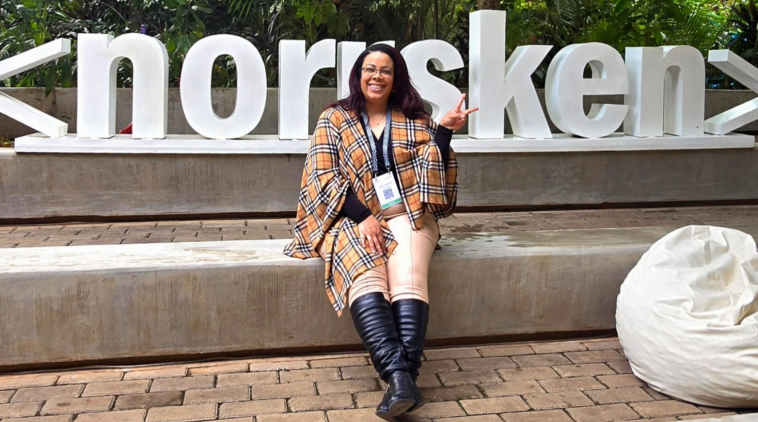
After trying to close the loop on this for two years, the answer finally clicked – at Norrsken Africa Week: Day I, in the session “Inside Venture Studios: Rethinking How Ventures are Built, Scaled and Exited.”
Tyler Karahalios Zlotoff mentioned that female founders often have messier cap tables. This was a sobering, necessary truth that explains something I’ve felt for years but never had the language for.
Female founders disproportionately end up with messy, cluttered, fragmented cap tables – not because they’re “disorganised,” but because of the predatory behaviour that too many VCs, angels, venture builders/studios, accelerator programs, incubators and “advisors” direct toward them.
Here’s the dark pattern no one talks about:
Women are targeted more often by low-value “investors/accelerators/incubators”, lazy “co-founders” and opportunistic “advisors” who pounce early, demand disproportionate equity, contribute nothing meaningful, and leave the founder structurally weakened for later rounds.
When the business struggles – often because the founder’s cap table has been compromised from day one – these same actors walk away with equity, with IP, and with opportunities to repurpose the founder’s labour and insights elsewhere.
It’s extraction disguised as “support.” And it’s a silent reason so many women struggle to raise: Because by the time they meet institutional investors, their cap table has already been damaged by people who were never trying to build with them, only to benefit from them. This pattern is systemic. It’s gendered. And it needs to be named.
The beauty is: a good venture studio or legal team (like Founders Law ) can help reverse that damage – cleaning up cap tables, restructuring incentives, and helping founders regain the strategic clarity they were never supposed to lose. But beyond venture studios and lawyers, we need authentic male allyship – not the performative “Let me introduce you to a couple of people,” followed by silence. I mean allyship with teeth – the real kind:
– Putting actual capital behind female founders
– Writing cheques into their SPVs
– Opening doors and insisting they walk through
– Raising on their behalf
– Advocating for them in the rooms they aren’t yet invited into
– Taking real risks, not offering empty words
Men like Uwem Uwemakpan, Anthonio Pinheiro and Abraham Augustine – deep currents moving quietly beneath the surface, and influencing in my direction, ocean depths far beyond my reach.
If you want to support women founders, be like these men!
Support them like their success is tied to your own. Because when women win, ecosystems get stronger.
To every female founder reading this: Get help. Get credible advisors who are not predatory. If something feels off, end the process and walk away. Do not let anyone lowball you, confuse you, or bury you in hoops you were never meant to jump through. Take your time. A clean cap table is more valuable than a fast cheque.
And please, upskill yourself relentlessly. If you can’t afford business school, the knowledge is still accessible: YouTube has entire MBA syllabi, and business school case studies are everywhere. Ask friends who went to business school for their notes. Study pricing, positioning, leadership, governance, and negotiation. Because here’s the uncomfortable truth:
Average men are peacocking while brilliant women are underselling.
If you don’t intentionally build your confidence, competence narrative, and communication muscle, investors will overlook you or choose average men over you. And even if they invest, most will try to replace you at Series A with someone “more global” or “more experienced.” Do not give them the ammunition!
Become the leader they cannot justify replacing.
And to the senior women – the CXOs, Chiefs of Staff, Directors, Strategists: We need you! Take the plunge. Leave corporate. Start companies. Build category-defining ventures.
To the ones that are already on the journey: You already have the experience investors claim women lack. Don’t let anyone gaslight you into thinking otherwise. When an investor tells you, “Come back at $150k ARR for pre-seed,” recognise the absurdity. If you’ve reached $150k ARR, you are no longer pre-seed – you are halfway to demonstrating a path to $1M ARR, which is Series A territory in most of the world.
Don’t shrink to fit unrealistic expectations. Stand tall, build boldly, and let your results speak louder than the gatekeepers.
This post isn’t just my observation – it’s a call to action.
For the ecosystem.
For the allies.
For the founders.
And for the women who haven’t yet started, but absolutely should!
This post was created with our nice and easy submission form. Create your post!

Written by
Founder & CEO MedTech Solutions | Building Health Data Infrastructure for Africa | Powering Global Health Intelligence | Advancing Global Health with Data
Did this story move you? Every gift goes directly to Isabelle Ugochukwu — writers on Muwado earn from reader appreciation, not algorithms. Even $1 makes a difference.






Muwado weekly chart
Get Africa’s top 10 stories every Thursday
No account needed — just your email.
Want to follow Isabelle Ugochukwu and get notified every time they publish?
Create a free Muwado account →