

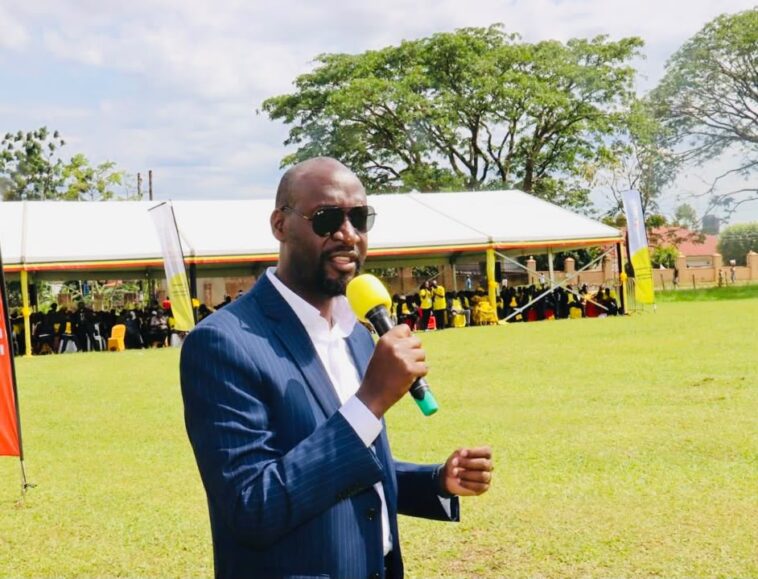
 Rwakakamba Morrison

Rukungiri District enters the Financial Year 2026/27 with a direct local government allocation of 66.84 billion shillings. This breaks down to a wage component of 41.13 billion shillings for salaries of teachers, health workers and administrators, 19.79 billion shillings for non-wage recurrent operations such as extension services and market management, and 4.37 billion shillings in development grants for capital projects. The municipal council receives an additional 17.64 billion shillings with a similar structure focused on urban services and infrastructure.
These resources form part of a national budget above 84 trillion shillings that prioritises full monetisation through commercial agriculture, parish-level revolving funds, value addition and market access. National envelopes flow to districts through wage transfers, sector-specific grants and development allocations that districts integrate into local workplans.
Rukungiri’s coffee, banana and livestock strengths, plus its natural assets, create immediate high-impact opportunities if leaders move aggressively to match national priorities with local projects.
Parish-Level Revolving Funds: 9 to 10.5 Billion Shillings Annual Potential:
Nationally, the Parish Development Model has deployed 4.4 trillion shillings over five years to 10,589 parishes, with a target of around 100 million shillings per parish annually. With roughly 93 parishes, Rukungiri can access 9 to 10.5 billion shillings yearly in revolving capital. This funds 80 to 150 households per parish with 1 to 2 million shillings each for commercial enterprises. The next phase’s focus on productivity and market linkages makes it perfect for scaling local value chains when combined with the district’s 4.37 billion shillings development grant.
Agro-Industrialisation and Cage Farming at Rwenshama:
The national agro-industrialisation envelope stands at 2.26 trillion shillings. Rukungiri captures its share through the district development grant and sector grants for irrigation, inputs, extension and processing. A high-potential innovation is cage farming on Lake Edward at Rwenshama. This commercial aquaculture model delivers high yields with lower land requirements.
Aggressive leaders can secure three to five initial cage clusters, each supporting 20 to 50 operators, by blending parish-level revolving funds, the district’s 4.37 billion shillings development grant and national agro-processing support. Each cluster could generate 200 to 500 million shillings in annual turnover while creating dozens of jobs and boosting fish production and exports. Pairing this with solar irrigation, targeting eight to twelve schemes district-wide, multiplies output and resilience using the same development funds.
Tourism: Agro-Tourism, Lake Edward, Kisiizi Falls, Bwindi Gateway and Ekitagata Hot Springs:
National tourism receives 567 billion shillings for branding, infrastructure and economic and commercial diplomacy. Rukungiri has ready, distinctive assets. Agro-tourism through coffee farm tours, banana plantation experiences and livestock demonstrations combined with farm stays directly monetises parish-level revolving fund enterprises.
Lake Edward at Rwenshama offers scenic fishing, birding and eco-adventures. Kisiizi Falls is a dramatic waterfall needing improved access; leaders can prioritise 10 to 15 kilometres of tourism road tarmac from the national transport budget of 8.79 trillion shillings. Proximity to Bwindi creates a gateway role for gorilla tourism spill-over through stopovers, guiding and hospitality.
Ekitagata hot springs at Minera River offer a unique health and relaxation tourism draw that aligns with national health tourism priorities.
Aggressive packaging of these into two to three clusters, plus national marketing and missions abroad targets, can attract 5 to 15 billion shillings in combined infrastructure, training and promotion support drawn from the national envelope and the district’s development grant. This creates 300 to 600 jobs in hospitality and guiding while raising farmgate prices through visitor spending.
Market Access and Democratic Republic of Congo Adjacency.
Rukungiri’s location adjacent to the Democratic Republic of Congo opens cross-border trade opportunities in produce, fish and goods. National market access focus supports this. The market vendor loan facility at 8 percent interest, with nationwide rollout in the Financial Year 2026/27, gives vendors and informal traders cheap working capital.
The above combined with additional capitalisation of the Uganda Development Bank and other enterprise funds, Rukungiri traders can expand volumes heading to the Democratic Republic of Congo. Improved roads of 20 to 40 kilometres of tarmac on priority market and tourism routes, drawn from the national transport budget and district development grant, plus parish-level revolving fund-linked cooperatives, convert border proximity into major revenue.
Schools, Hospitals and Broader Infrastructure
Human capital enablers receive major national shares:
The district’s 41.13 billion shillings wage component sustains frontline services in schools and health facilities. The 19.79 billion shillings non-wage recurrent allocation supports operations and maintenance. The 4.37 billion shillings development grant enables upgrades. The district can upgrade 15 to 25 schools with classrooms, laboratories and sanitation.
Health upgrades at Rukungiri Hospital and two to three key health centres, including equipment, solar power and maternity wards, are achievable through health infrastructure allocations and the development grant. Transport’s 8.79 trillion shillings enables the 20 to 40 kilometres of tarmac push, including critical tourism roads to Kisiizi Falls and Ekitagata hot springs.
What Rukungiri Leaders Need to Do Next Monday Morning:
A: Form a district tourism-agro-trade taskforce to package Rwenshama cage farming, Ekitagata hot springs, Kisiizi Falls access, agro-tourism and Bwindi gateway projects for national funding.
B: Integrate specific proposals of twelve solar irrigation schemes targeting 50 to 200 farmers this financial year, 20 to 40 kilometres of tarmac including tourism roads, school and hospital upgrades, and Democratic Republic of Congo trade facilitation into annual workplans and engage the finance ministry and sector ministries quarterly for concrete money releases.
C: Stack parish-level revolving fund equity with the 8 percent market vendor loans and Uganda Development Bank facilities for farmers, fishers, traders and processors. Track releases and absorption transparently to build credibility for larger future allocations.
Final note:
Rukungiri’s 66.8 billion shillings envelope plus national thematic flows represent concrete capital. By turning assets like Ekitagata hot springs at Minera River, Lake Edward cage farming potential, Kisiizi Falls, proximity to Bwindi and Democratic Republic of Congo border trade into bankable projects, aggressive leaders can deliver eight to twelve irrigation schemes, meaningful aquaculture clusters, tarmac tourism roads, school and hospital upgrades, and 9 billion shillings or more in annual parish-level revolving fund support.
Execution now determines the scale of household income growth, formalised enterprises and lasting local prosperity.
Morrison Rwakakamba, Coffee farmer and entrepreneur.
This post was created with our nice and easy submission form. Create your post!

Written by
Based in Uganda. Working to empower citizen agency to pursue large scale change in Uganda, Africa and the World.
Did this story move you? Every gift goes directly to Rwakakamba Morrison — writers on Muwado earn from reader appreciation, not algorithms. Even $1 makes a difference.




Muwado weekly chart
Get Africa’s top 10 stories every Thursday
No account needed — just your email.
Want to follow Rwakakamba Morrison and get notified every time they publish?
Create a free Muwado account →