

 Brian Oduti

Miti, Joshua and I climbed up the stairs inside a shaky, spiral metallic staircase, to a spot maybe on the fourth floor of a building, overlooking the Old Taxi Park from the East. Namirembe Road, Ben Kiwanuka Street and Luwum Street intersected below. Crowds walked in different directions through the intersection of these roads. A man selling shoes placed on white plastic sheets on the ground. Buyers stood around the shoes. Two different shoe vendors pitched behind and adjacent to a tent with white and yellow election campaign branding. The roads had turned into a market. Bodabodas rode through the intersection with passengers and some with luggage.
The streams of crowds spread out of the three roads from the intersection, drifting into small dots of different colours in the distance. From the staircase, I saw large circles: bright colours, orange, yellow, and red; umbrellas that the vendors sat under. A light drizzle fell. Voices on a loudspeaker announced merchandise and their prices, calling people to come and buy, unclear words swallowed by the blaring music.
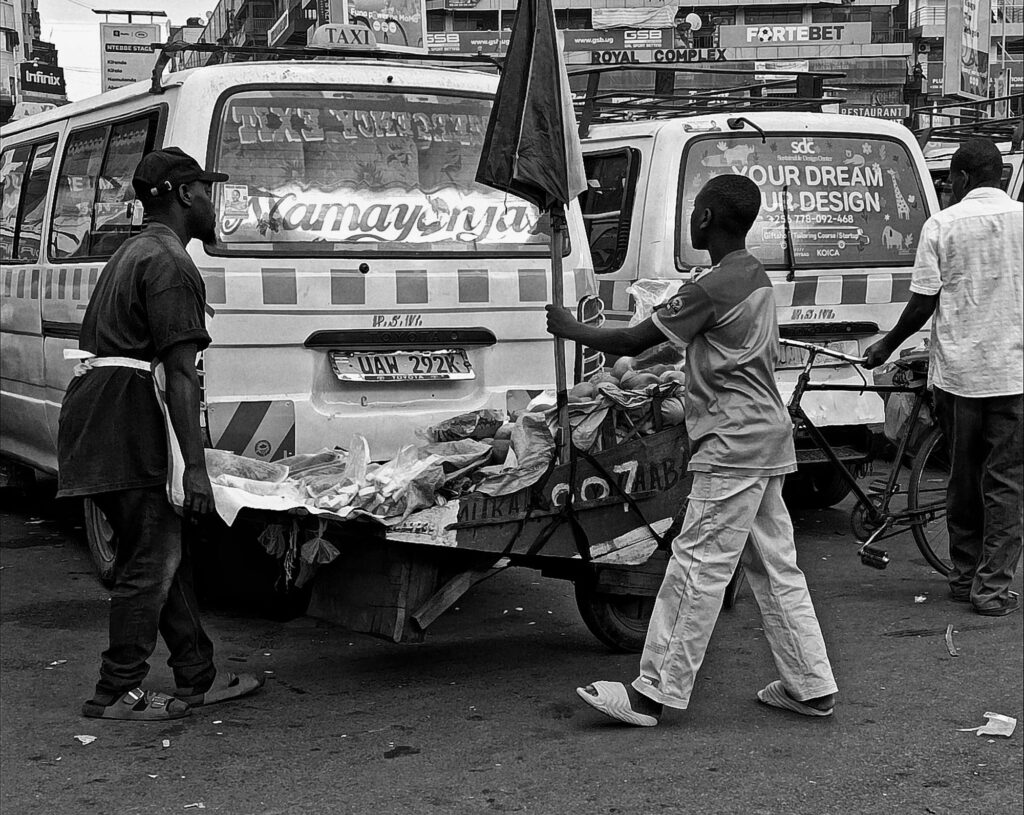
Later, we walked through the crowds, through the shopping area across towards the Old Taxi Park. We passed through a makeshift restaurant under tents; the dusty ones we had seen from the rickety stairs earlier. People recognized Miti. He fistbumped them and shook hands. Rasta, they called him.
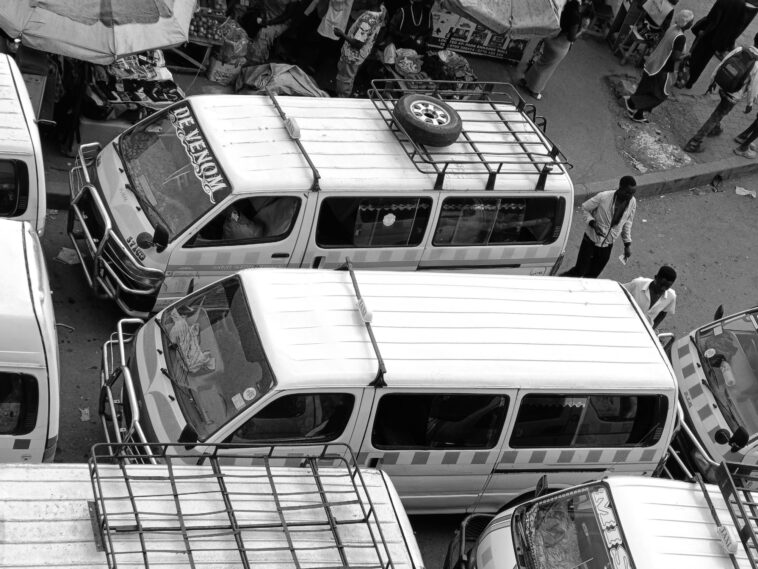
We walked into the taxi park. Metallic signs placed on the roofs of the taxis to label the routes, were being phased out. A telco put up its branded electronic signs at the spots where the taxis parked. All about there were these businesses: fruit vendors, cake sellers, and all these people moving about, shopping, women, children carrying luggage from one place to the next. We were just taking pictures. Miti was documenting it; archiving this history before it disappeared.
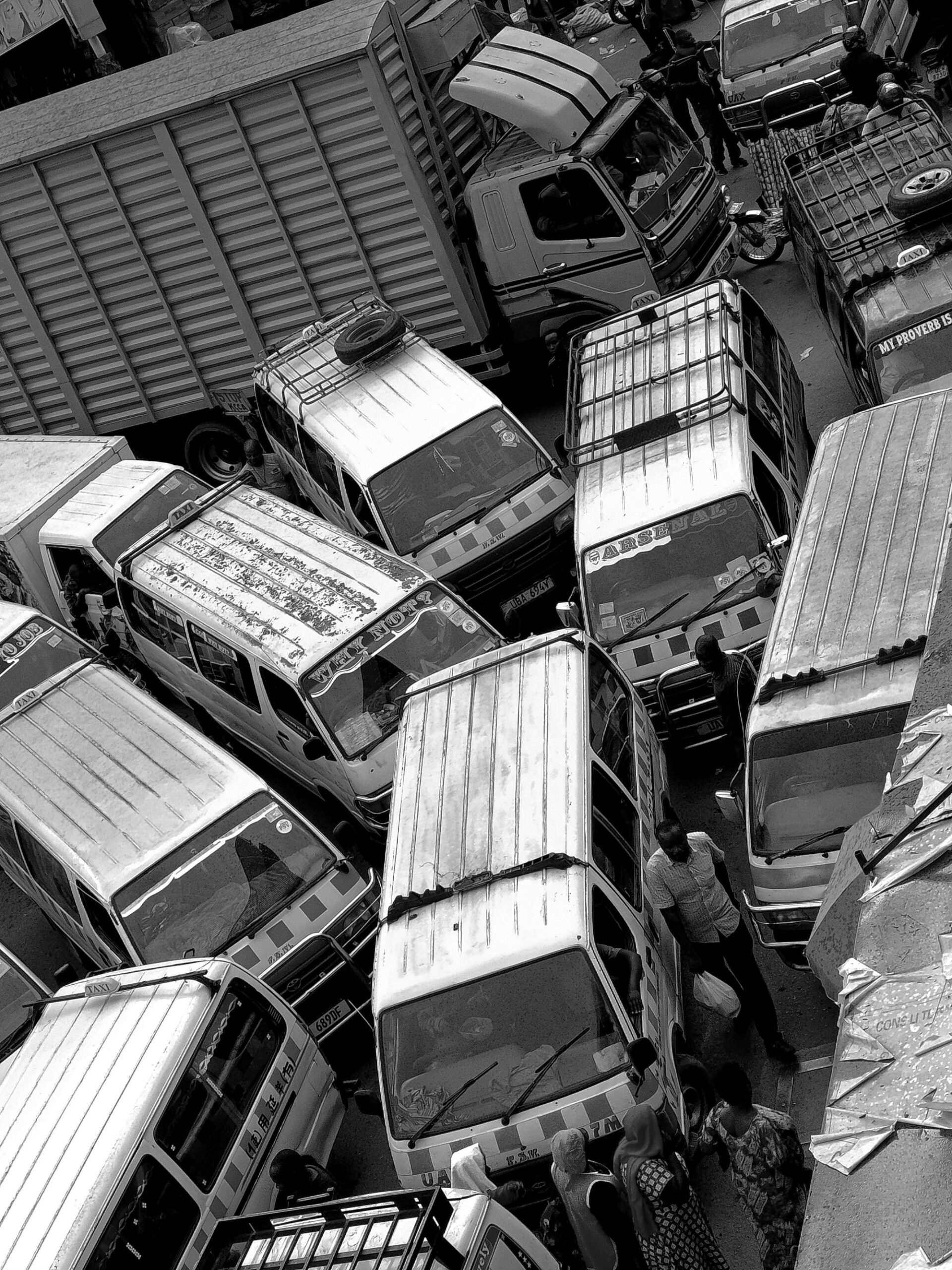
Miti spoke with the taxi drivers who stood waiting for passengers outside their vehicles. He asked how much they would sell the old signs, because they were not needed anymore. He argued that in ten or fifteen years, even more, we would have no idea how people navigated the park to find vehicles headed to their specific destinations. He had bought a number of signs before. Miti asked the driver how much he wanted for the yellow sign labelled with blue paint, with destinations like Mengo Hospital and the fare at two thousand shillings. One hundred thousand, the driver said. Miti had bought one at twenty thousand shillings before. He haggled but eventually left without the sign.
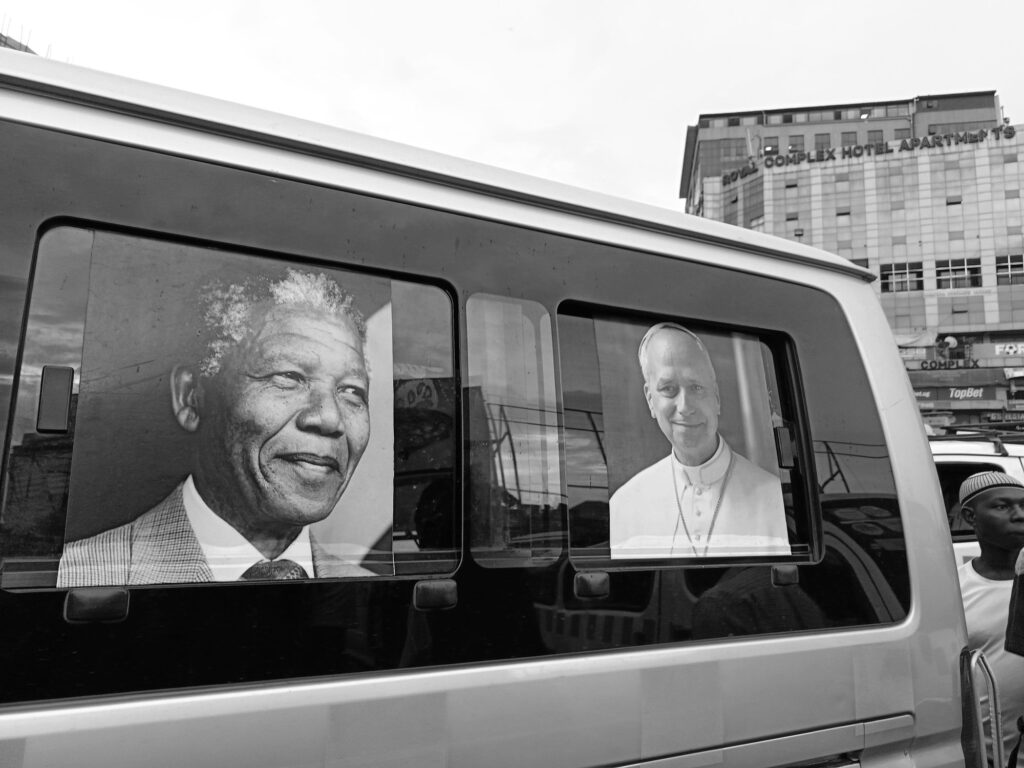
I saw a taxi with stickers of Nelson Mandela and Pope Leo XIV on its window. Many taxis have writing that ran along the top of the windscreens, and across the emergency exit windows too, with messaging ranging from the political to the inspirational, and the outright hilarious.
We stood near the taxi of the driver who refused to sell his sign. Paint on the taxi’s body was peeling, cracked into lines that told the story of the city’s constant grind and road rage. The tail light was torn open at one corner, the amber and red lenses still there but the frame around them stripped back to bare. The wipers were so rusted at the base that it was clear they did not wipe anymore. I had seen a taxi window without glass, covered over with blue polythene sheet. These vehicles looked like they would fall apart on the road. And they drove past the KCCA man and police station at the exit of the park.
A man in a green reflector jacket branded KCCA, stopped us. He asked why we were taking pictures and who permitted us. He pointed to the KCCA office on the North-Western side of the taxi park where we were supposed to seek permission before taking pictures. He said they did not want unverified information about the park on social media or in the news. Miti told the man he came here often and people know him, so there was no need to worry. The man asked for money. We did not have any, we said. He let us go.
This post was created with our nice and easy submission form. Create your post!

Written by
I write personal essays and short fiction set in Uganda. My work is informed by own experiences and how they fit within policy, memory, and the idea of home.
Did this story move you? Every gift goes directly to Brian Oduti — writers on Muwado earn from reader appreciation, not algorithms. Even $1 makes a difference.






Muwado weekly chart
Get Africa’s top 10 stories every Thursday
No account needed — just your email.
Want to follow Brian Oduti and get notified every time they publish?
Create a free Muwado account →