

 Shadreck Chikoti

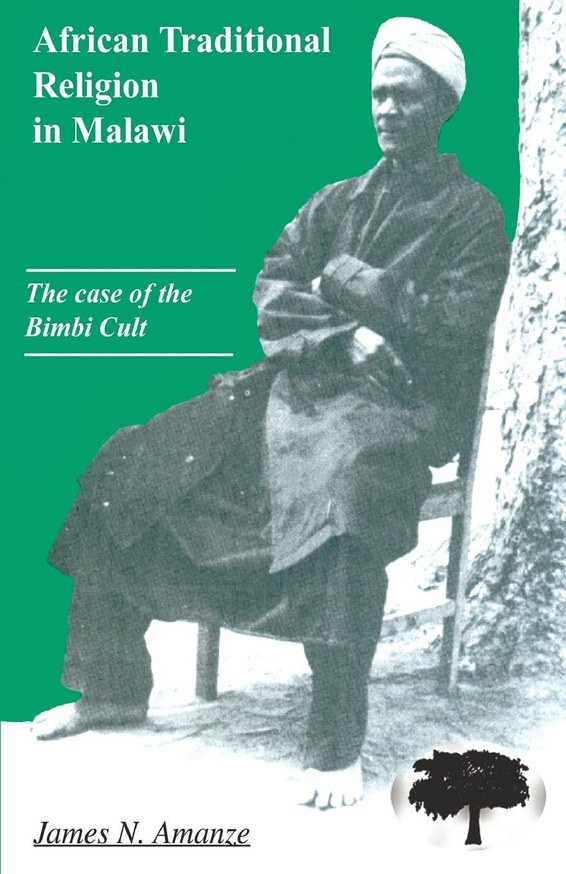
The Bimbi Cult is found in the southern region of Malawi, particularly in the districts of Zomba, Mangochi, and Machinga. Although many scholars have written about this religious institution, one of the most comprehensive studies is James N. Amanze’s African Traditional Religion in Malawi: The Case of the Bimbi Cult (2002).
One of the most remarkable aspects of the Bimbi Cult is its ability to bring together different ethnic groups and foster peaceful coexistence and mutual respect. Among the communities that participate in the cult are the Chewa, Yao, Ngoni, and Lomwe. In this respect, the cult provides an important historical example of interethnic cooperation and social cohesion in Malawi.
Amanze traces the origins of the cult to the Maravi state. He notes that “historically, the Bimbi cult was one of the Chewa religious institutions in Malawi which the Maravi state builders in the Upper Shire used to hold their system together” (Amanze, 2002, p. 10). This observation is significant because it connects the cult directly to the political and religious structures of the Maravi state, which dominated large parts of present-day Malawi and neighboring regions between the fifteenth and nineteenth centuries (Phiri, 1975).
However, the Bimbi Cult is not exclusively a Chewa institution. As Amanze (2002) explains, “in its present form, the Bimbi cult as a living force, claims a large following cutting across geographical, ethnic, family and faith boundaries” (p. 10). This demonstrates how a religious institution that originated within the Maravi-Chewa tradition evolved into a broader regional movement that transcended ethnic divisions.
According to Amanze (2002), the cult originated at Kaphirimtiwa in central Malawi. He writes that “the Bimbi cult, which shares the same characteristics as the Mbona cult among the Chewa of the Lower Shire Valley, originated at Kaphirimtiwa in Central Malawi” (p. 11). Several Chewa historians identify Kaphirimtiwa as the birthplace of many Chewa religious institutions in both central and southern Malawi. These institutions are associated with members of the Banda clan, who were traditionally renowned as rainmakers and custodians of sacred religious practices.
The name “Bimbi” derives from the title of the cult leader, who may be either male or female. A male leader is known as Mchinjika, while a female leader is called Mtsamila. The term “Bimbi” is commonly interpreted as “seer.” In Chichewa, it is also associated with the idea of concealing, preserving, or safeguarding something sacred. The Bimbi is believed to reveal hidden truths received from Chauta (God), to see through the eyes of Chauta, and to serve as a mediator between humanity, the ancestors, and the divine.
The Bimbi Cult recognizes all ethnic groups residing within its area of influence. At the same time, it openly acknowledges its origins in Kaphirimtiwa and Nsinja, regions historically associated with the Maravi. Members of the cult are fully aware of these origins and preserve them within their oral traditions. The cult also recognizes that the earliest inhabitants of many of these areas were the Maravi, or more specifically, the Chewa.
Discussing sacrificial ceremonies at Kalembo in Machinga District, Amanze (2002) observed:
“The approach to the shrine was done in a dignified manner. The elders took their shirts and hats off and the women wore their clothes up to the waist. In front of the congregation there was village headman Mmaniwa, the owner of the shrine and representing the Chewa, the first inhabitants of the area. Behind him came Group Village Headman Mpango representing Chief Kalembo and the Yao section of the community. Behind him came Group Village Headman Chimdikiti representing the Ngoni” (p. 46).
This ritual arrangement is particularly important because it publicly recognizes the Chewa as the first inhabitants of the area while simultaneously acknowledging the Yao and Ngoni communities as integral members of the regional social order.
Although the Bimbi Cult promotes harmony among different ethnic groups today, Amanze also explains the historical processes that made such coexistence possible. During the second half of the nineteenth century, the Chewa, who were regarded as the original inhabitants and custodians of the land in districts such as Zomba, Chiladzulu, and Machinga, experienced a decline in political power due to external pressures and migrations.
Amanze (2002) notes:
“The present political situation is such that, in traditional politics, it is the Yao who occupy almost all the chieftaincies (though most of them with Chewa names), whereas the Chewa are only represented in the village headmanships” (p. 47).
The arrival of the Ngoni further intensified pressures on local communities and religious institutions. According to Amanze, the Bimbi shrines and associated religious structures came under threat during the Ngoni incursions. In response, the local Chewa sought military protection from the Yao. This alliance was formalized through an agreement concluded at Chilanga on the western side of the Shire River.
According to Bimbi oral traditions:
“The terms of this agreement required the Chewa formally to recognize Liwonde’s military and political superiority in secular matters, while Liwonde on his part recognized the Bimbi’s superiority in spiritual matters” (Amanze, 2002, p. 48).
Following this agreement, the Bimbi Cult developed into a regional religious institution within the Mbewe chiefdoms, strengthening both social stability and interethnic cooperation.
Today, Bimbi ceremonies continue to serve as gatherings that unite people from different ethnic backgrounds in an atmosphere of peace and reconciliation. During sacrificial rites, prayers are conducted in multiple languages, beginning with Chichewa, followed by Chiyao and Chingoni. The ceremonies often culminate at the graves of ancient Chewa chiefs, where participants prostrate themselves, roll on the ground, and invoke the names of their ancestors and former rulers.
The Bimbi Cult therefore offers an important lesson for contemporary Malawi. Its history demonstrates that communities can acknowledge past conflicts, migrations, and struggles while still building systems of coexistence and mutual respect. The cult embodies the recognition that a shared future depends not on the denial of history but on an honest acceptance of it. In this sense, the Bimbi tradition stands as a powerful reminder that ethnic diversity need not be a source of division; rather, it can become the foundation of unity and national cohesion.
References
Amanze, J. N. (2002). African traditional religion in Malawi: The case of the Bimbi cult. Blantyre, Malawi: CLAIM.
Phiri, K. M. (1975). A history of the Chewa kingdom of Malawi. London, England: Longman.
This post was created with our nice and easy submission form. Create your post!

Written by
Did this story move you? Every gift goes directly to Shadreck Chikoti — writers on Muwado earn from reader appreciation, not algorithms. Even $1 makes a difference.






Muwado weekly chart
Get Africa’s top 10 stories every Thursday
No account needed — just your email.
Want to follow Shadreck Chikoti and get notified every time they publish?
Create a free Muwado account →